An Evening at Tablao Flamenco 1911, the World's Oldest Flamenco Tablao.
In the middle of Madrid's bustle is a room that has been alive for more than a century: Tablao Flamenco 1911. It is known as the oldest tablao in the world. It isn't just a performance venue; it holds flamenco's shared memory going back to 1911.
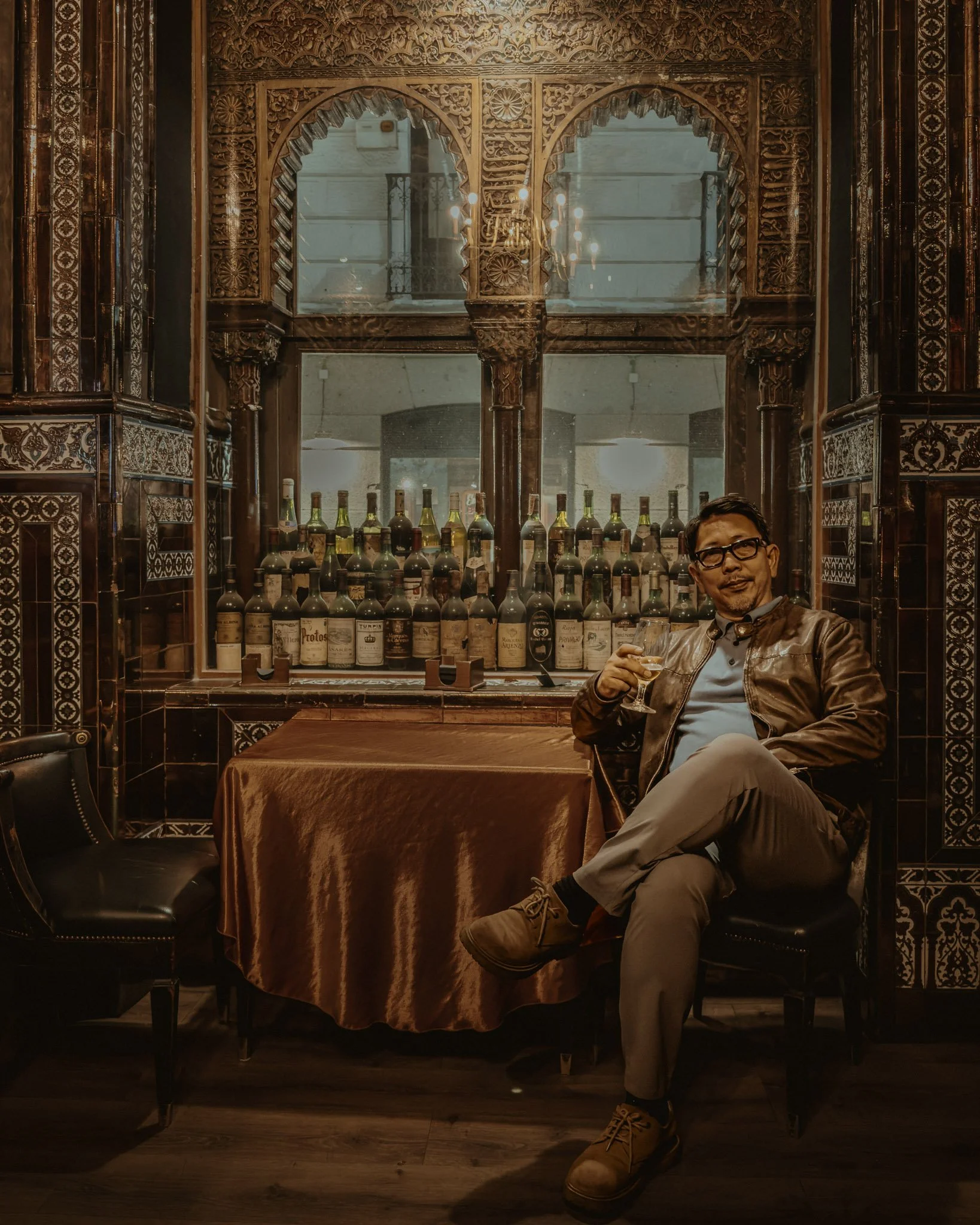
The moment you step inside, the atmosphere changes. It feels more intimate, warmer, and truly “alive.” There is no stiff distance between the audience and the performers. Everything feels close, almost personal.
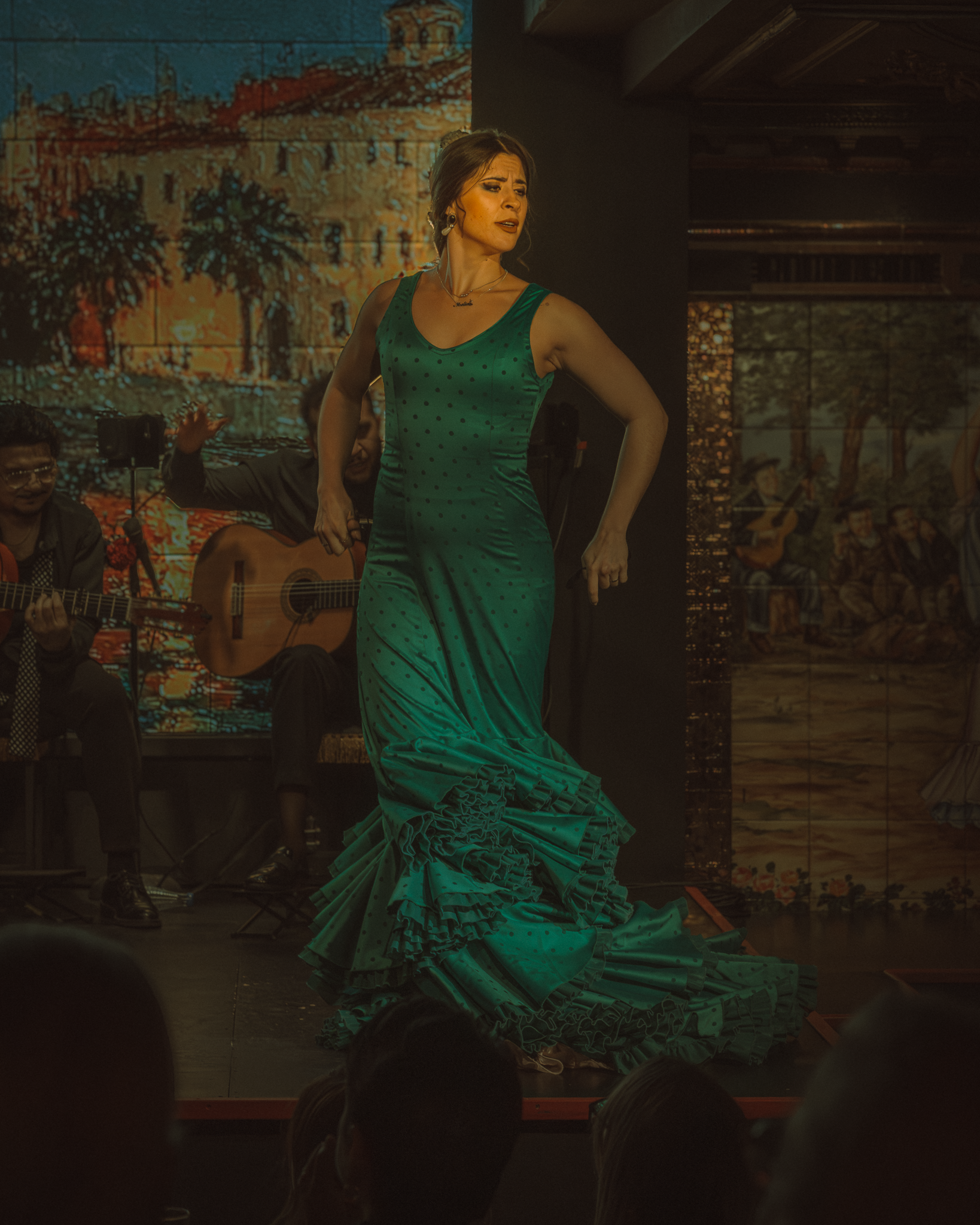
Noelia Ruiz
What struck me most was not only the performance but how the room itself becomes part of it. The small scale creates visual and emotional closeness, and the seating layout gives every guest a direct connection to the stage. You don't watch from a distance. You are inside the performance.
The Room's Acoustics Are Part of the Performance
I pay close attention to space and performance, and I found that this tablao's main strength is its acoustic quality. It doesn't lean on heavy amplification. Instead, the room was designed, or perhaps evolved on its own over time, to carry sound naturally.
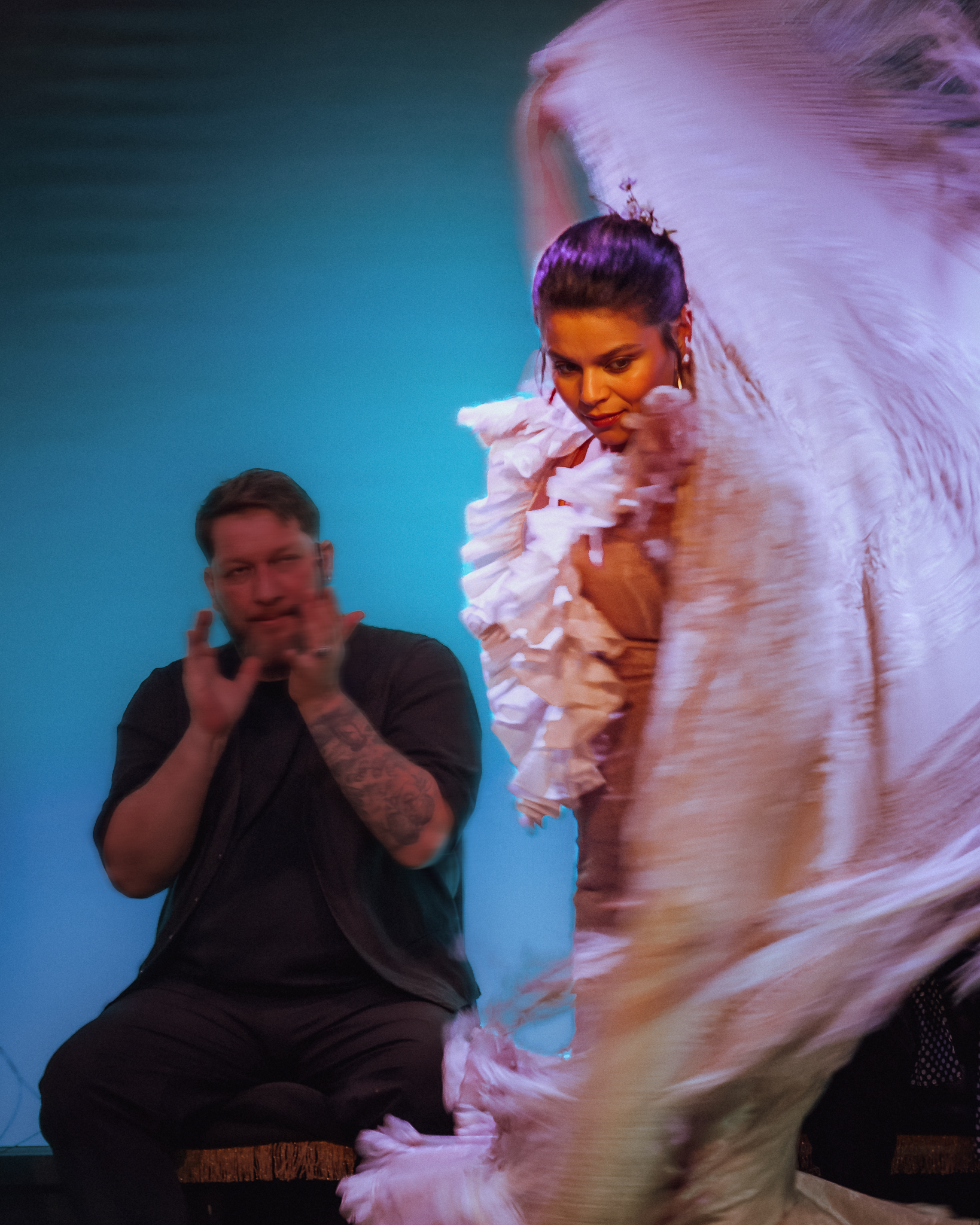
Maria Moreno
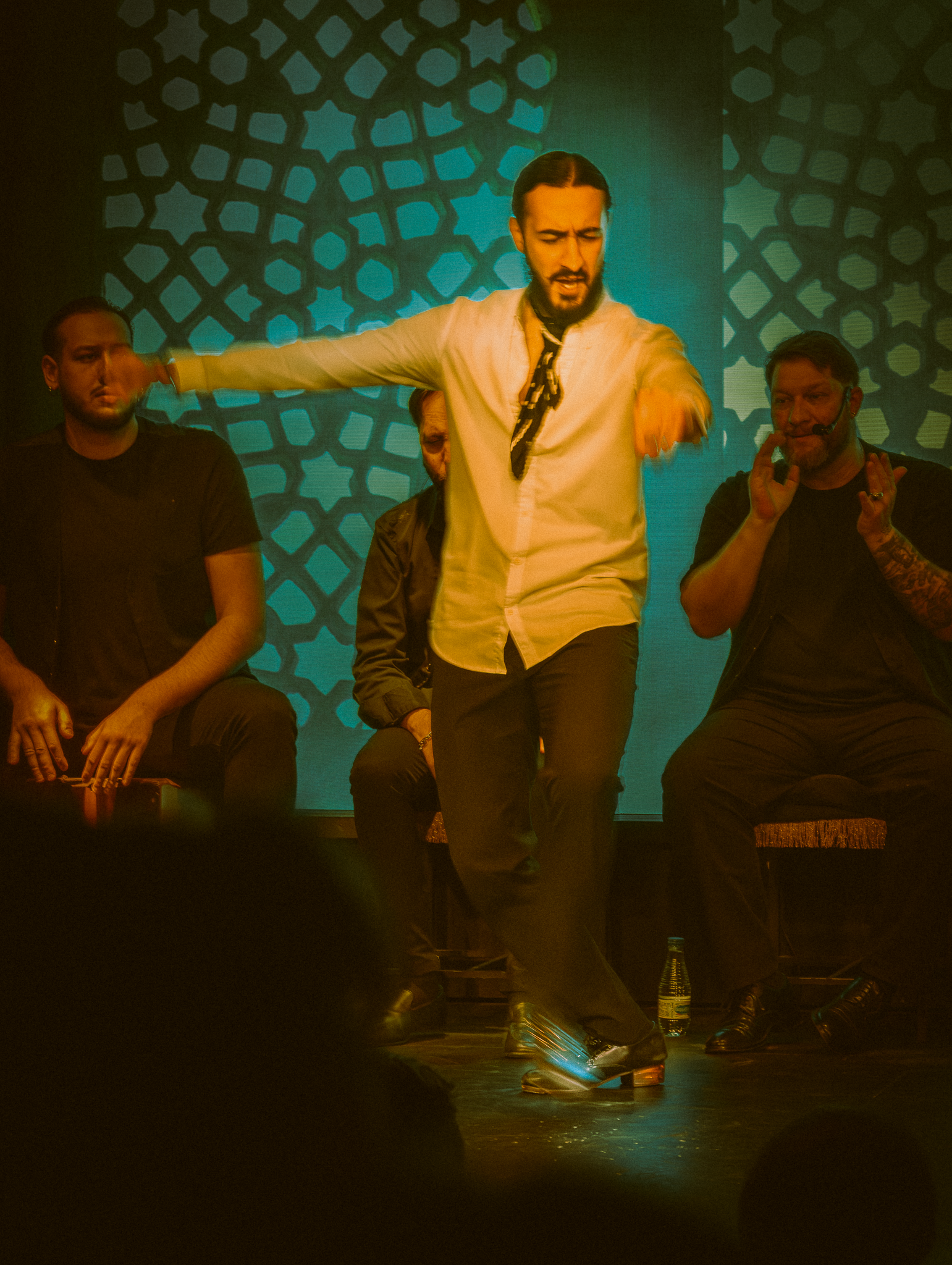
The guitar sounds clear but still warm. The handclaps (palmas) have a sharp, well-defined rhythm. But the dancers' footwork (zapateado) dominates. A special wooden floor amplifies it, a simple element that works as a resonating surface. You don't only hear each stamp; you feel it, as if it travels through the room.
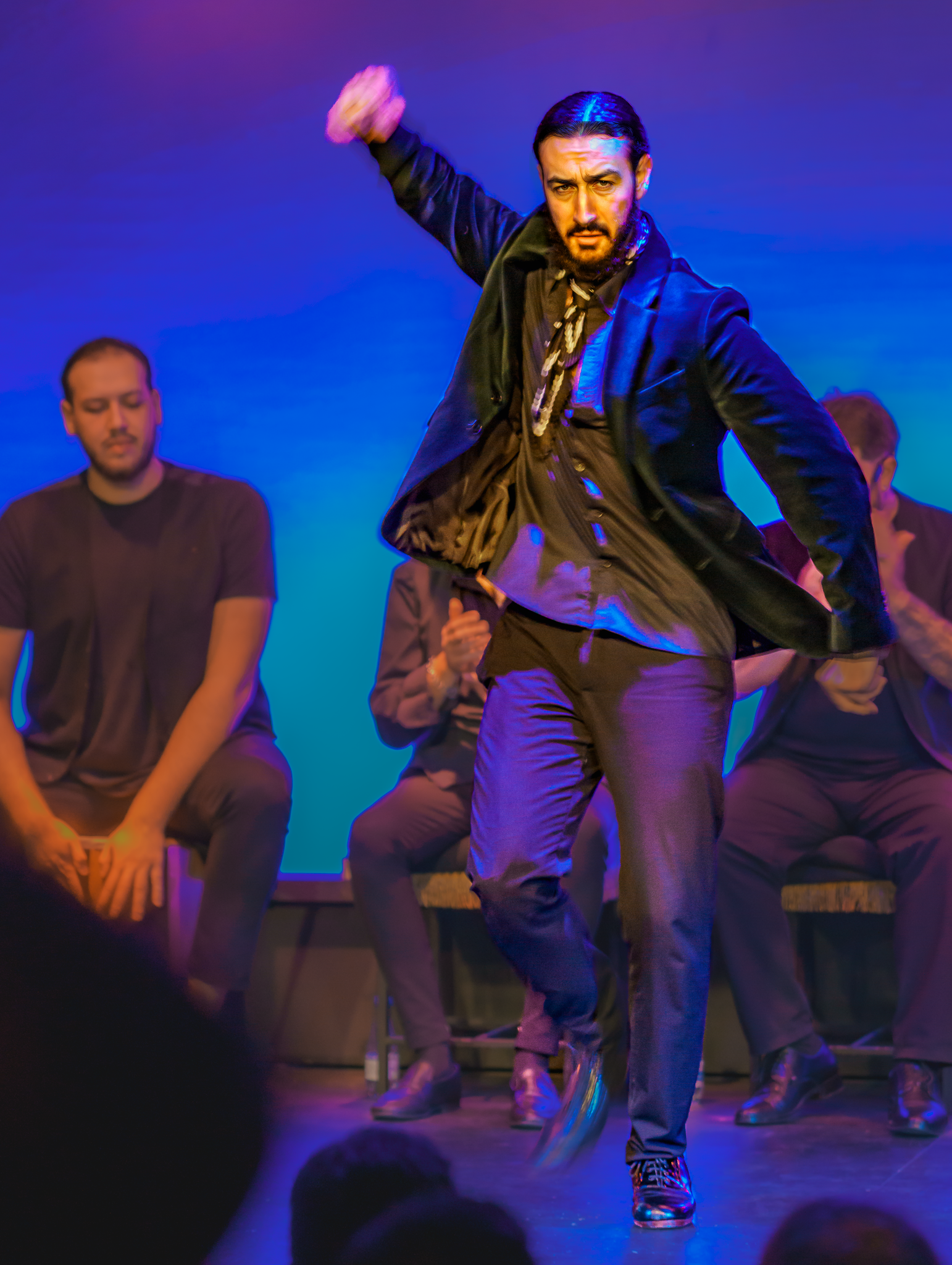
Jose Escarpin
Here, acoustics are more than a technical matter; they are part of the emotional experience. The sound isn't “produced.” It is simply there: direct, raw, and honest.
Light, Shadow, and Visual Dramaturgy
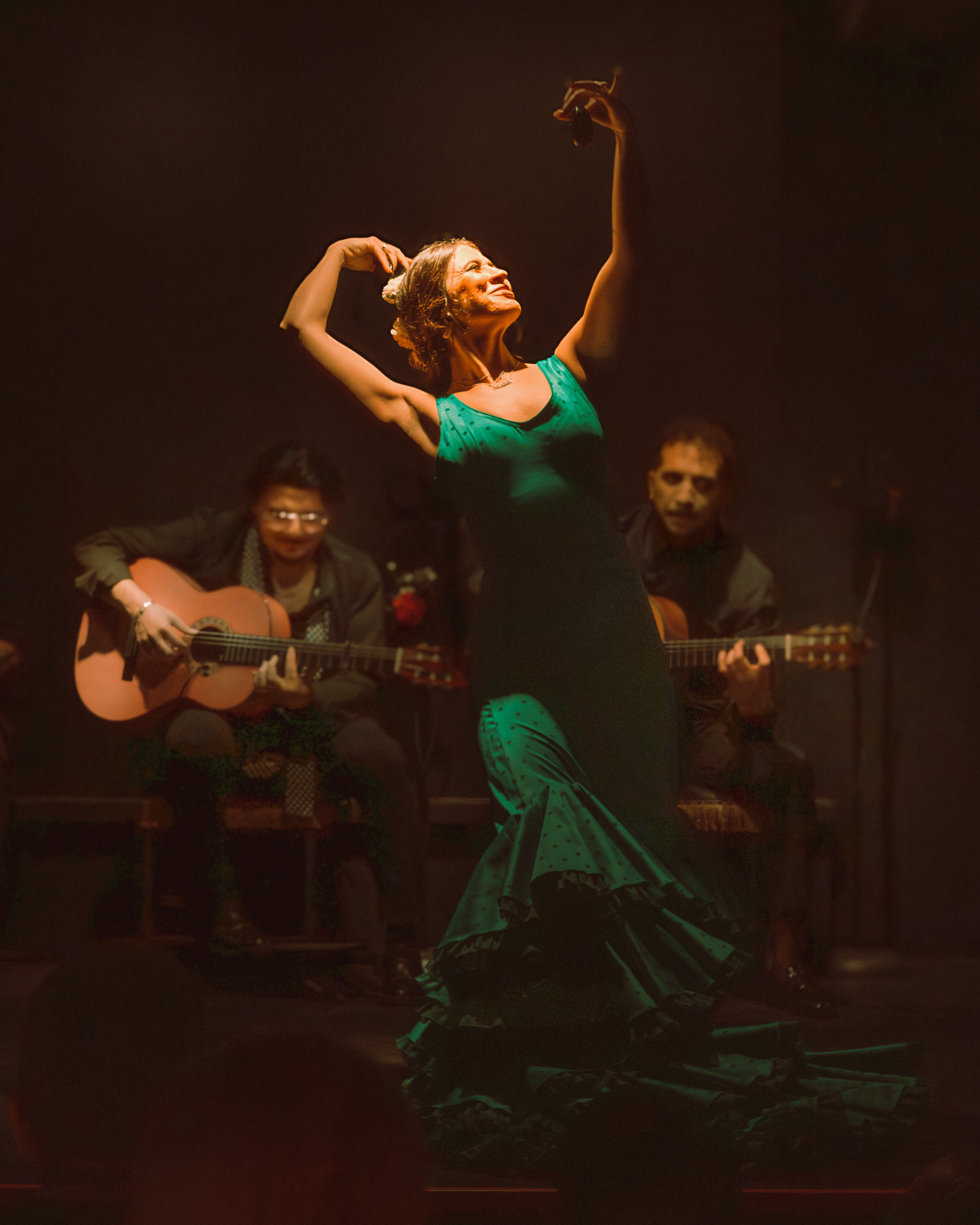
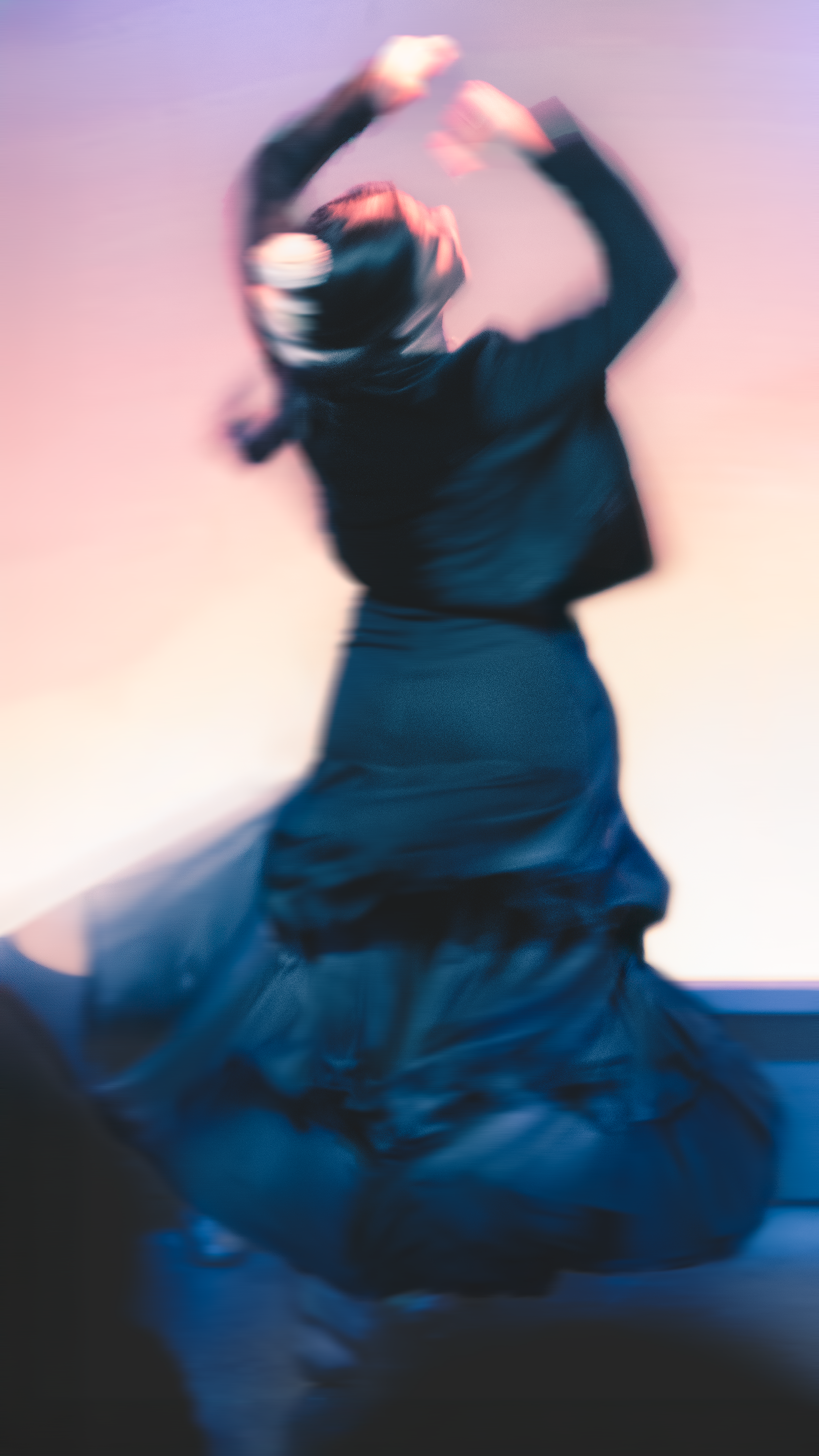
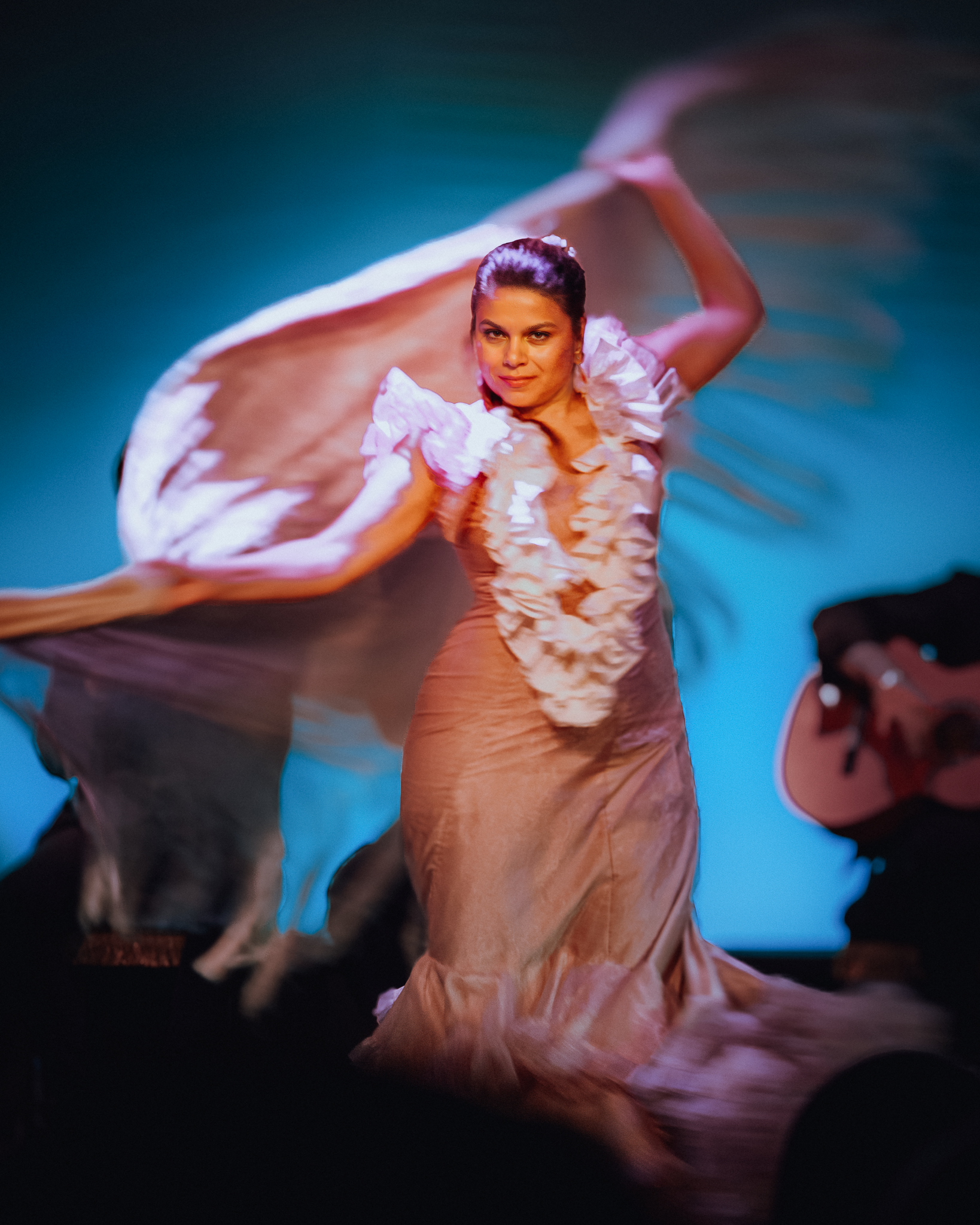
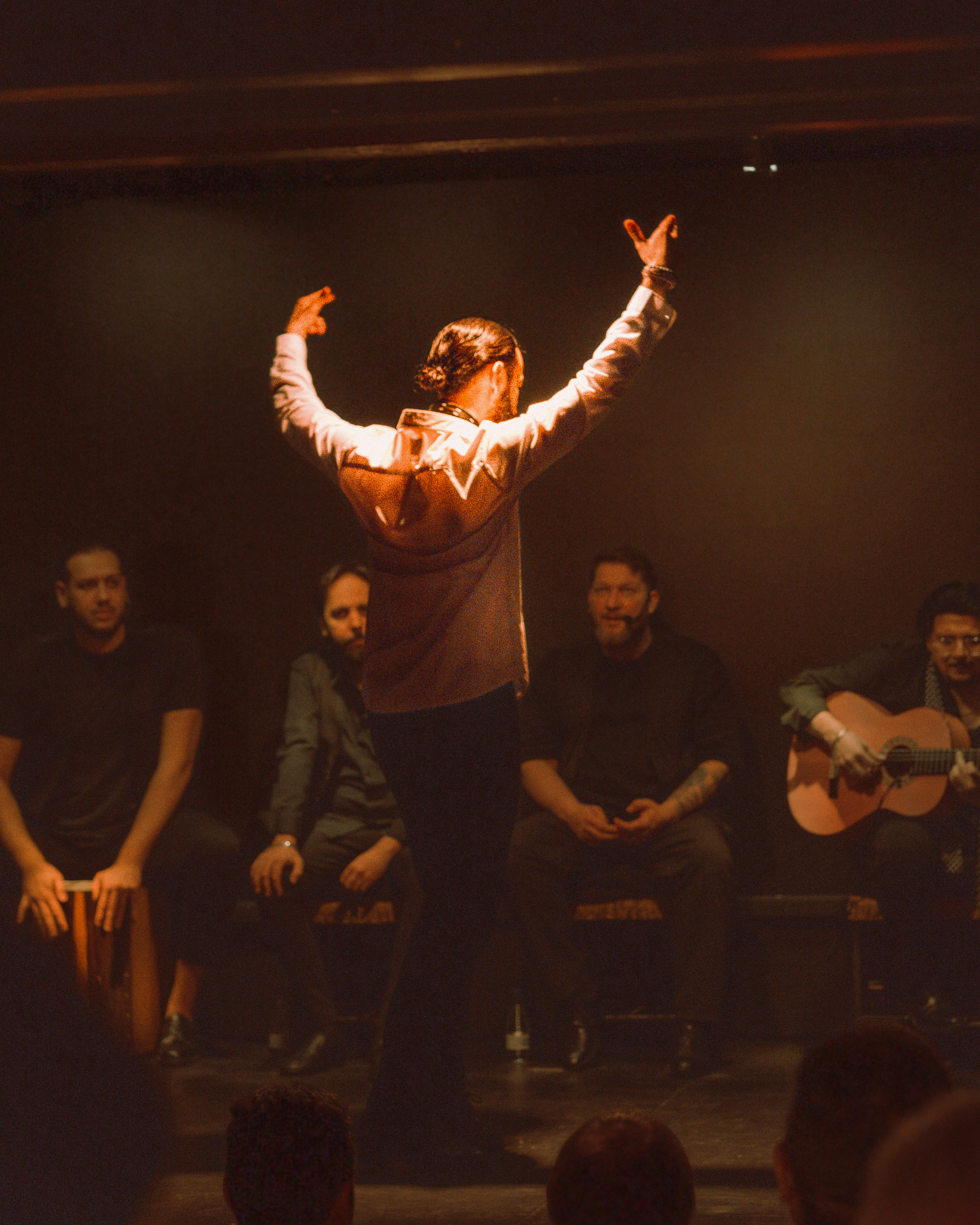
Lighting matters as much as sound. The approach isn't complex or excessive; it is simple and effective. Warm spotlights shape silhouettes, bring out the texture of movement, and create dramatic contrast between light and dark.
Noelia Ruiz
In many moments, I felt the light was doing more than lighting the stage. It was steering emotion. Shadows build tension and highlights sharpen intensity, all in step with the rhythm of the music and the movement.
Smart Integration of Modern Audiovisual Technology
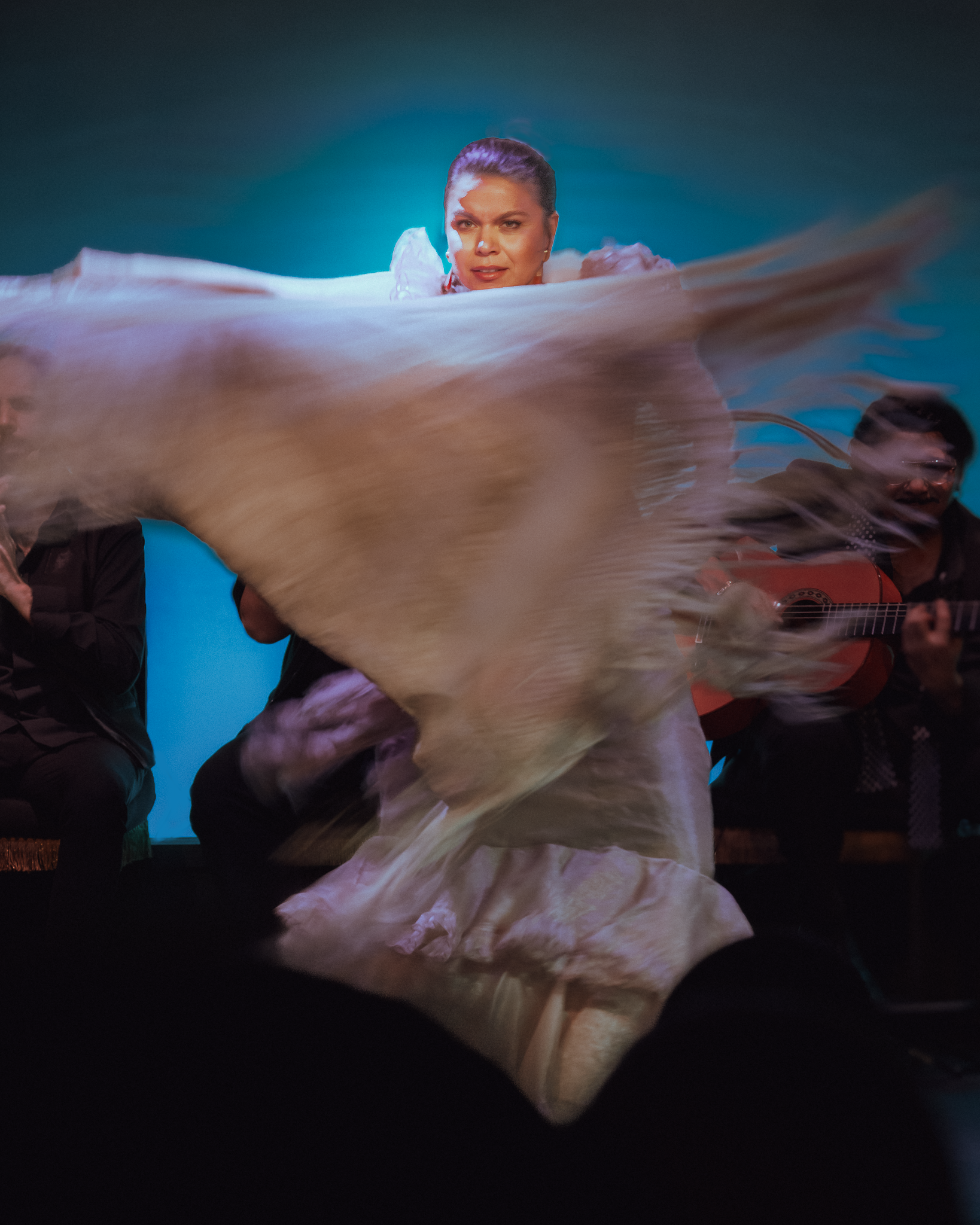
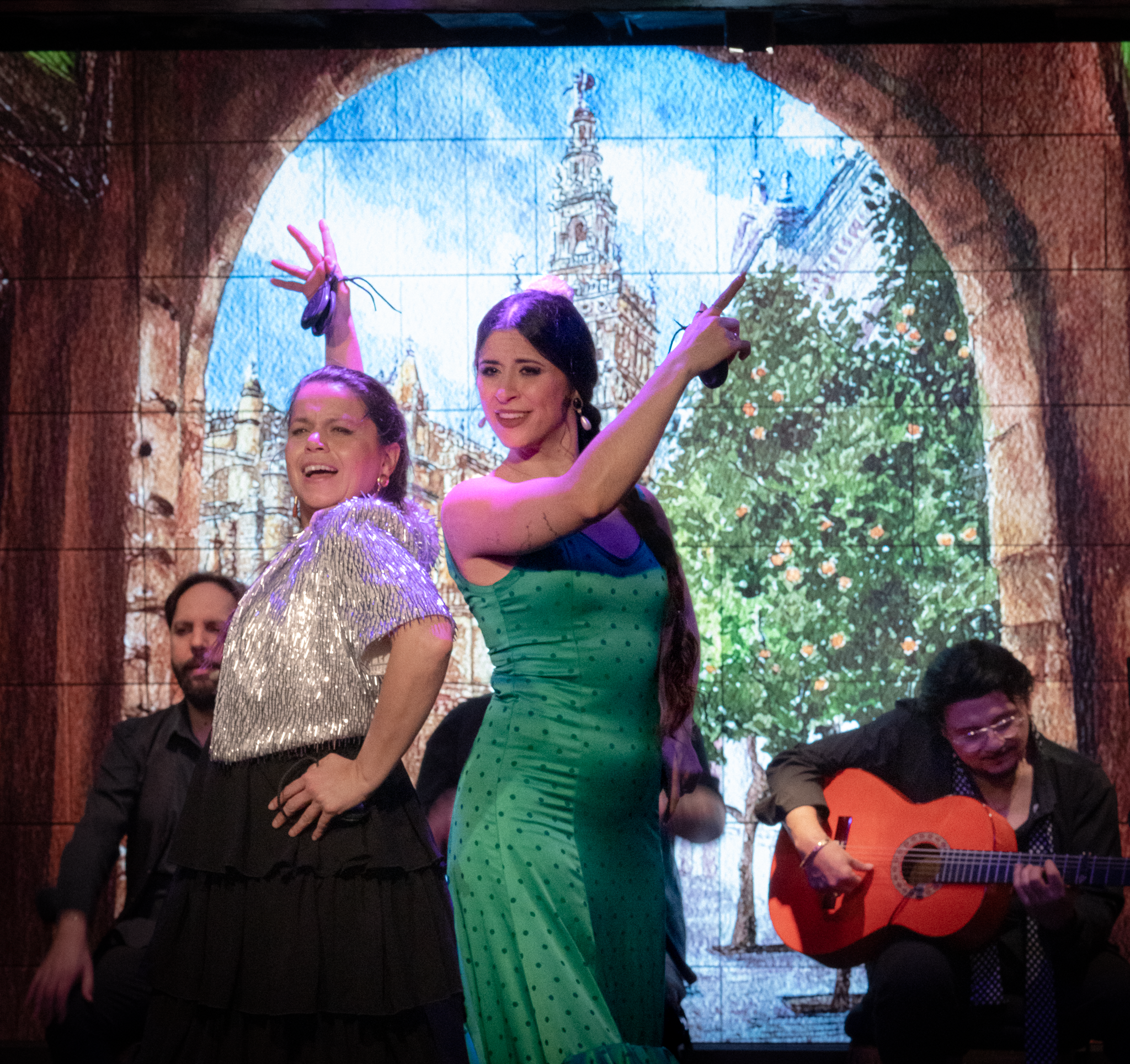
Interestingly, while the venue keeps the strength of tradition and the authenticity of the room, it also uses today's technology to strengthen the audiovisual experience. An LED screen on the stage wall enriches the backdrop and extends the visual story. It adds context, atmosphere and emotional accents as the show moves, without trying to steal the spotlight.
Maria Moreno
For sound, a modern system is there to carry clear sound evenly to every seat, not to dominate. The room already has strong natural acoustics, so the system works precisely. It keeps the guitar, vocals and zapateado in balance so every detail is heard evenly across the audience. Used with this kind of restraint, technology doesn't erase authenticity. It strengthens the audiovisual experience without feeling overdone.
Jose Escarpin
Flamenco as a Spatial Experience
What I took from this experience is that flamenco can't be separated from its space. Modern concerts often rely on technology to scale up. The tablao relies on intimacy instead. Its small scale is a strength, not a limitation.
Noelia Ruiz
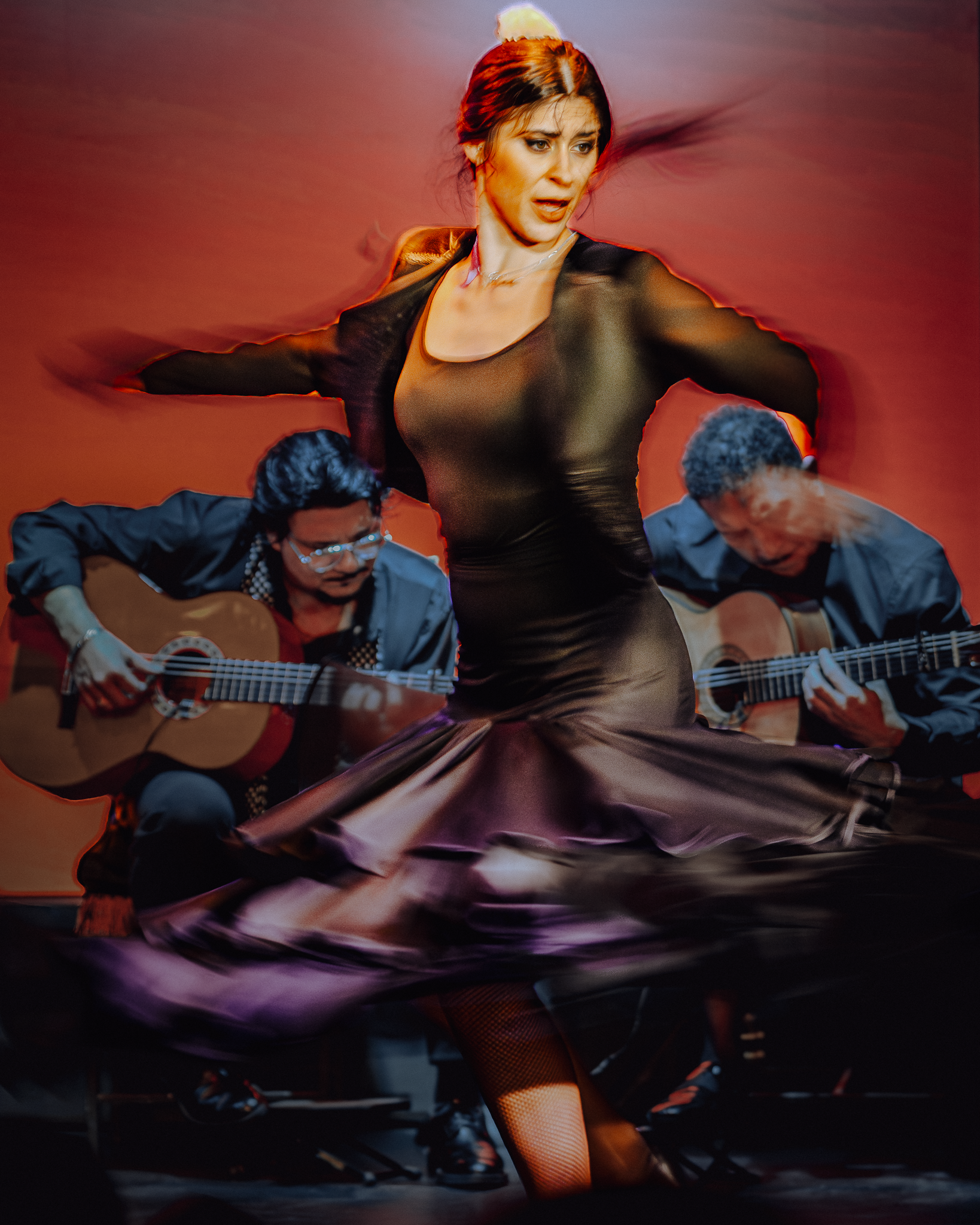
At Tablao Flamenco 1911, the connection between performers, audience and space feels very direct. There is no “filter.” You see every expression clearly, hear every sound in full, and every moment feels real.
Maria Moreno
This is more than a performance. It is a complete spatial experience, where architecture, acoustics, light and performance come together as one.
Closing
Watching flamenco here changed how I understand performance. It isn't about large scale or advanced technology. It is about how a space can fundamentally strengthen the human experience.
Jose Escarpin
In a world that is more and more digital and filtered through intermediaries, experiences like this feel rarer, and that is exactly what makes them more valuable.