Human-Centered Building Performance
Literature Reviews, Research Insights & Evidence-Based Design Frameworks
Explore literature reviews, research insights, and evidence-based design frameworks.
Discover how acoustics, lighting, thermal comfort, indoor air quality, passive design, and smart building technologies work together bridging building physics, environmental psychology, and sustainable design—to create healthier, more comfortable, and higher-performing environments for people.

Air Quality in the Cities - Air Pollution or Healthy Air

The World Health Organisation recently released its most detailed study on global pollution to date and the results are over 90% of the population lives in places where air pollution exceeds safe limits. Three million people are reportedly dying every year as a result of tiny particulates in the air – solid and liquid matter that is suspended in the air we breathe, and arrives there from a wide range of human-made sources, from car fumes and power plants.
In 2013, birds started falling from the skies in Singapore because of smog that had formed as a result of forest fires. Multiple studies have shown that birds respond to environmental change before humans can even notice it. This is why birds are invaluable indicators of the health of our environment. Everyone who is familiar with the story of the canary in the coal mine will know that when birds begin to disappear there’s something nasty in the air.
Ozone, a gas that occurs in nature, is also produced by human activities, including by power plants and cars. A layer of ozone in the upper atmosphere protects the Earth from the harmful ultraviolet rays of the sun. But ground-level ozone is hazardous and is the main pollutant in smog.

To examine the relationship between bird abundance and air pollution, the researchers used models that combined bird observations from the Cornell Lab of Ornithology’s eBird program with ground-level pollution data and existing regulations. They tracked monthly changes in bird abundance, air quality, and regulation status for 3,214 U.S. counties over a span of 15 years.
The team focused on a regulation called the NOx (nitrogen oxide) Budget Trading Program, which was implemented by the U.S. Environmental Protection Agency to protect human health by limiting summertime emissions of ozone precursors from large industrial sources.
The findings suggest that ozone pollution is most detrimental to the small migratory birds – such as sparrows, warblers, and finches – that make up 86% of all North American land-bird species. Ozone pollution directly harms birds by damaging their respiratory systems and indirectly harms their food sources.
“Not only can ozone cause direct physical damage to birds, but it also can compromise plant health and reduce numbers of the insects that birds consume,” said study co-author Amanda Rodewald, Garvin Professor of Ornithology in the Department of Natural Resources and the Environment in the College of Agriculture and Life Sciences, and director of the Center for Avian Population Studies at the Cornell Lab of Ornithology.

“Not surprisingly,” Rodewald said, “birds that cannot access high-quality habitat or food resources are less likely to survive or reproduce successfully. The good news here is that environmental policies intended to protect human health return important benefits for birds too.”
Last year, a separate study by the Cornell Lab of Ornithology showed that North American bird populations have declined by nearly 3 billion birds since 1970. This new study shows that without the regulations and ozone-reduction efforts of the Clean Air Act, the loss of birdlife may have been 1.5 billion birds more.
What should we do?
Reduce the source of air pollution because of combustion such as reduce the number of trips you take in your car, reduce building combustion equipment, avoid burning leaves, trash, and other materials. Reduce construction or production activity air pollution. Reduce source of air pollution because of HVAC by banning the production of CFC by 2010 dan HCFC by 2030 globally.

ALTA Integra is a multi-discipline building physics engineer designer such as acoustics sound, lights, thermal, air quality, and etc. Research agreed that the built environment is affecting the sensor, emotion, behavior, and biology of humans and other living objects. Our mission is to create a greener, healthier, beauty and comfort to lives in.
#wildlife #human #health #people #city #airpollution #airquality #design

The evolution of Architecture’s Beauty and Science philosophy is by self-learning from its own history
Hegel's (1826) theory that architecture is the Absolute Spirit expresses cognitive content as an aspect of organizing the natural environment. As with Architecture History in general, Hegel offers a progressive account of architectural history, wherein successive stages the Symbolic, the Classical, and the Romantic periods bring increasing freedom among architectural objects from symbolism and purpose and enhanced expression of the Absolute Spirit.
Symbolic Architecture is where the shape of the architecture is trying to free itself from its nature, as Aristotle (384 BC) said that architecture form is pursuing the holiest picture of biological explorations as the “total form” of the animal. The paradigm example of Symbolic Architecture is Sphinx which might symbolize the holiest form of animal and the Pyramid that functions more as a symbol of the everlasting home for their king which regards as a son of God.

Sphinx and Pyramid is the paradigm example of Symbolic Architecture
Classical Architecture is a harmonious shape between form and function, the architecture is made from wood, stone, and marble. The architecture design and build with a purpose. The purpose of the temple mainly concentrated on the naos, the "dwelling" of the cult statue. A famous example of Classical Architecture is the Greek Temple. The elaboration of the temple's external aspects served to stress the dignity of the naos. Similar to the Pyramid the interior part of the architecture is remark as a sacred place.

An image of Greek temple made from stone and mud
Romantic Architecture philosophy is born after Christianity, so the interior function as a collective place for people to celebrate or worship. The architecture concept of beauty is beyond functionality with decorative ornament and stained glasses due to the development of material process technology and architecture science. This is true even of the Gothic, which Hegel takes as an ultimate (if qualified) success in the history of architecture for its metaphorical communication of spirit.
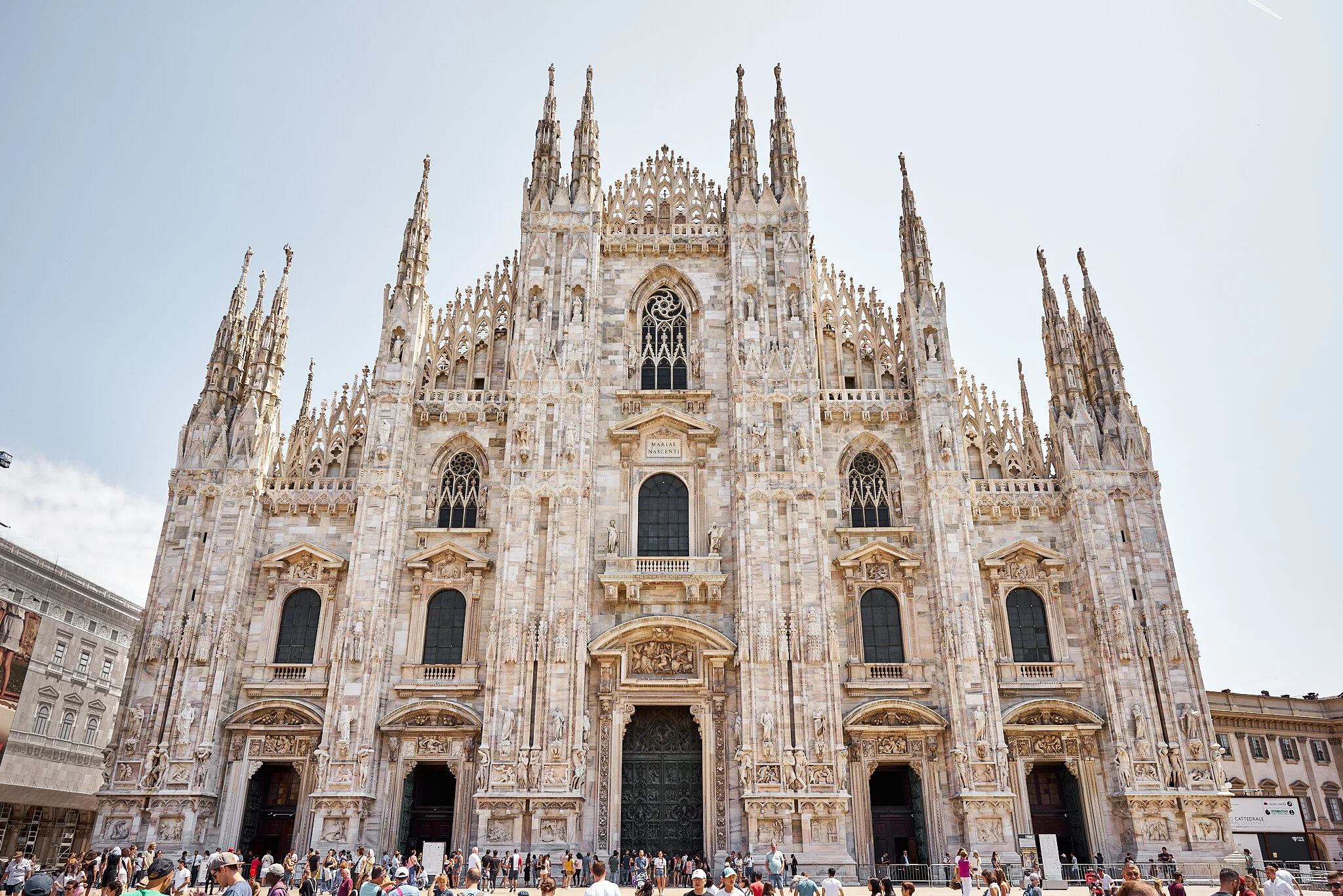
Along with the material technology and architecture science - Gothic Architecture is the enhanced expression of the Absolute Spirit
After Hegel's theory about Romantic Architecture which is the time when he lived, below are some thoughts from modern Architecture philosophers.
Merleau-Ponty (1945) that our existence in the world is best understood through ways it is shaped by the bodily experience of our surroundings. That bodily experience is relative to what appears in our visual field, to our tactile and kinesthetic engagement (hence to our position and motion), and to who we are as individuals and group members.
Graham (2012), the central problem of architectural aesthetics is to account for architectural meaning and value while embracing a synthesis of artistic value and utility (“engineering”) value.
J. Robinson (2012) offers an architectural application: our experience of the built environment shapes our appreciation of, and abilities to negotiate our surroundings.
ALTA Integra believes that smart and strategic integration of Architectural Building Physics knowledge such as Acoustic, Lighting, Thermal, Air Quality, and other disciplines into the built environment will make a big impact in our future history.

Modern architecture is to find the optimal blend of purpose, art and engineering
#philosophy #art #history #human #architecture #interior #science #engineering