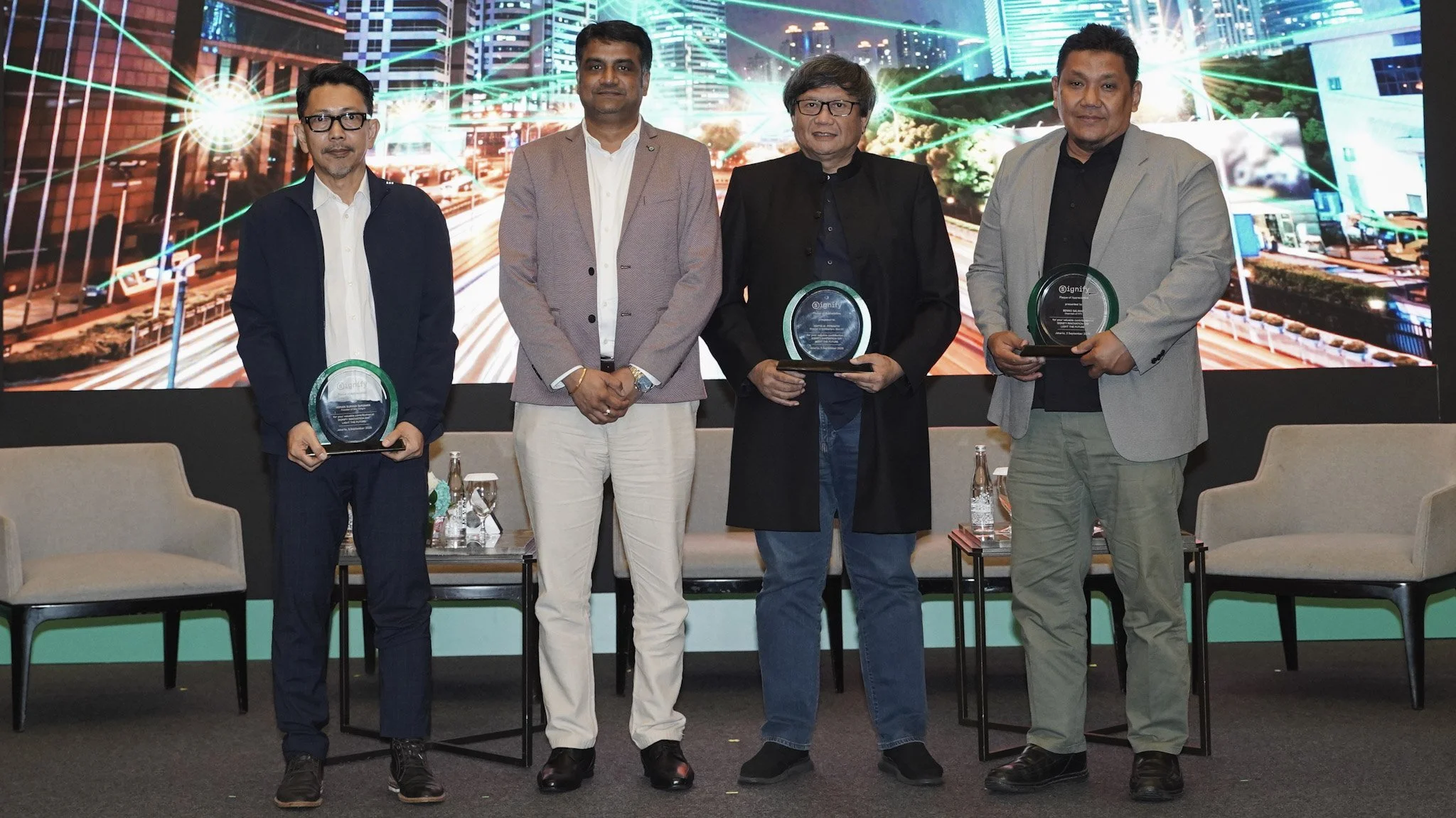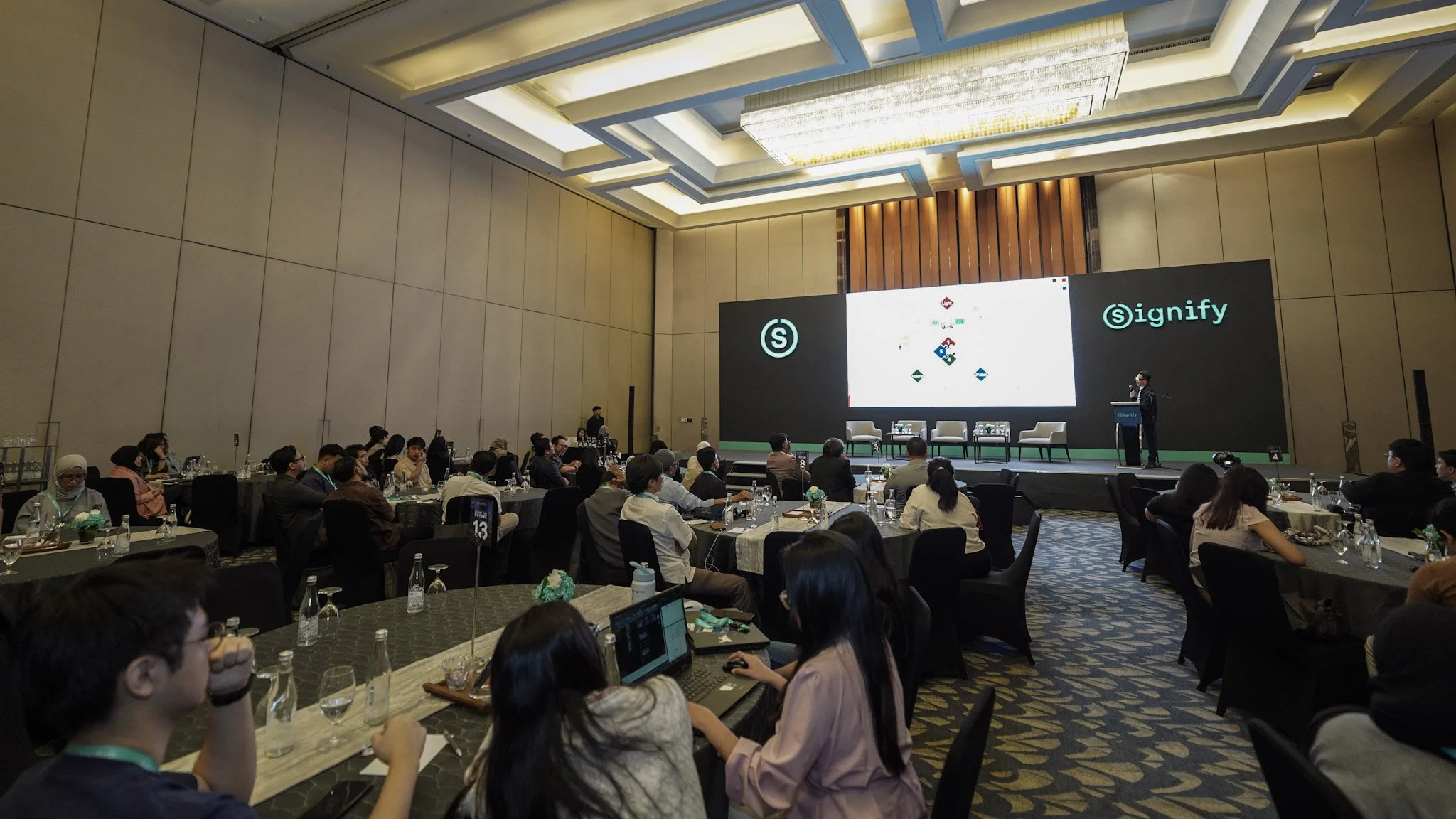
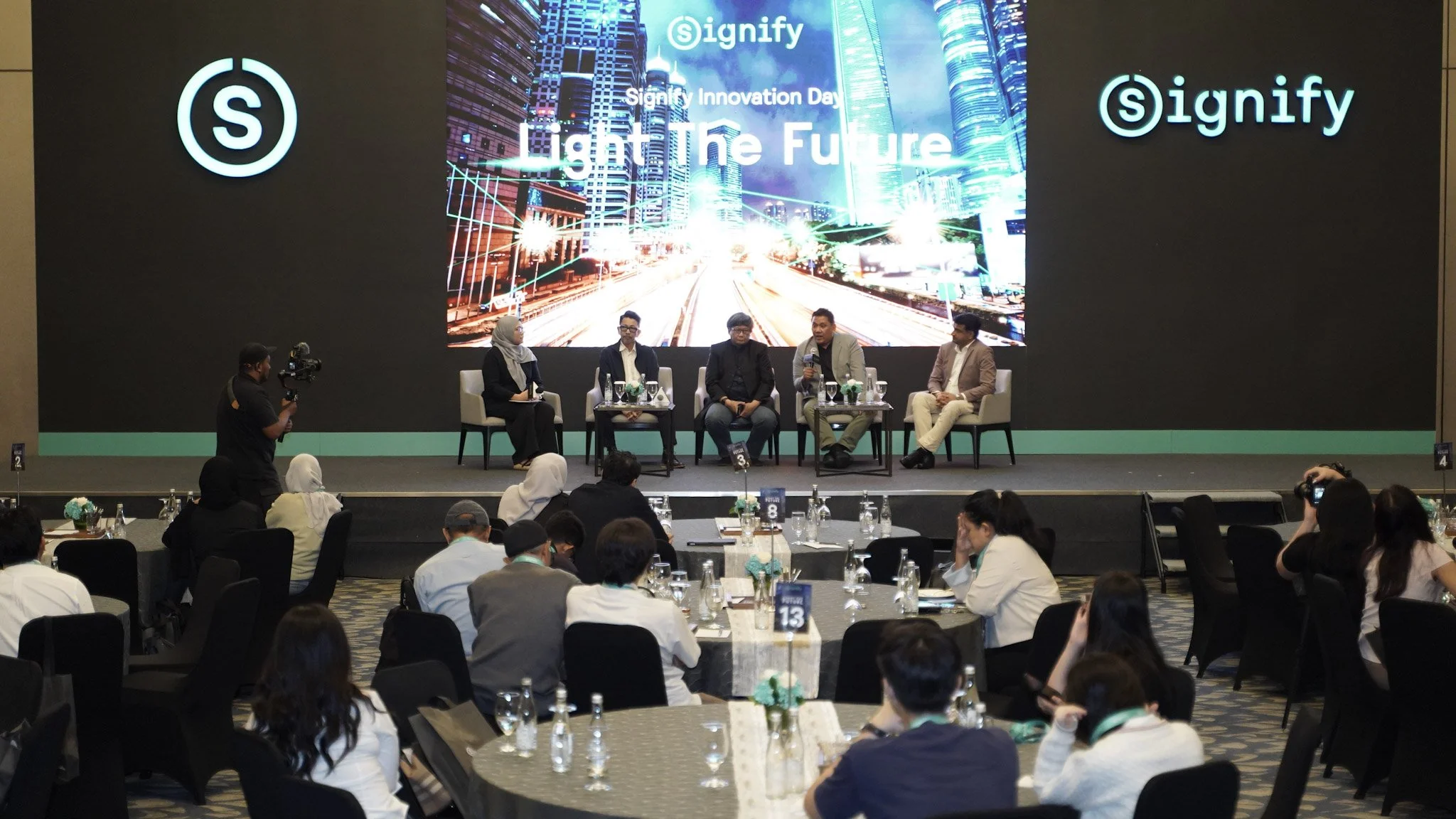
Lighting is often experienced visually, but its impact on buildings reaches far beyond illumination. In contemporary sustainable design, lighting sits at the intersection of energy performance, visual comfort, user experience, operational control, and architectural intent. This was the central theme of Signify Innovation Day - Light the Future, held on 3 September 2026 at Sheraton Grand Jakarta Gandaria City, South Jakarta, under the message “Enabling Sustainable Building Performance in Indonesia.”
The event brought together architects, lighting designers, interior designers, MEP consultants, and other industry professionals to discuss how lighting can support the advancement of sustainable building architecture and urban infrastructure in Indonesia. The program opened with remarks from Shishir Bansal, Head of Specification Sales at Signify Indonesia, followed by a series of presentations connecting building performance, architecture, and urban lighting.
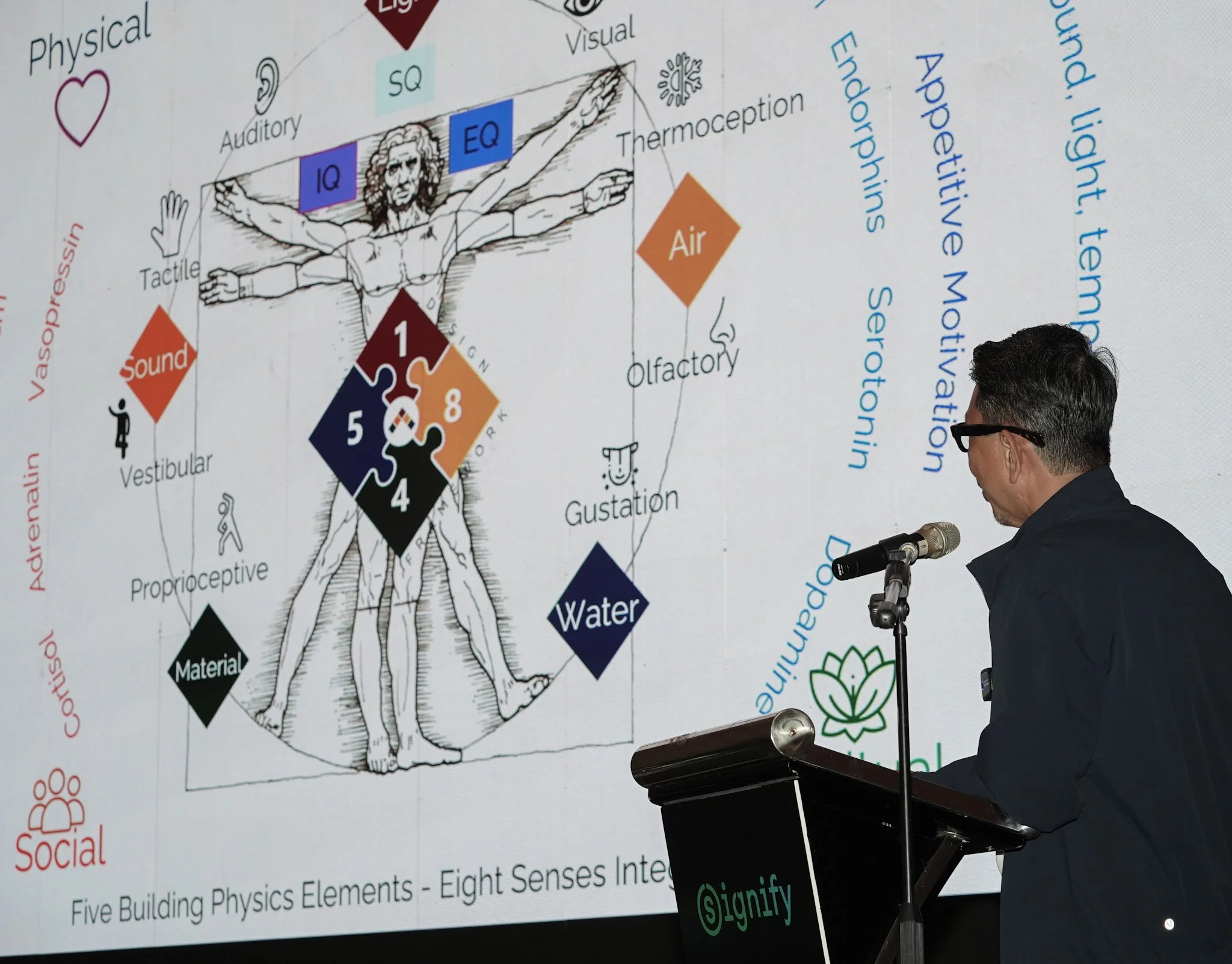
I had the opportunity to participate as a keynote speaker representing ALTA Integra, with a presentation titled “Enabling Sustainable Building Performance in Indonesia: Lighting Role in LEED Certification.” As the first technical presentation in the program, the session explored how lighting can support the performance conversation in green building practice, especially when design teams look beyond equipment selection and begin to consider lighting as part of an integrated building strategy.
In sustainability frameworks such as LEED, lighting should not be treated as a standalone technical item. It influences energy demand, visual quality, controllability, user comfort, and the relationship between daylight and artificial lighting. A well-considered lighting strategy can support better operational outcomes, but only when it is coordinated with the building’s architecture, interior functions, facade response, controls strategy, commissioning process, and long-term maintenance plan.
This is especially relevant in Indonesia, where new commercial, institutional, hospitality, and public-space projects increasingly need to respond to both environmental responsibility and user experience. Lighting has a role in that conversation because it affects how people read, occupy, navigate, and experience a space. At the same time, it also interacts with energy use, daylight availability, operational scheduling, and maintenance planning.
Following my session, Aditya W. Fitriawan, Director of Architecture at Alien DC, shared perspectives on sustainable architecture and the future of building and public-space design in Indonesia. Benno Salinas, Chairman of HTII, continued the discussion through the lens of smarter, more liveable, and more engaging urban spaces. Together, these perspectives showed that sustainable building performance is not created by a single discipline. It requires alignment between the owner’s goals, design intent, engineering decisions, product specification, installation quality, and operational behavior.
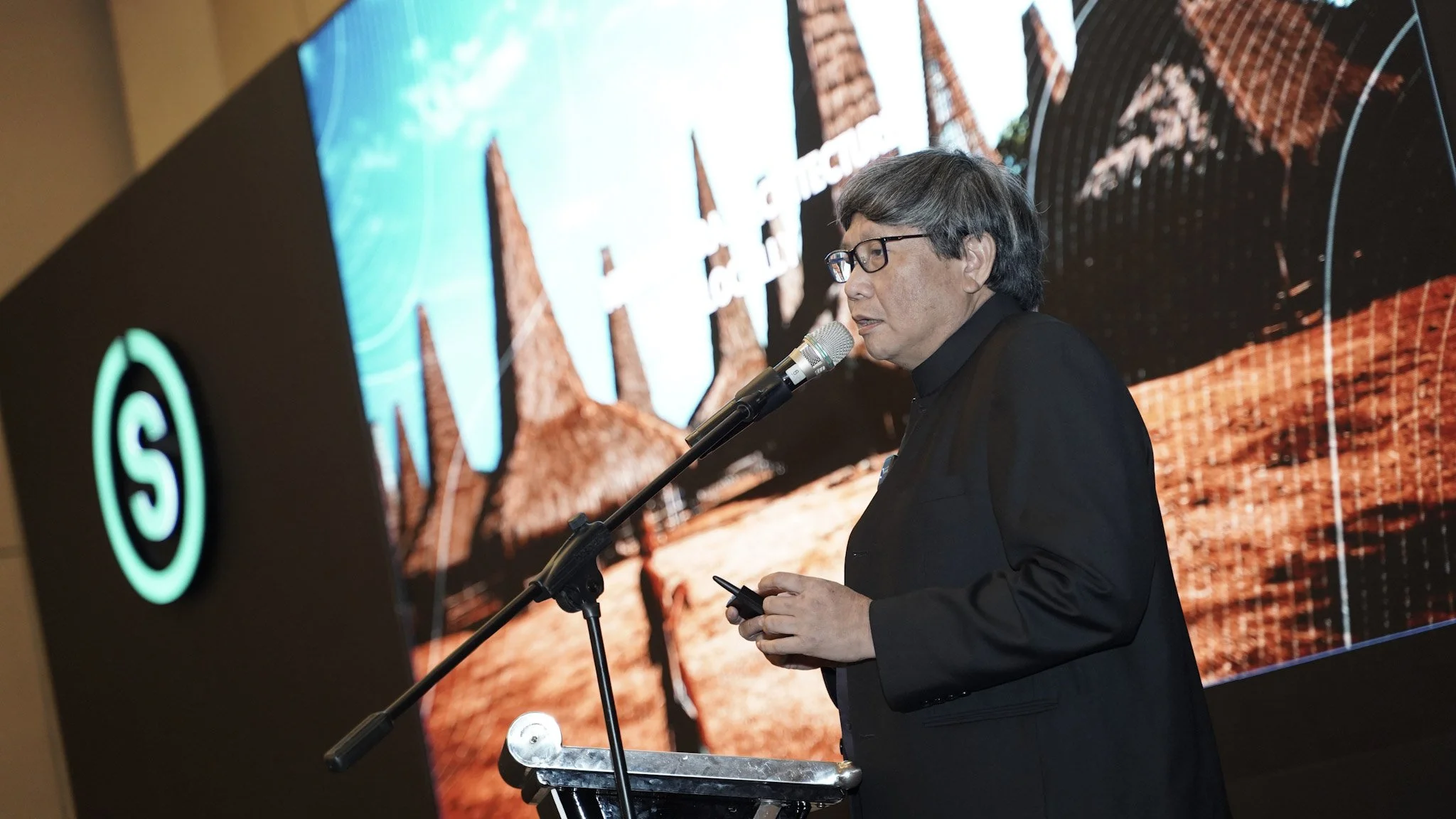
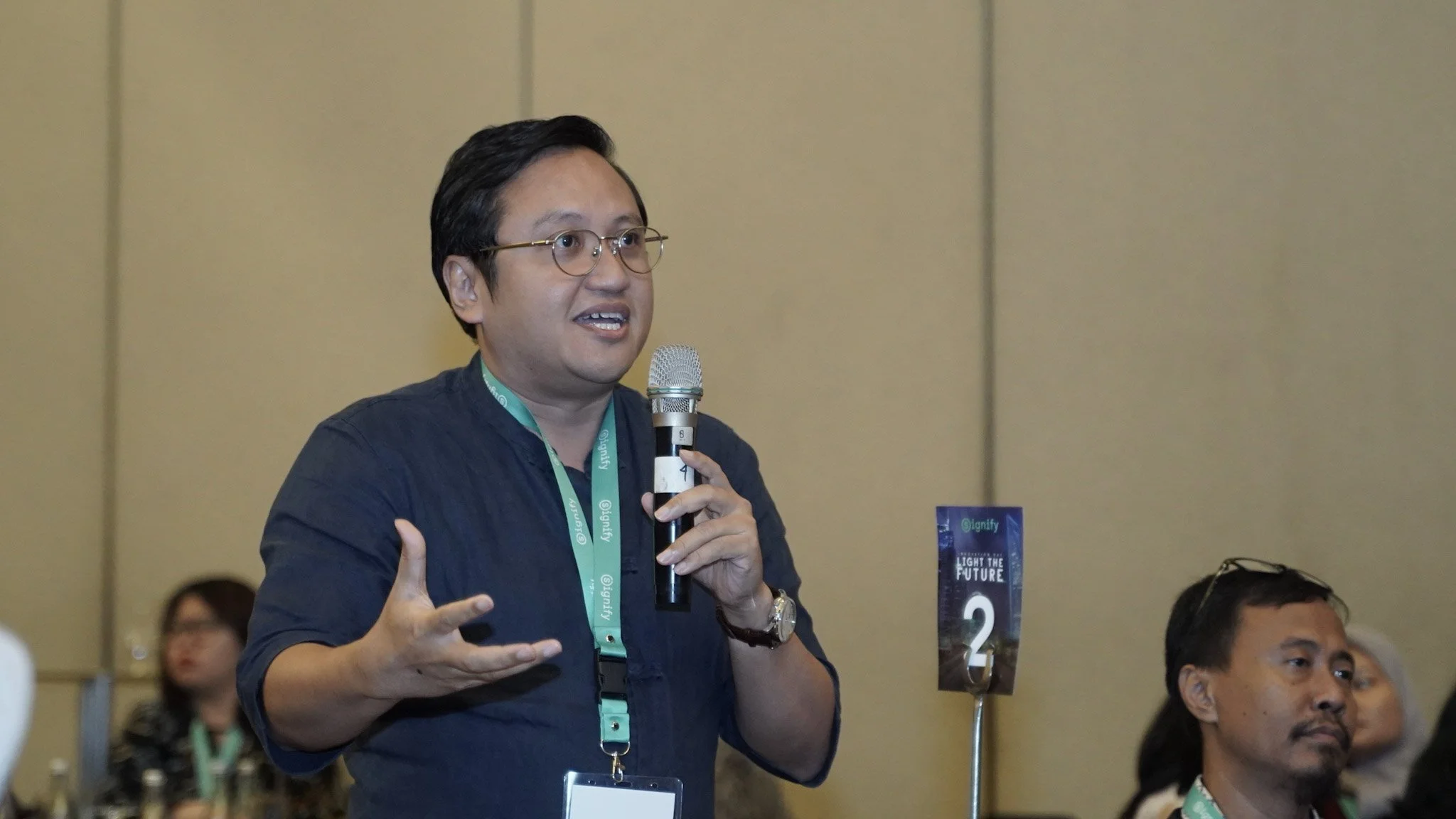
The interactive Q&A session reinforced this point. Discussions around sustainable buildings in Indonesia increasingly need to move from general aspiration into measurable, coordinated, and context-sensitive implementation. For lighting, that means asking better questions: How does the lighting concept support the user’s actual activities? How does it work with daylight availability? How flexible is the control system? How will the system be commissioned, operated, and maintained? How can design decisions support both energy responsibility and human comfort?
The event also included a demonstration of Signify’s innovative lighting technologies, giving participants the opportunity to connect strategic discussion with practical solutions. For practitioners, this bridge between concept and technology is important. Product innovation becomes most useful when it is connected to a clear performance brief, a disciplined design process, and a realistic understanding of how buildings are used over time.
For me, the key takeaway from Signify Innovation Day was that lighting has an important role in shaping the next chapter of sustainable buildings in Indonesia. It is not only about efficiency, nor only about visual expression. It is about using light as part of a more intelligent, responsive, and human-centered building environment.
As Indonesia continues to develop new buildings and public spaces, the conversation around lighting should continue to mature. The goal is not simply to install advanced systems, but to design lighting environments that are purposeful, measurable where needed, maintainable over time, and aligned with the real needs of people and buildings.
I appreciate Signify Indonesia for convening this professional forum and for creating a space where building-performance, architecture, and urban-design perspectives could meet in one discussion. Events like this help strengthen the industry conversation and encourage more integrated thinking about how design and technology can support a more sustainable built environment.