Human-Centered Building Performance
Literature Reviews, Research Insights & Evidence-Based Design Frameworks
Explore literature reviews, research insights, and evidence-based design frameworks.
Discover how acoustics, lighting, thermal comfort, indoor air quality, passive design, and smart building technologies work together bridging building physics, environmental psychology, and sustainable design—to create healthier, more comfortable, and higher-performing environments for people.

Air Quality in the Cities - Air Pollution or Healthy Air

The World Health Organisation recently released its most detailed study on global pollution to date and the results are over 90% of the population lives in places where air pollution exceeds safe limits. Three million people are reportedly dying every year as a result of tiny particulates in the air – solid and liquid matter that is suspended in the air we breathe, and arrives there from a wide range of human-made sources, from car fumes and power plants.
In 2013, birds started falling from the skies in Singapore because of smog that had formed as a result of forest fires. Multiple studies have shown that birds respond to environmental change before humans can even notice it. This is why birds are invaluable indicators of the health of our environment. Everyone who is familiar with the story of the canary in the coal mine will know that when birds begin to disappear there’s something nasty in the air.
Ozone, a gas that occurs in nature, is also produced by human activities, including by power plants and cars. A layer of ozone in the upper atmosphere protects the Earth from the harmful ultraviolet rays of the sun. But ground-level ozone is hazardous and is the main pollutant in smog.

To examine the relationship between bird abundance and air pollution, the researchers used models that combined bird observations from the Cornell Lab of Ornithology’s eBird program with ground-level pollution data and existing regulations. They tracked monthly changes in bird abundance, air quality, and regulation status for 3,214 U.S. counties over a span of 15 years.
The team focused on a regulation called the NOx (nitrogen oxide) Budget Trading Program, which was implemented by the U.S. Environmental Protection Agency to protect human health by limiting summertime emissions of ozone precursors from large industrial sources.
The findings suggest that ozone pollution is most detrimental to the small migratory birds – such as sparrows, warblers, and finches – that make up 86% of all North American land-bird species. Ozone pollution directly harms birds by damaging their respiratory systems and indirectly harms their food sources.
“Not only can ozone cause direct physical damage to birds, but it also can compromise plant health and reduce numbers of the insects that birds consume,” said study co-author Amanda Rodewald, Garvin Professor of Ornithology in the Department of Natural Resources and the Environment in the College of Agriculture and Life Sciences, and director of the Center for Avian Population Studies at the Cornell Lab of Ornithology.

“Not surprisingly,” Rodewald said, “birds that cannot access high-quality habitat or food resources are less likely to survive or reproduce successfully. The good news here is that environmental policies intended to protect human health return important benefits for birds too.”
Last year, a separate study by the Cornell Lab of Ornithology showed that North American bird populations have declined by nearly 3 billion birds since 1970. This new study shows that without the regulations and ozone-reduction efforts of the Clean Air Act, the loss of birdlife may have been 1.5 billion birds more.
What should we do?
Reduce the source of air pollution because of combustion such as reduce the number of trips you take in your car, reduce building combustion equipment, avoid burning leaves, trash, and other materials. Reduce construction or production activity air pollution. Reduce source of air pollution because of HVAC by banning the production of CFC by 2010 dan HCFC by 2030 globally.

ALTA Integra is a multi-discipline building physics engineer designer such as acoustics sound, lights, thermal, air quality, and etc. Research agreed that the built environment is affecting the sensor, emotion, behavior, and biology of humans and other living objects. Our mission is to create a greener, healthier, beauty and comfort to lives in.
#wildlife #human #health #people #city #airpollution #airquality #design

Energy in the Cities - Global Warming - Climate Change - Birds Migration

Due to global warming, bird migrate two days earlier each decade
Similar to light pollution, a study suggests that rising temperatures are causing birds to migrate a little earlier each spring. Due to global warming that the journey home is shifting forward by a little less than two days each decade. That doesn’t sound like much. But if we calculate over 5 decade multiply by hundreds of migrating species all over the country. In other words, climate change is causing a noticeable, gradual, shift in one of nature’s grandest natural phenomena.

Due to global warming food availability is mismatch
An earlier bird migration due to global warming does not synch with the growth of new plants or the availability of food. Global Warming, Climate change might be affecting the timing of spring vegetation blooms or the abundance of insects and other food sources—factors that can strongly affect the survival of migrating birds. Besides food availability, global warming is like to impact bird migration such as increased storm frequency, lowered water tables, higher drought frequency, sea-level rise, and habitat shifts.
Generally speaking, short and middle-distance migrating birds can adapt to climate changes more easily, whereas long-distance migrants are at a disadvantage. Their migration rhythm is usually more fixed and they struggle with readjustment to changing temperatures. Because of this rigidness, they suffer more from the impacts of climate change than other birds.
What should we do?
Climate change is in progress, and it is clear that it is affecting our environment, by adding to the disarrangement of ecological balances. It is not only in the interest of migratory birds but also in our own interest to protect all species on the planet earth against the impact of climate change.

Cities consume three-quarters of the world's energy and are responsible for 80% of its greenhouse gas emissions. First, reducing energy use in buildings such as HVAC and Lighting energy while promoting clean energy can slow global warming. Second, select the building location can lower building occupant transportation energy use. Finally use local building materials can decrease transportation and manufacturing energy uses.
ALTA Integra is a multi-discipline building physics engineer designer such as acoustics sound, lights, thermal, air quality, and etc. Research agreed that the built environment is affecting the sensor, emotion, behavior, and biology of humans and other living objects. Our mission is to create a greener, healthier, beauty and comfort to lives in.
#wildlife #birds #globalwarming #climatechange #architecture #greenbuilding #buildingphysics #integratingknowledge #energy #city

Lights of the City - Beautify the City or Light Pollutant threats Living Creatures

“How do birds know when to fly to the sun?
Who tells them the seasons?
How do we, humans know when it is time to move on?
As with the migrant birds, so surely with us, there is a voice within if only we would listen to it, that tells us certainly when to go forth into the unknown.”

Besides help visual sensory, lights affect birds’ behavior and biology. Light pollution has been shown to change migration and nesting time, disorient migrating birds, disrupt hormones and sleep in birds and other wildlife, and contribute to declines in insects that birds eat.
As temperatures warm and plants bloom, eager birds await the arrival of summer residents like warblers, tanagers, vireos, and grosbeaks, the sights of light are a sure sign of spring of migrating birds. Light pollution in a city causes false signs of spring of mitigating birds, nesting, and mating time. This behavior change also affecting bird reproduction quantity and quality.

Excessive Artificial Light at Night (ALAN) can also disorient birds during migration, bright lights at night on large buildings attract birds in the same way that bright porch lights attract moths. Which can result in fatal collisions. A recent study estimates that between 100 million and one billion birds are killed in the United States each year as a result of collisions with buildings. Given that most songbirds migrate at night, it’s no surprise that light pollution is a significant contributor to the harm of these birds.

Same with humans and other living creatures, light pollution will disrupt the circadian rhythm that causes disrupt biological hormones that control sleep and awake condition. Disorientation of sleep and awake condition can cause serious health problems and that lead to death.
Last but not least, light pollution contributes to declining insects that birds eat. Over a seven-year period, the bird showed a real change in their reproduction when comparing behavior near streetlights with those without lights. The change was that, on average, females near lights laid their eggs 1.5 days earlier than those in the dark, this may lead to a mismatch between the timings of peak food demand from their baby chicks and the peak timing of food that is available.
ALTA Integra is a multi-discipline building physics engineer designers such as acoustics sound, lights, thermal, air quality, and etc. Research agreed that built environment is affecting sensor, emotion, behavior and biological of human and other living object. Our mission is to create a greener, healthier, beauty and comfort to live for.
#light #lightingdesigner #lightingdesign #facadelighting #birds #nature #health #mentalhealth #lightpollution #cityscape

Sounds of the City - Between Noise Pollution and Beautiful Soundscape?
“Have you ever wonder, where have all the birds gone? ”
In Jakarta city nowadays we hardly see birds nesting, flying, or looking for food. Some research says that nature soundscape such as the sound of running water, or birds singing will improve mental health. However, due to the increasing noise pollution, the sound of birds became the sound of machinery.
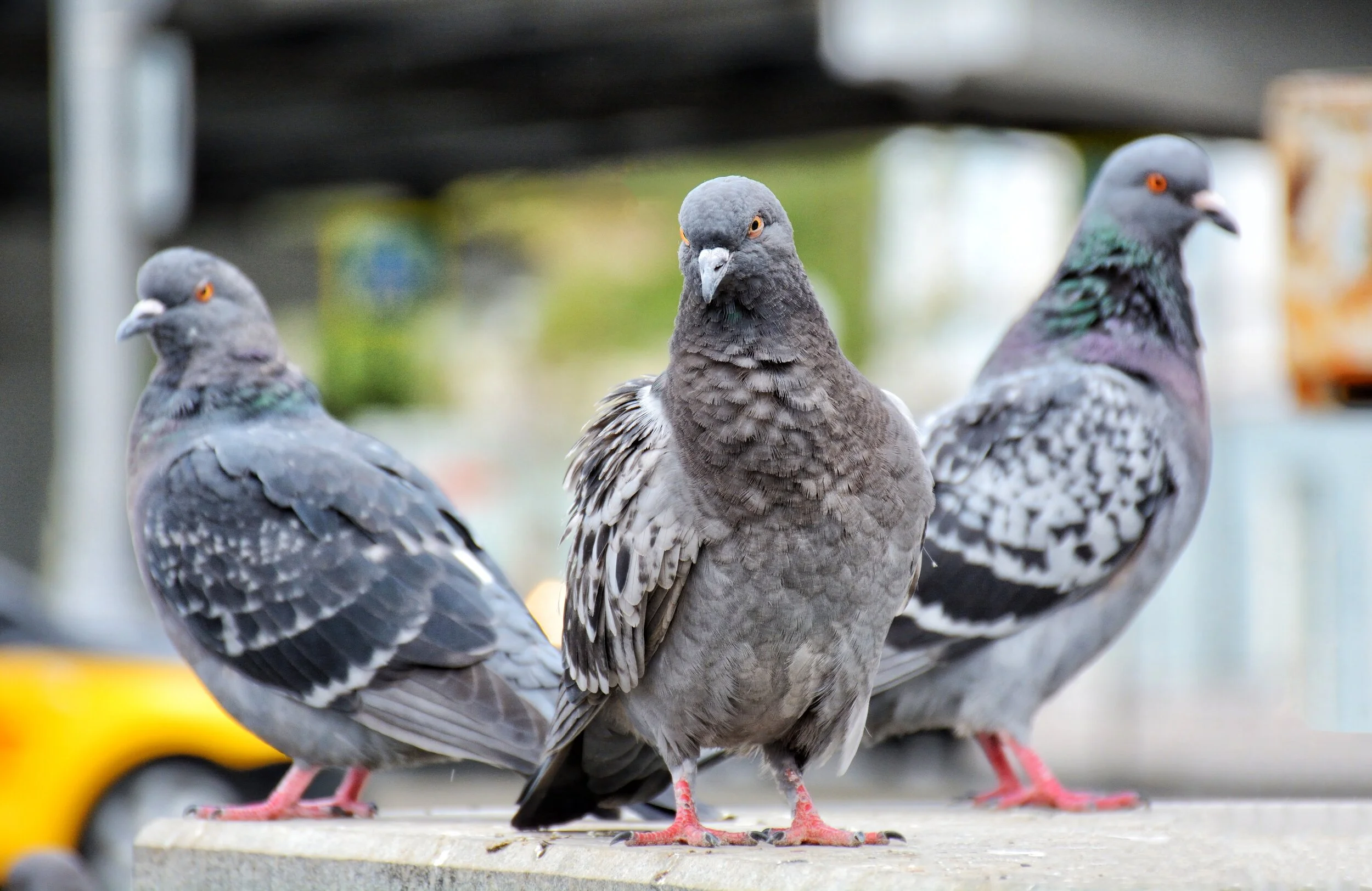
Loud sound can have a serious impact on human health as well as on ecosystems. The effects of noise pollution on birds have been a key subject of study for scientists and conservationists over the last decade. Researchers suggest that noise pollution affects their behavior, fitness, breeding, and growth, and often leads to chronic stress.
Scientists say that constant noise may form an acoustic blanket muffling the audio cues birds rely on to detect predators, competitors, and their species. Noise pollution delayed nesting for birds whose songs are at a lower frequency and thus more difficult to hear through low-frequency human noise. When considering noise pollution, results showed that birds living in forested environments tend to be more sensitive to noise than birds in open environments.
You may have noticed that many birds around us sing at different pitches or volumes in response to noise. One well-known example is Robins, which sing at quieter times of the day or night. This could be seen as an adaptation, but the problem is that this change can disrupt mating and affect breeding success in such birds.
For birds, hearing is second in importance only to vision for monitoring the world around them. Avian hearing is most sensitive to sounds from about 1 to 4 kHz, although they can hear higher and lower frequencies. No species of bird has shown sensitivity to ultrasonic frequencies (>20 kHz). Sensitivity to frequencies below 20 Hz (infrasound) has not received much attention; however, pigeons and a few other species have shown behavioral and physiological responses to these low frequencies. In general, frequency discrimination in birds is only about one-half or one-third as good it is for humans within the 1 - 4 kHz range.

A problem that birds suffer that is similar to humans is damage to the auditory receptors (hair cells) from loud noises. The sound intensity that produces damage and the amount of damage produced differ depending on the species. Birds residing in the active areas of airports might be constantly subjected to sound pressure levels that damage their hearing. Thus, to effectively disperse birds using sound, auditory alerts must be at frequencies that can be detected by the damaged auditory receptors. Although some if not all species of birds have the ability to repair damaged hair cells, continued exposure to loud noises would prevent recovery of their hearing.
ALTA Integra is a multi-discipline building physics engineer designer such as acoustics sound, lights, thermal, air quality, and etc. Research agreed that the built environment is affecting the sensor, emotion, behavior, and biology of humans and other living objects. Our mission is to create a greener, healthier, beauty and comfort to lives in.
#sounddesign #sounddesigner #soundscape #acoustics #birds #nature #health #mentalhealth #noisepollution #cityscape