Sacred Facade Lighting Design of Makassar Cathedral
Project Overview
The sacred facade lighting design for Makassar Cathedral Church was developed to enhance the nighttime identity of one of the city’s important religious landmarks while respecting the spiritual character and historical architectural presence of the church.
Rather than treating facade lighting as a purely decorative element, the project approached light as a medium for reinforcing sacred atmosphere, light as a communication medium, and urban presence after dark.
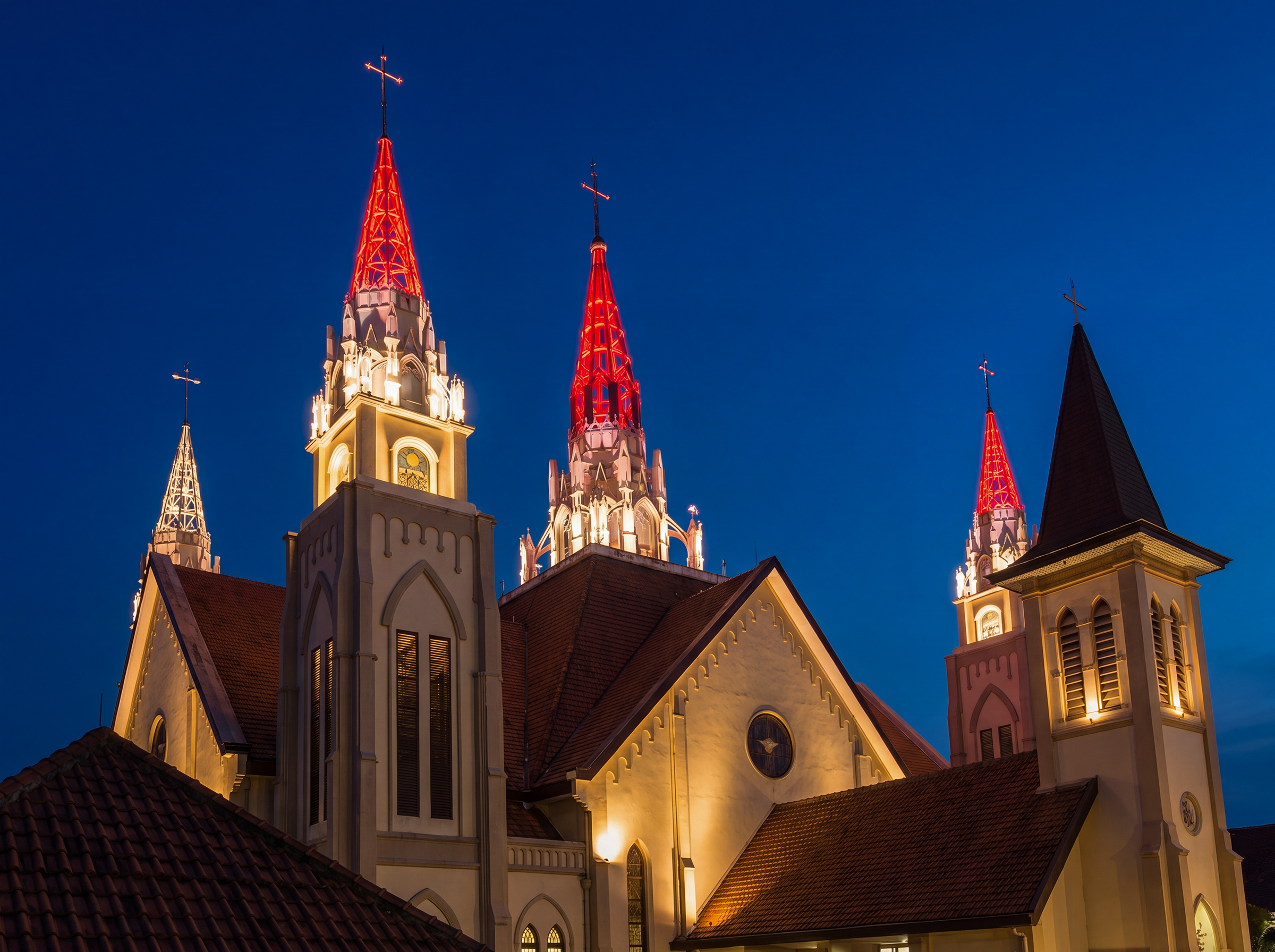
The design aimed to reveal the architectural beauty of the cathedral in a subtle and respectful manner while improving nighttime visibility, visual comfort, and contextual integration within the surrounding urban environment.
The Challenge
Religious architecture presents unique lighting challenges compared to commercial or entertainment buildings.
The facade lighting needed to:
Preserve the sacred and contemplative identity of the church
Avoid excessive brightness and visual aggression
Respect the surrounding urban environment
Maintain architectural authenticity
Enhance visibility without creating glare
Support nighttime recognition and wayfinding
In many urban environments, facade lighting can easily become overpowering, especially when influenced by commercial lighting approaches that prioritize brightness over atmosphere and architectural sensitivity.
For a cathedral church, the challenge was not to create spectacle, but to create dignity, warmth, and spiritual presence through light.
Additionally, the project had to consider the impact of artificial lighting on nearby residents, urban nighttime ambience, and environmental light pollution.
Preliminary Design Study
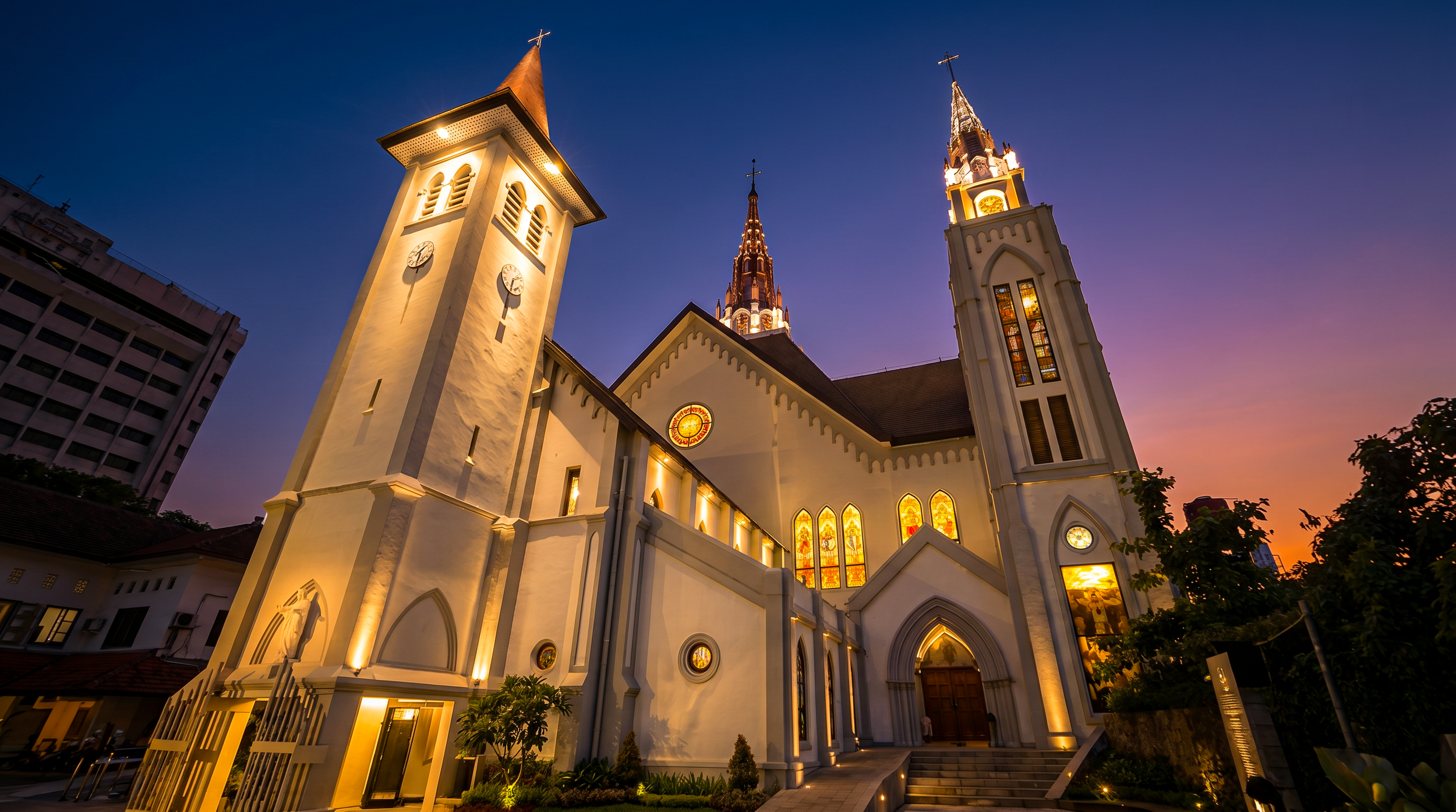
Our preliminary design study began with understanding the architectural language and spiritual significance of the cathedral itself. Instead of uniformly illuminating the entire building, the lighting composition was carefully layered to reveal:
Visual hierarchy
Sacred focal points
Architectural depth
Vertical proportion
Material texture
The lighting strategy emphasized controlled illumination and selective accentuation to preserve the calm and graceful character of the church facade. Warm color temperature selections were carefully integrated to support a welcoming and contemplative nighttime atmosphere while avoiding harsh visual contrast.
The facade was treated as an architectural canvas where light reinforces form, rhythm, and symbolism rather than overpowering the architecture itself.
Human-Centered Lighting Performance Strategy
The project adopted a human-centered lighting approach that prioritizes visual comfort, emotional perception, and environmental wellbeing. Rather than maximizing brightness levels, the design focused on creating balanced luminance and soft visual transitions that feel comfortable for pedestrians, worshippers, and the surrounding community.
The performance strategy considered:
Visual comfort at pedestrian level
Reduction of glare
Controlled luminance distribution
Night Time visual adaptation
Contextual brightness within the surrounding area
Environmental sensitivity and reduced light spill
The lighting composition was calibrated to ensure that the church remains visually prominent without contributing excessive nighttime brightness to the urban environment.
This approach supports both spiritual atmosphere and healthier nighttime environmental conditions.
Lighting Design Integration Study
The facade lighting system was developed through integration between architectural intent, lighting performance, and environmental context.
Design development included:
Architectural facade analysis
Nighttime contextual studies
Lighting hierarchy planning
Beam angle optimization
Material reflectance evaluation
Visual simulation and rendering validation
By coordinating lighting placement with the architectural composition, the design minimizes visible equipment presence while preserving the integrity of the cathedral facade during daytime conditions.
The result is a lighting system that feels architecturally integrated rather than technically imposed.
Our Lighting Design Impact
The final design establishes Makassar Cathedral Church as a dignified and recognizable nighttime landmark while preserving its sacred identity and architectural character. The facade lighting enhances the perception of depth, warmth, and spiritual presence without relying on excessive illumination or visual spectacle.
Through a contextual and performance-based design methodology, the project demonstrates how architectural lighting can support not only aesthetics, but also human experience, urban sensitivity, and environmental responsibility. The project reflects a broader design philosophy in which lighting becomes an instrument for shaping atmosphere, identity, and meaningful night-time architecture.
Consult Your Lighting Design Project
ALTA Integra is a Building Science and Technology consultancy dedicated to creating human-centered environments through evidence-based design. By studying the relationship between light, sound, space, technology, and human emotion, we help transform buildings into places that inspire wellbeing, strengthen identity, emotional support space, and dedicated for a more sustainable future.
Whether you are designing a place of worship, heritage building, hospitality destination, workplace, educational facility, or public space, our lighting consultancy services help translate design vision into meaningful visual, emotional, and environmental performance.