Keeping a hospital environment quiet during construction is part of the quality of care a hospital owes its patients.
How did we design a noise barrier to protect Pantai Indah Kapuk Hospital (RS PIK) from the construction noise of its new Mother and Child Hospital building?
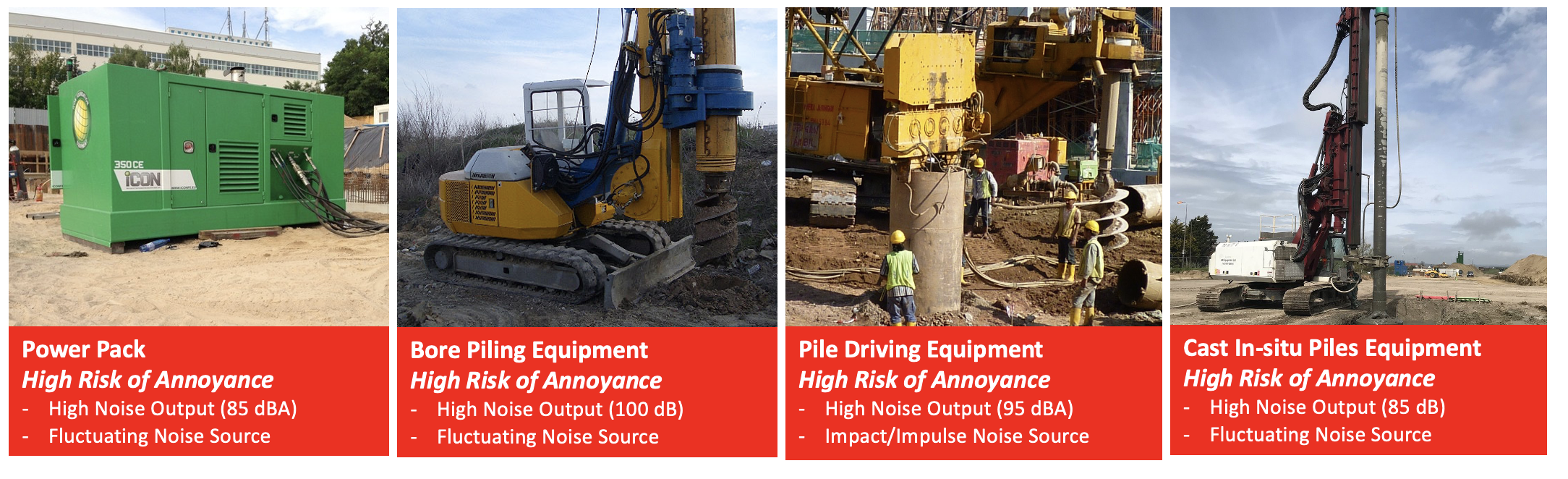
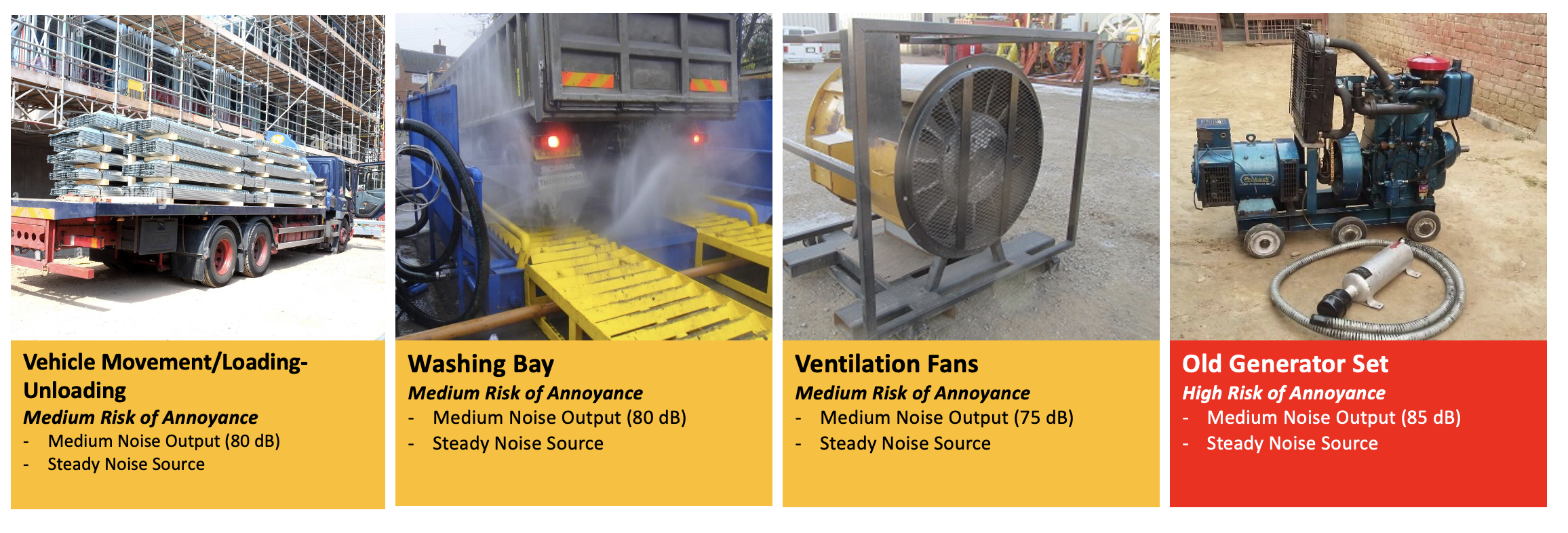
Identifying the types and levels of noise expected
First, we identified each construction activity, from cutting concrete structures and jack hammering to moving materials and debris. We then measured the noise of each activity and used the results to build a noise map.

Modeling noise to predict its impact
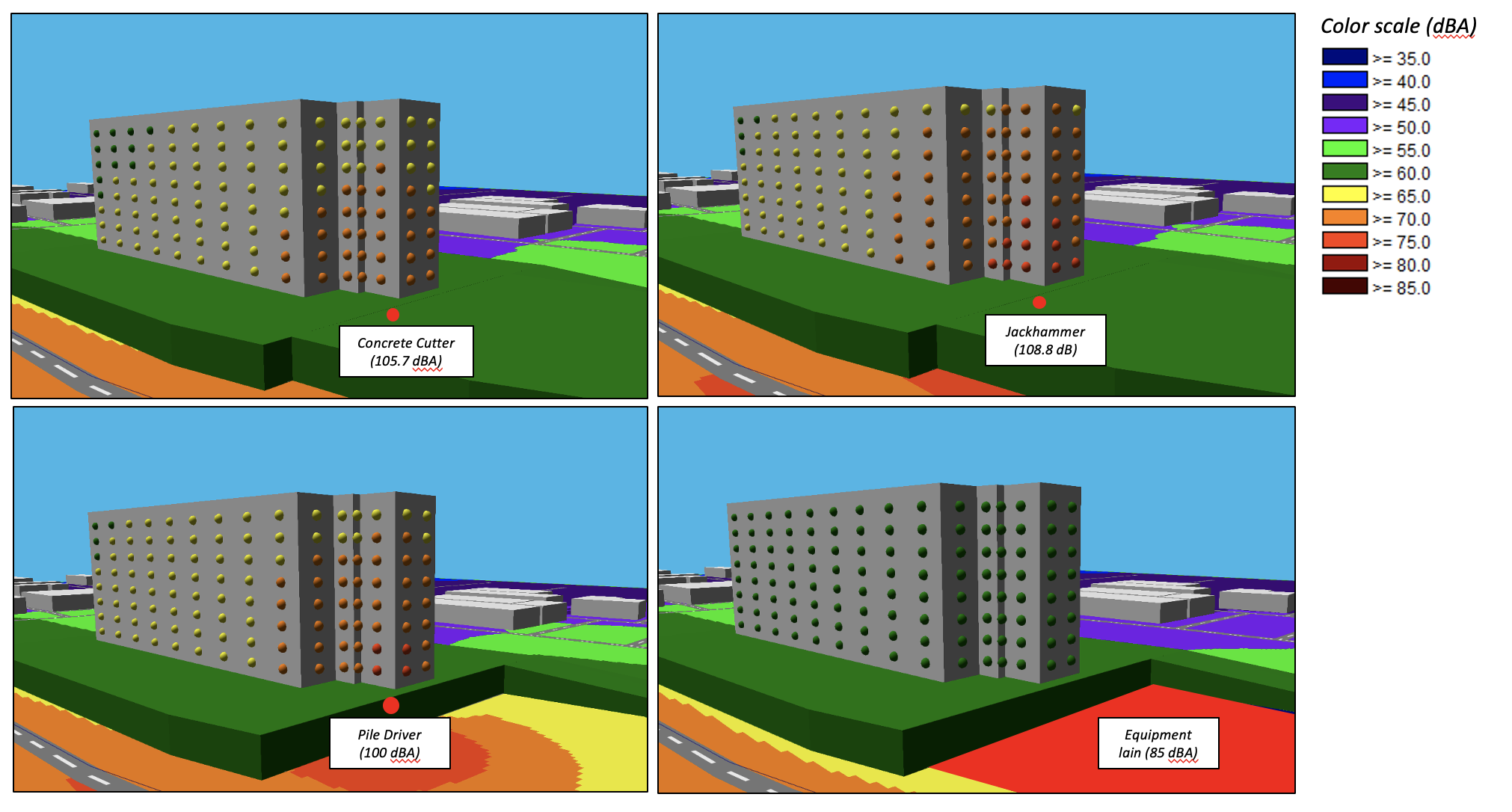
The images below show the noise modeling results for several construction activities:
Top left: concrete cutting produces 105.7 dBA from a moving source. The predicted noise levels in front of the building facade are shown as half-sphere symbols, ranging from orange for 70 dBA to dark green for 60 dBA.
Top right: predicted noise levels on the hospital building facade from jack hammer work.
Bottom left: predicted noise levels on the building facade from pile driving, with the noise source moving across the work area.
Bottom right: other general construction activities, averaging 85 dBA.
Developing several noise barrier design concepts for the best acoustic performance
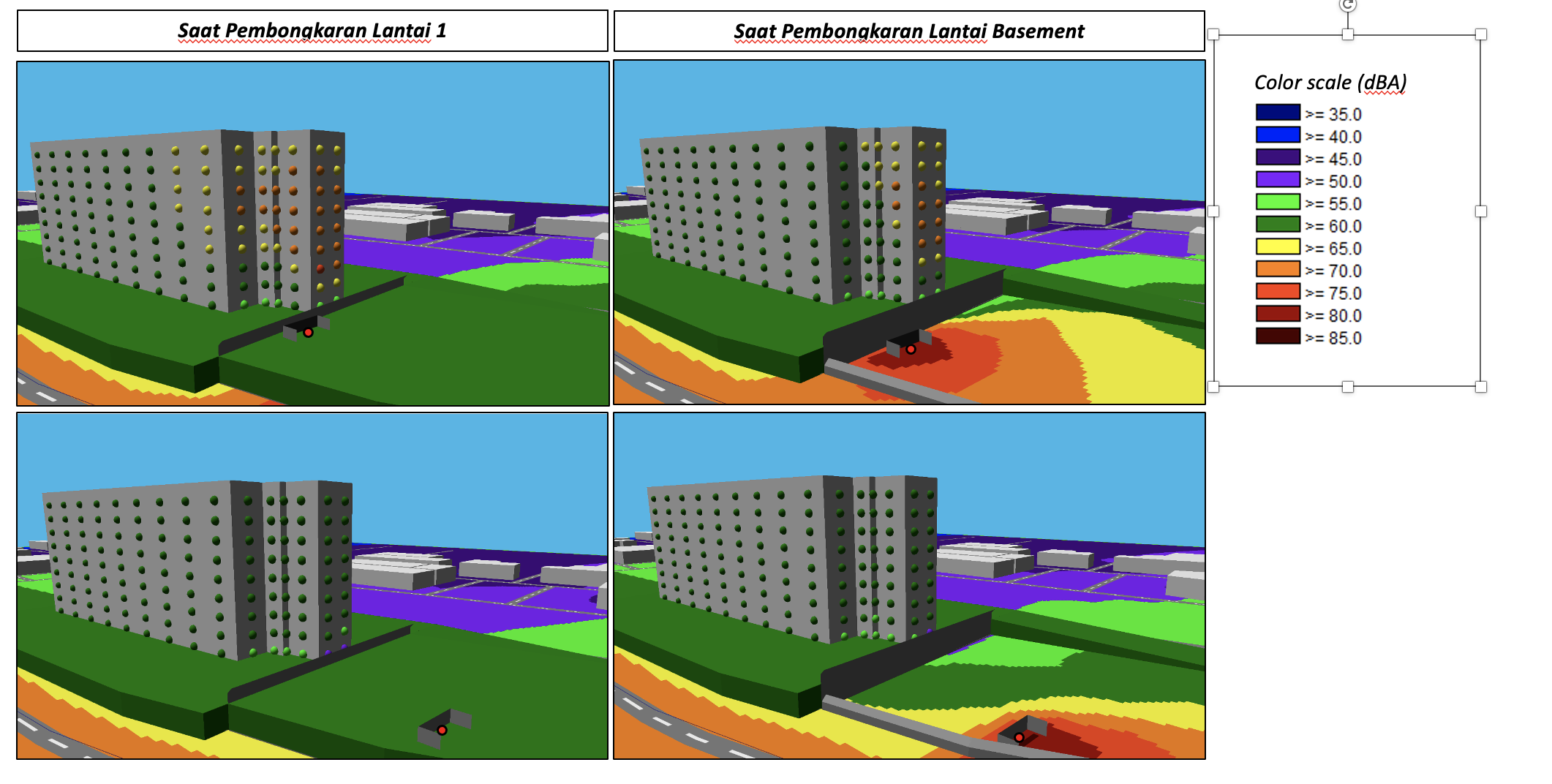
The images below show the lowest predicted noise levels on the hospital facade, achieved at the lowest noise barrier cost.
Top left: a permanent noise barrier and a portable noise barrier for jack hammering and concrete cutting at the position closest to the hospital. The facades exposed to 70 dBA serve rooms that are not noise-sensitive, such as circulation areas and storage.
Bottom left: simulation with the work at its farthest position from the hospital building. Noise at the facade surface is around 60 dBA.
Top right: noise modeling and simulation of basement slab demolition at the position closest to the building.
Bottom right: noise modeling and simulation of basement slab demolition at a position farther from the building.
Reviewing the contractor's noise barrier mock-up
Once the contractor for the parking facility demolition was appointed, they had to submit a mock-up of the noise barrier material based on our drawings.
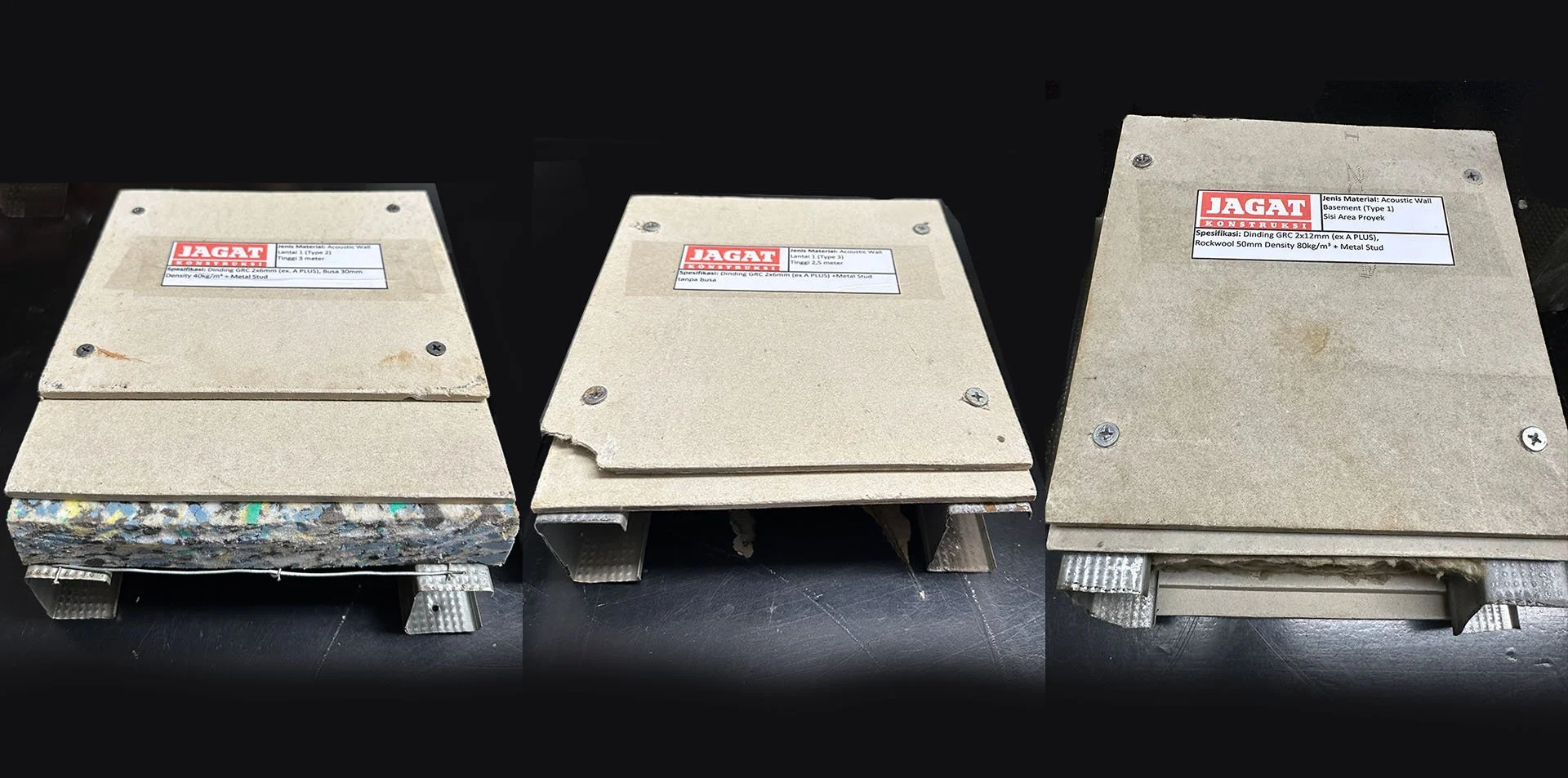
Construction in progress
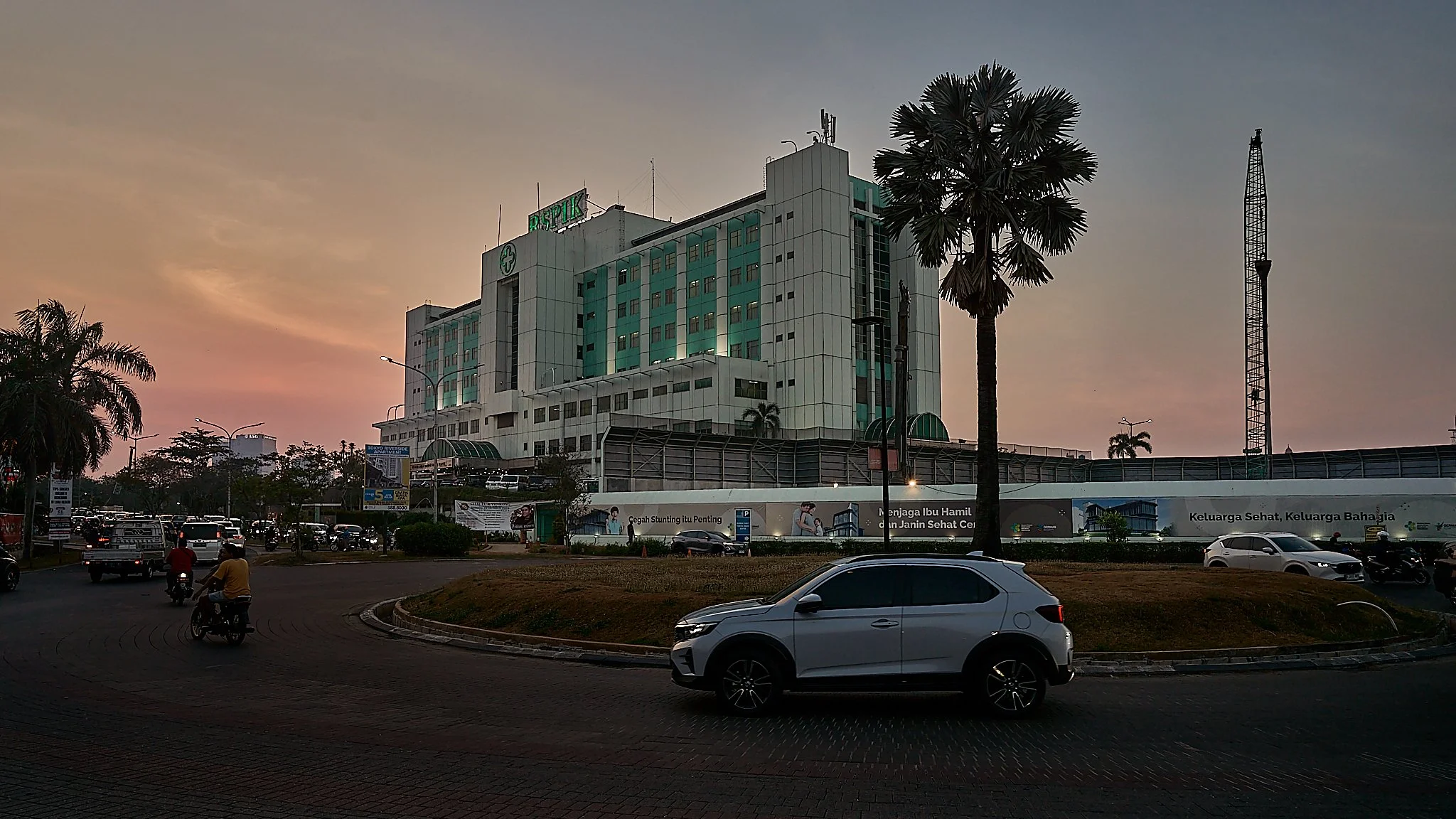
The photos below show the installed noise barrier, which let construction go ahead without disrupting the healthcare services of Pantai Indah Kapuk Hospital.
How many of us have been disturbed by construction noise, and what responsibility have project owners taken for it? Are there regulations that limit construction noise so it does not disturb other activities such as schools, offices and homes?