El Retiro Park: Urban Climate and Building Physics in Madrid
The Thermal Argument of a Park — A building-physics field observation at El Retiro and the Paseo del Prado axis, Madrid · 11 March 2026
Three systems are visible in these photographs: a demanding continental climate, architecture accumulated across four centuries, and people continuously revealing which parts of that environment perform well. El Retiro is not simply beautiful. Much of its beauty is the visible consequence of environmental engineering undertaken before the profession had today's technical vocabulary.
This is an observational reading rather than an instrumented measurement campaign. The conclusions are therefore strategic, not a substitute for project-specific modelling.
The Climate Is Not the Postcard
Madrid-Retiro's long-term climate record gives an annual mean temperature of approximately 15.0 °C, average July daily maxima of 32.1 °C, and only about 421 mm of annual precipitation. This is a constrained water budget on a continental plateau, with hot, dry summers and cold winters.
On 11 March 2026, the Retiro station recorded temperatures from 6.2 °C to 15.0 °C. Relative humidity was about 94 percent at 09:00, then fell through the day to approximately 59 percent by late afternoon. No precipitation was recorded and maximum wind speed was approximately 16.2 km/h. In the photographs, heavy coats coexist with bright sun and high cloud. This combination of low air temperature and strong short-wave solar gain explains the occupancy pattern: people choose exposed sun in March, while in July the same occupants would migrate toward canopy, colonnades and shaded edges.
The park's value proposition therefore reverses seasonally. In cool months it supplies solar access and wind shelter; in hot months it supplies shade, evapotranspiration and a cooler radiant environment. Any asset whose environmental role changes twice a year should be evaluated with seasonal scenarios rather than a single annual average.
Air Quality and the Value of Distance
Madrid's municipal air-quality bulletin for 11 March reported no exceedances of hourly or daily pollutant limits across the city network. The highest citywide daily readings were 19 micrograms per cubic metre for PM2.5 and 31 for PM10, both at Plaza Elíptica; the maximum hourly nitrogen-dioxide reading was 100 micrograms per cubic metre, also at Plaza Elíptica. These are citywide maxima, not measurements taken beside the photographed subjects, but they frame the observation responsibly.
Inside El Retiro, distance from traffic, vegetated ground and a substantial tree buffer change the lived experience of air and noise even when regional pollution remains present. The park does not create a sealed atmosphere. It creates separation, deposition surfaces, lower background noise and routes where exposure can be reduced. For development strategy, proximity to large green space is therefore both an amenity and an environmental-performance attribute.
A Gate That Became a Thermal Boundary
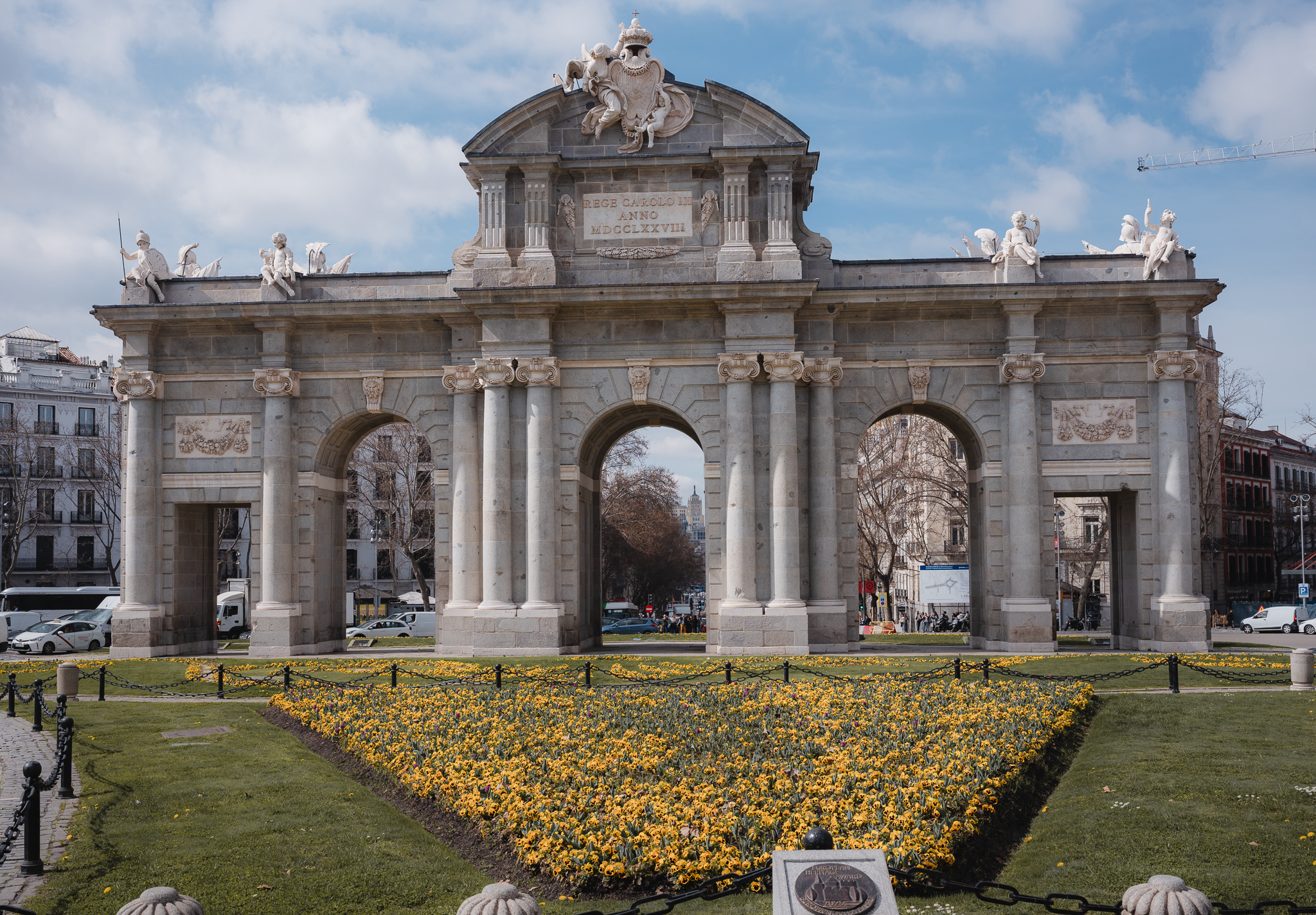
Photographs show Francesco Sabatini's monumental gate, commissioned by Charles III in the 1770s and inaugurated in 1778. Built principally in granite with pale Colmenar limestone ornament, it originally functioned as a customs gate in the wall of Philip IV: a controlled threshold between city and country.
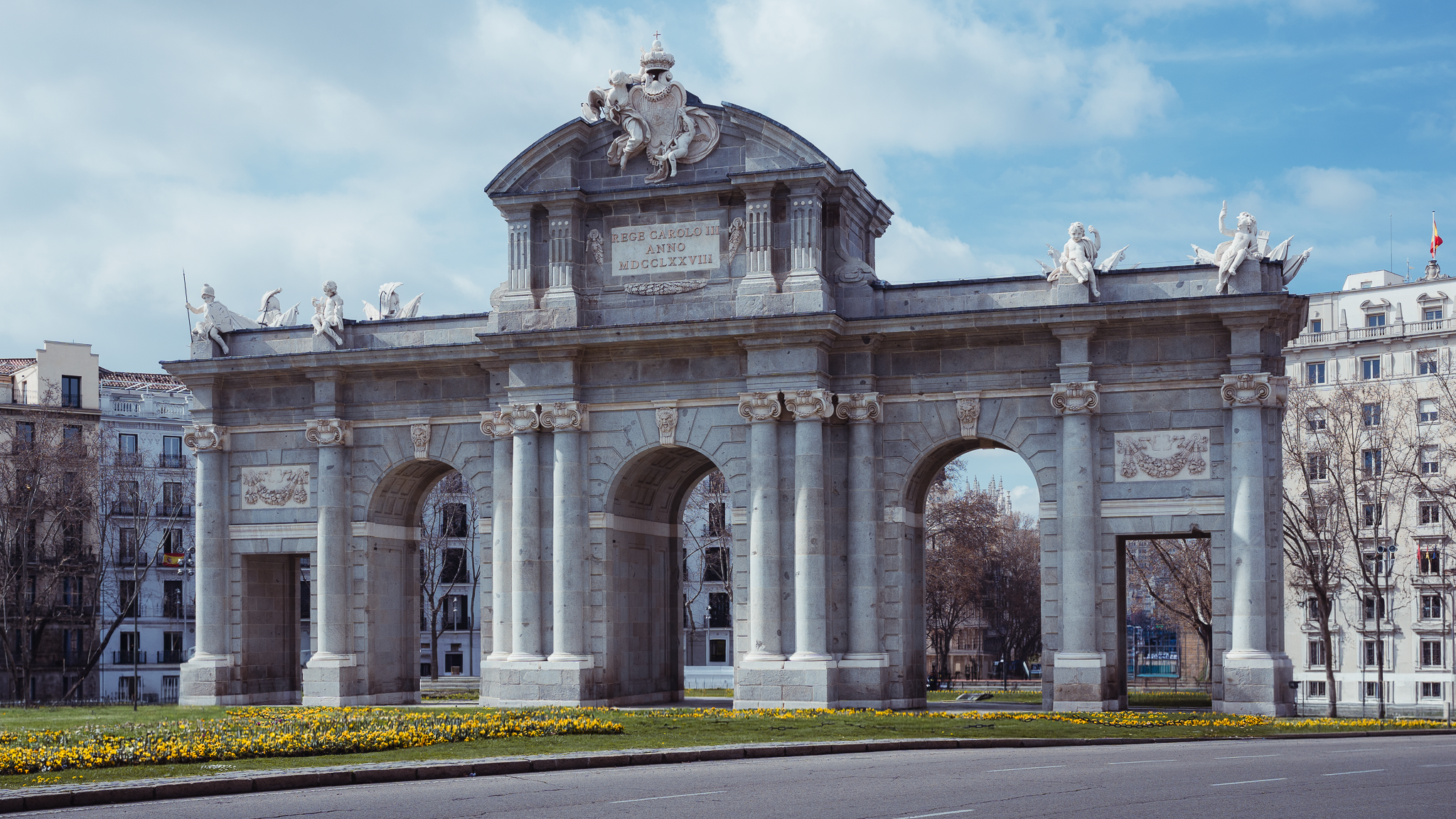
The wall has disappeared, but the threshold remains in environmental form. Arup's UHeat study of Madrid reported a difference approaching 8 °C between the hottest built-up areas and El Retiro during the hottest day examined in 2022. The study associated the hottest areas with less than 6 percent vegetation cover and the coolest with more than 70 percent.
Sabatini's gate now marks a transition from dense mineral city to a major vegetated landscape. Its massive stone, deep reveals and shaded arches also demonstrate a durable passive-design logic: thermal mass moderates rapid temperature change, while depth creates protected surfaces. In the photographs, spring flowers occupy the former line of hard fortification. Soft infrastructure has replaced a fiscal boundary without erasing the civic landmark.
A Royal Landscape Transformed into Public Infrastructure
El Retiro began in the 1630s as a royal retreat associated with Philip IV and the Count-Duke of Olivares. Its seventeenth-century landscape combined formal gardens, wooded enclosures, ponds, canals, fountains, orchards and ceremonial walks. The site was damaged during the Peninsular War, replanted under Ferdinand VII, and transferred to the municipality in 1868, when it became fully public.
Immediately west of the park, the Enlightenment programme under Charles III assembled observation, botany, art and water as an urban system. Juan de Villanueva's Royal Observatory, the Royal Botanical Garden, the building that became the Prado Museum, and Ventura Rodríguez's fountains along the Salón del Prado were conceived as parts of a civic landscape of knowledge. In 2021, UNESCO inscribed the Paseo del Prado and Buen Retiro ensemble as a Landscape of Arts and Sciences.
This history matters to current practice because it dissolves the false boundary between architecture, landscape and infrastructure. The axis was conceived as a coordinated environmental and cultural investment, not as isolated objects.
Water as an Engineering Decision
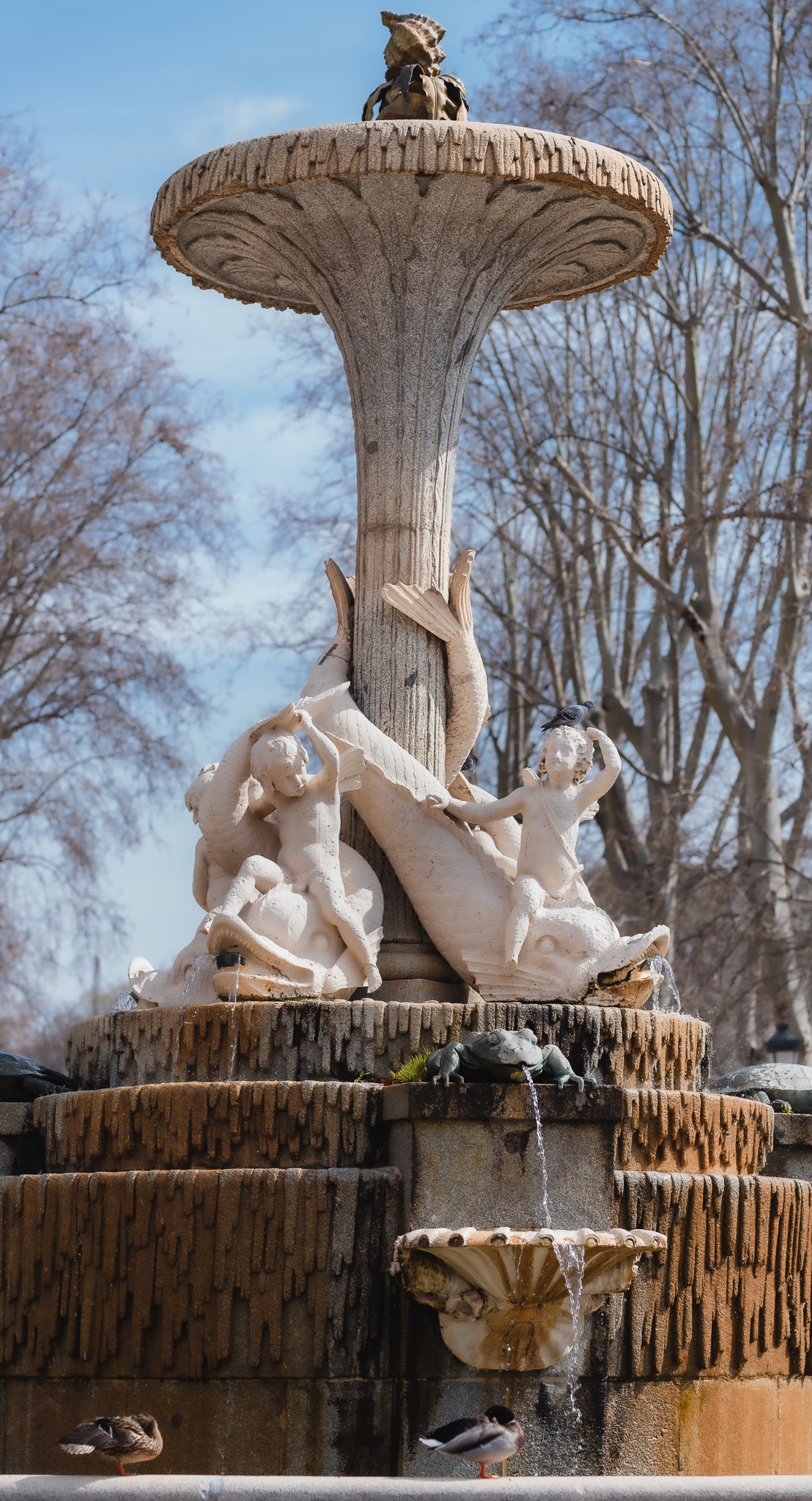
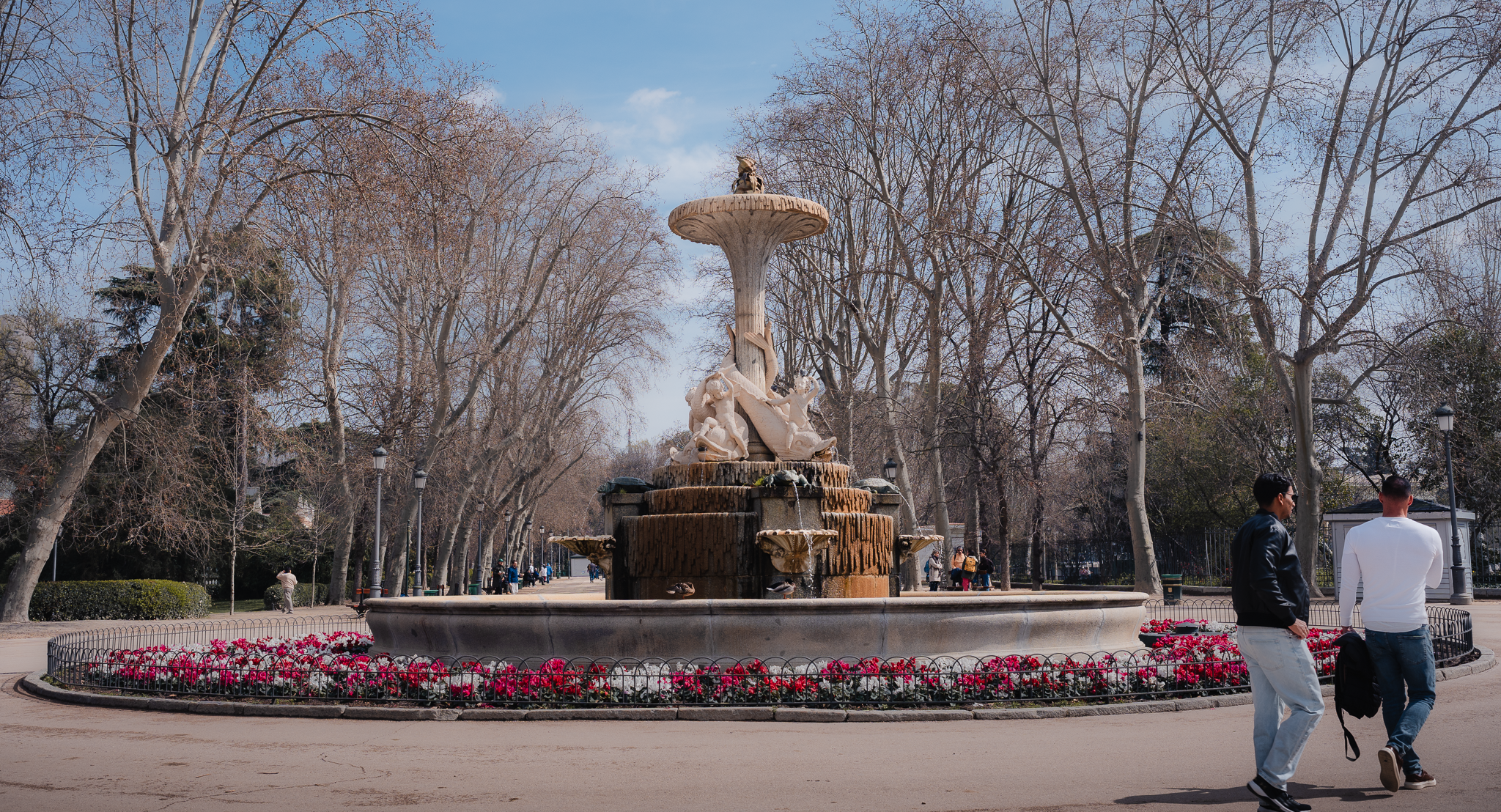
In a climate receiving roughly 421 mm of rain annually, every fountain is a latent-heat device paid for with a scarce resource. The Artichoke Fountain and the terraced water feature near the Puerta de España use thin falling films, broken jets and broad shallow basins. These geometries increase water's exposed surface and its contact with moving air.
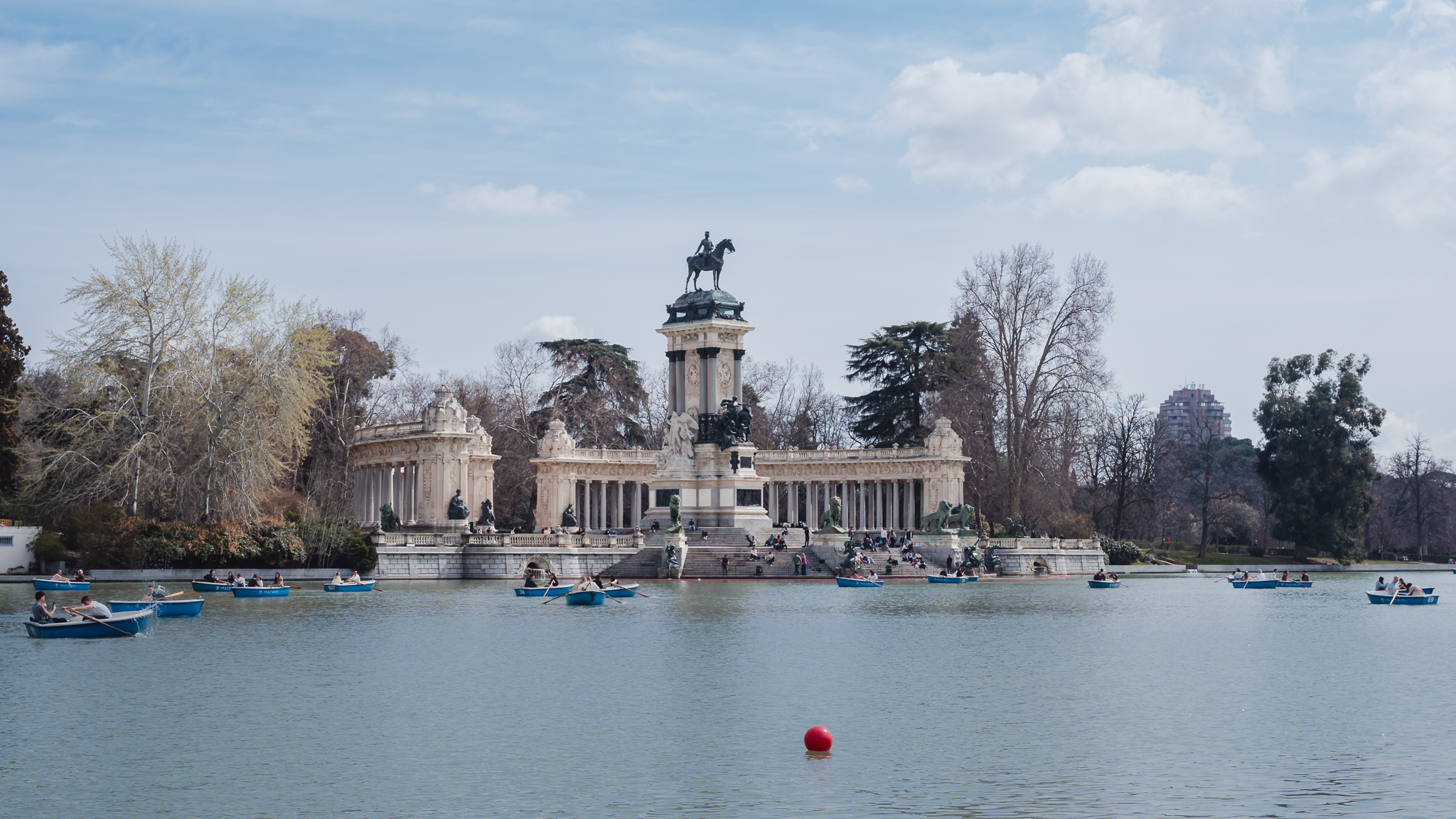
The result is threefold. Evaporation can remove sensible heat locally. Falling water raises the acoustic floor with broadband sound, supporting conversational privacy. The visible presence of water also creates a perceptual cue of coolness that can influence thermal-comfort judgments independently of measured air temperature.
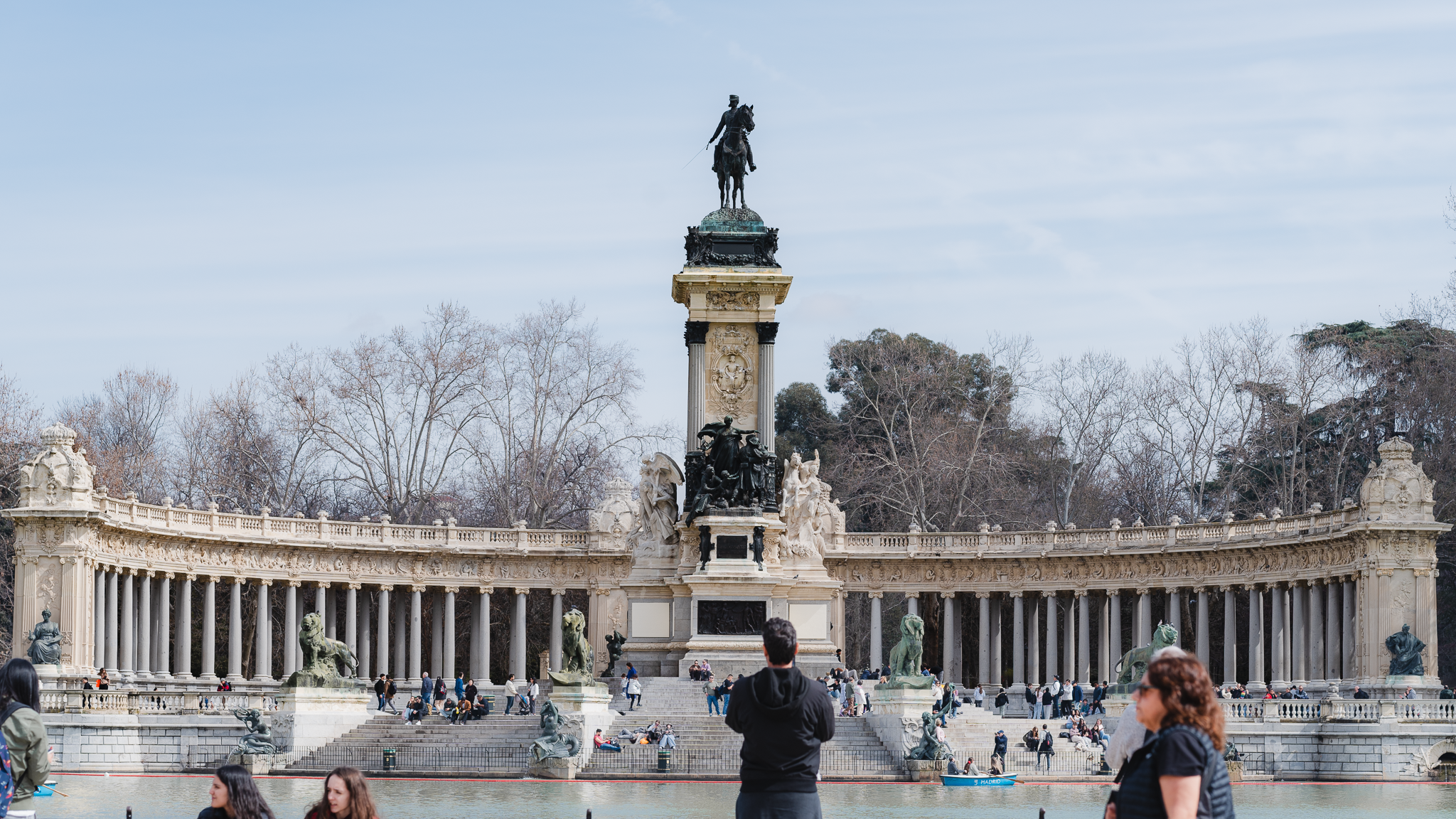
The commercial caveat is equally important: this performance requires water, cleaning, pumping energy and maintenance. In Madrid, a fountain is an operational-expenditure decision presented as ornament. It should be evaluated honestly as both.
Section Determines Thermal Performance
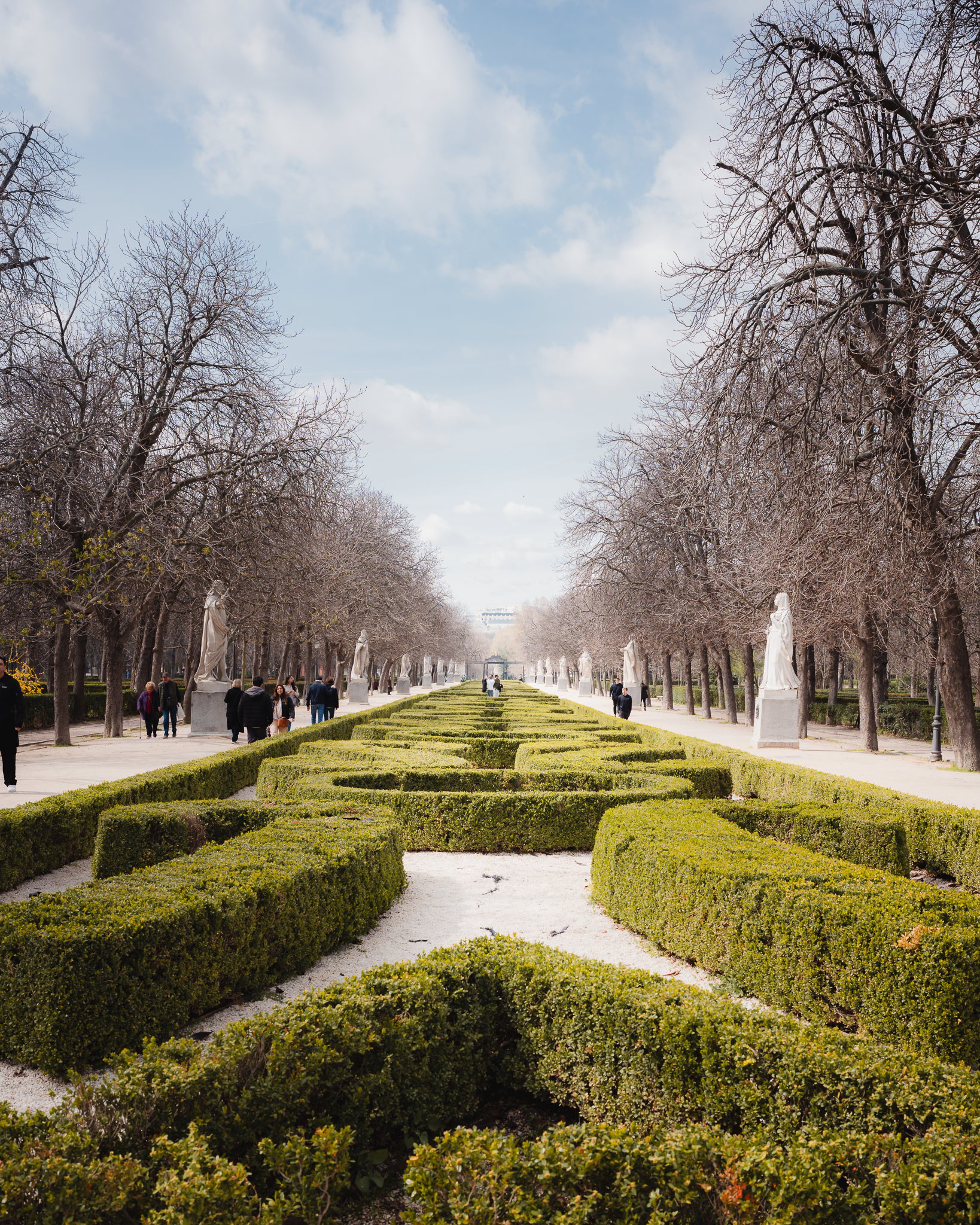
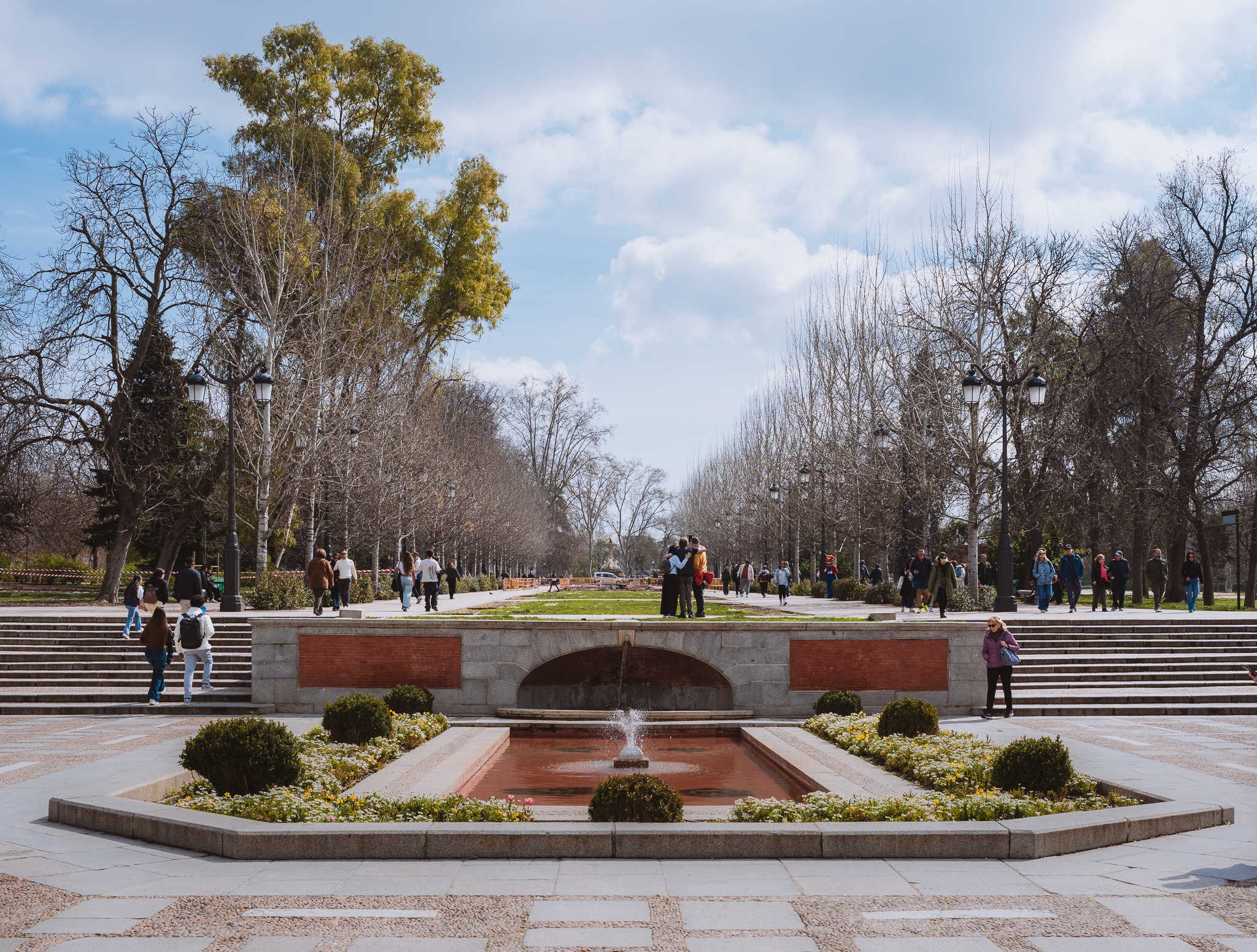
The clipped boxwood parterre is formally precise but thermally limited. Vegetation at knee height provides almost no useful shade to a standing person, and the open sky produces a high sky-view factor and substantial radiant exposure.
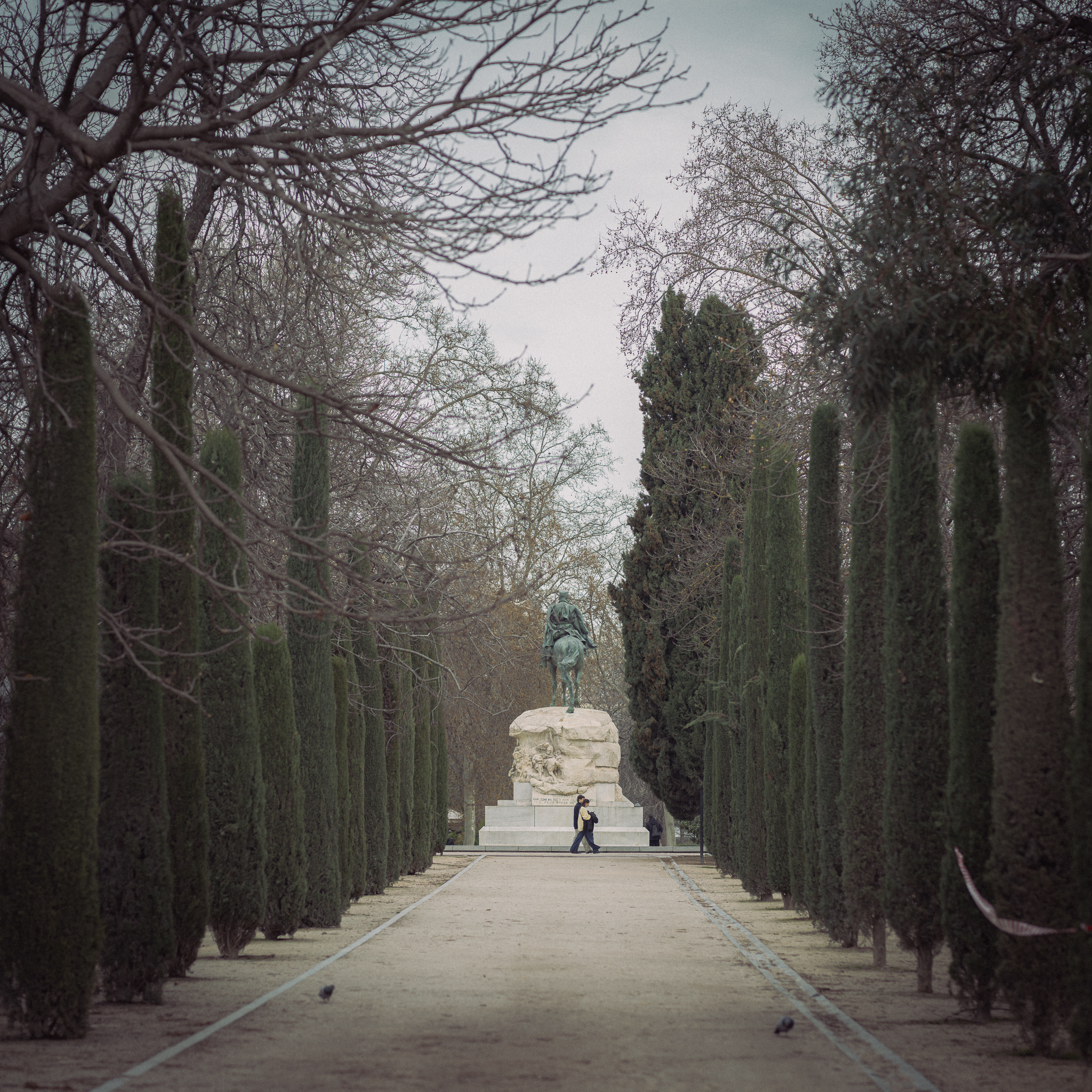
The cypress-lined allée provides the counter-example. Tall, dense evergreen mass encloses both sides of the route, reduces the visible sky, limits solar exposure, moderates wind and establishes a distinctive microclimate. The two compositions may be equally successful in plan, yet they perform very differently in section.
This is a practical design-review lesson: most landscape proposals are discussed in plan, while much of their thermal performance is determined by canopy height, crown density, enclosure and the relationship between sun, wind and the human body. Section should therefore be a primary environmental decision drawing.
Mass, Shelter and Occupancy
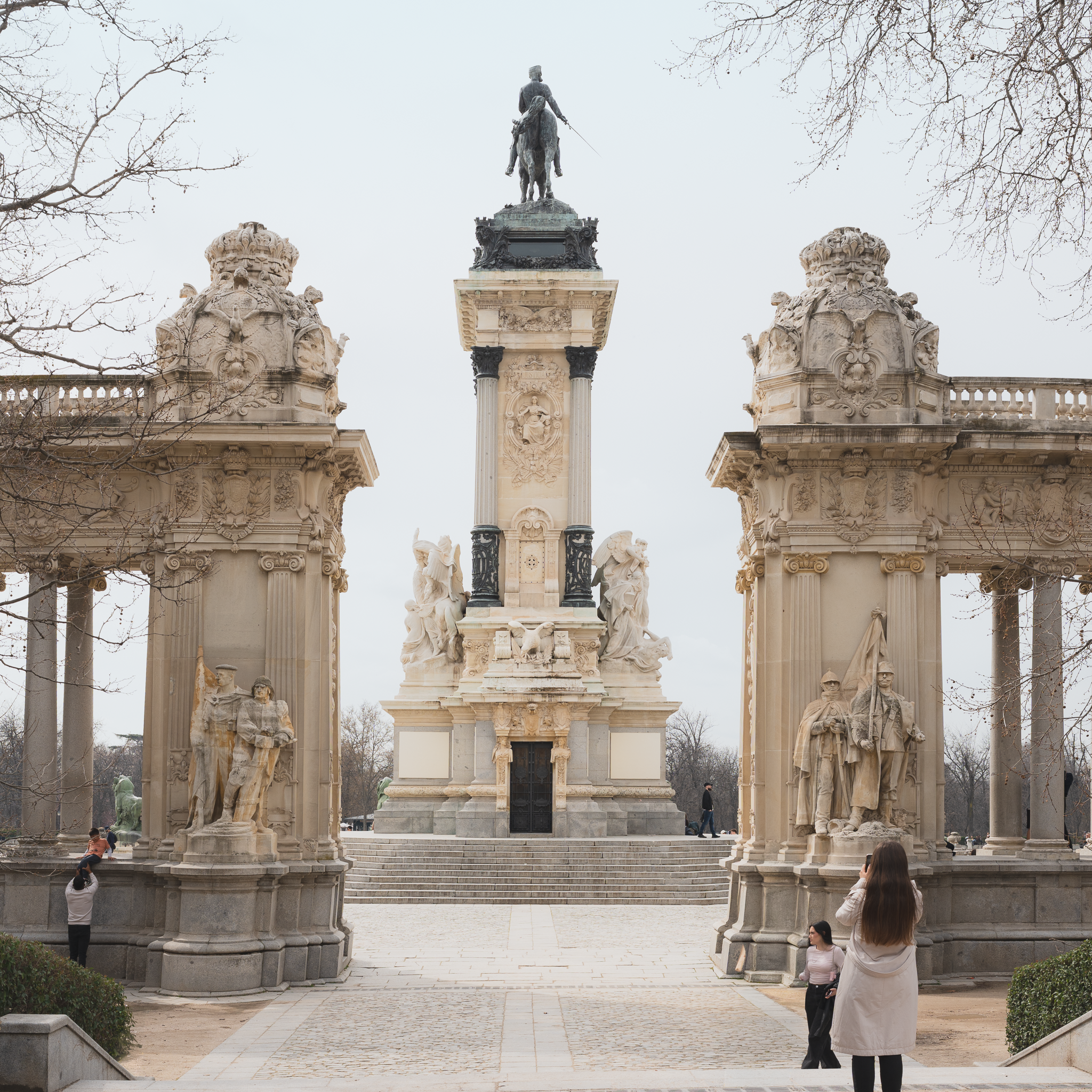
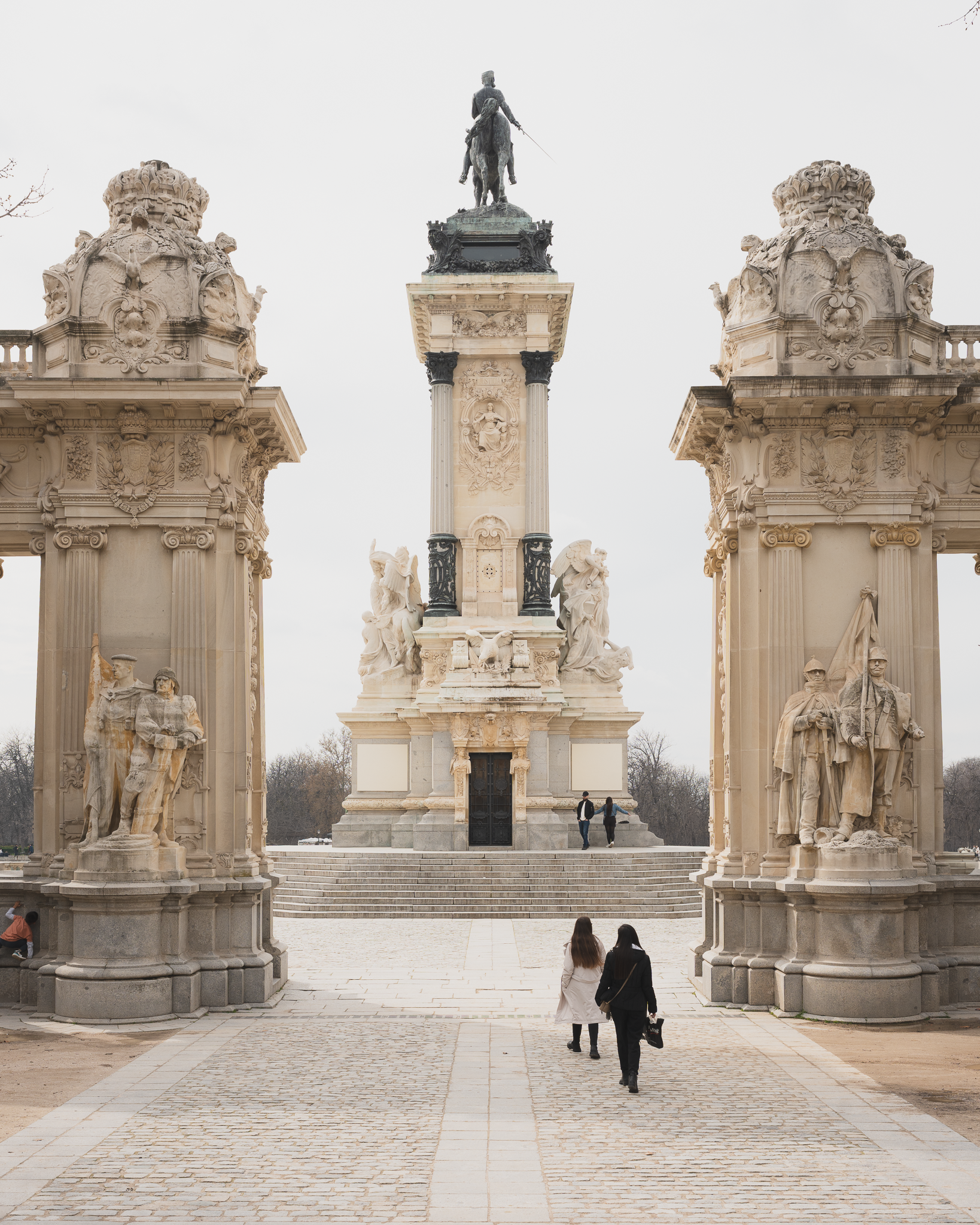
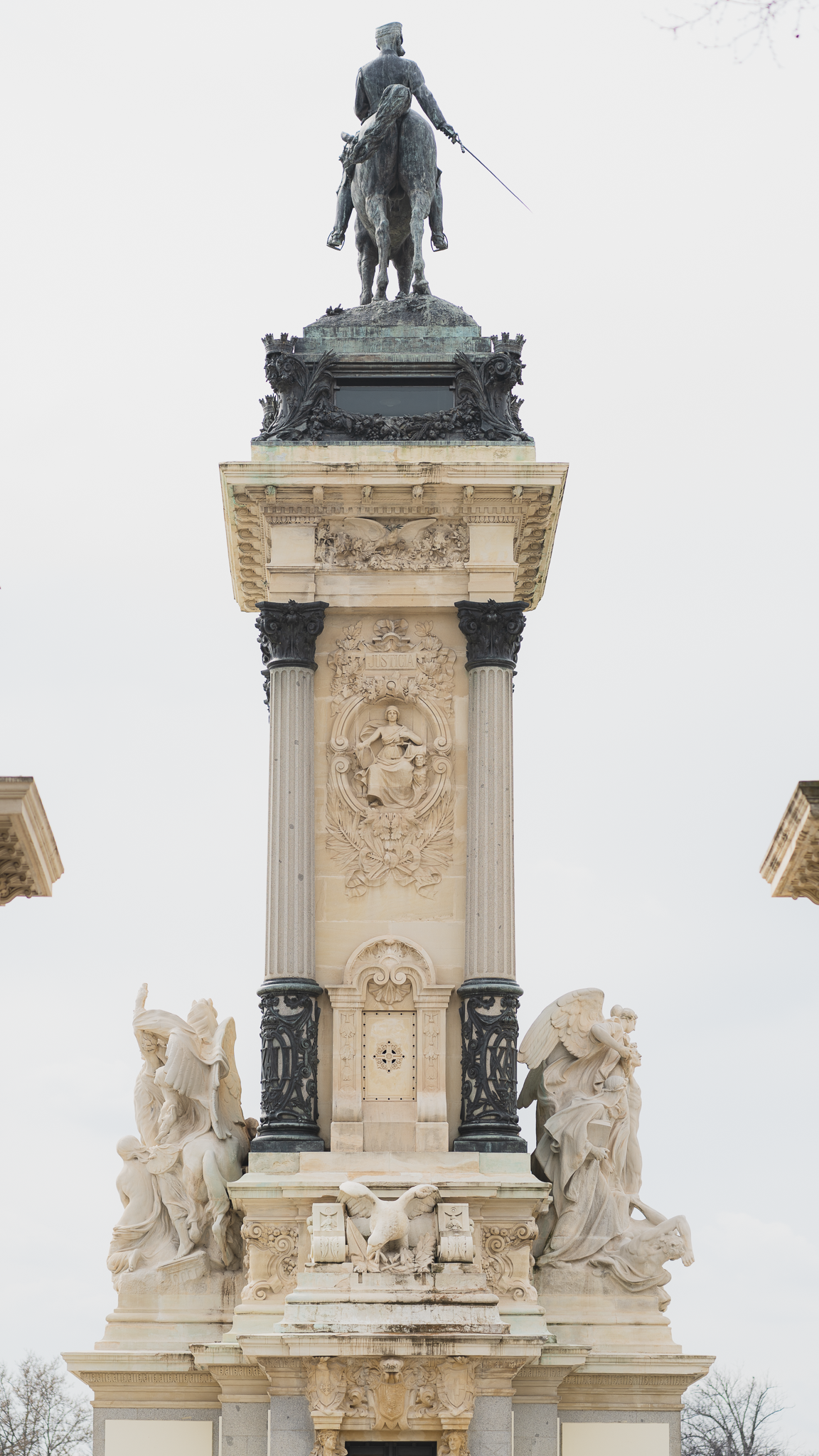
The Alfonso XII monument was initiated through a public competition won by José Grases Riera. Its first stone was laid in 1902 and the ensemble was inaugurated in 1922. The composition combines a semicircular Ionic colonnade with a 30-metre central body and Mariano Benlliure's bronze equestrian statue.
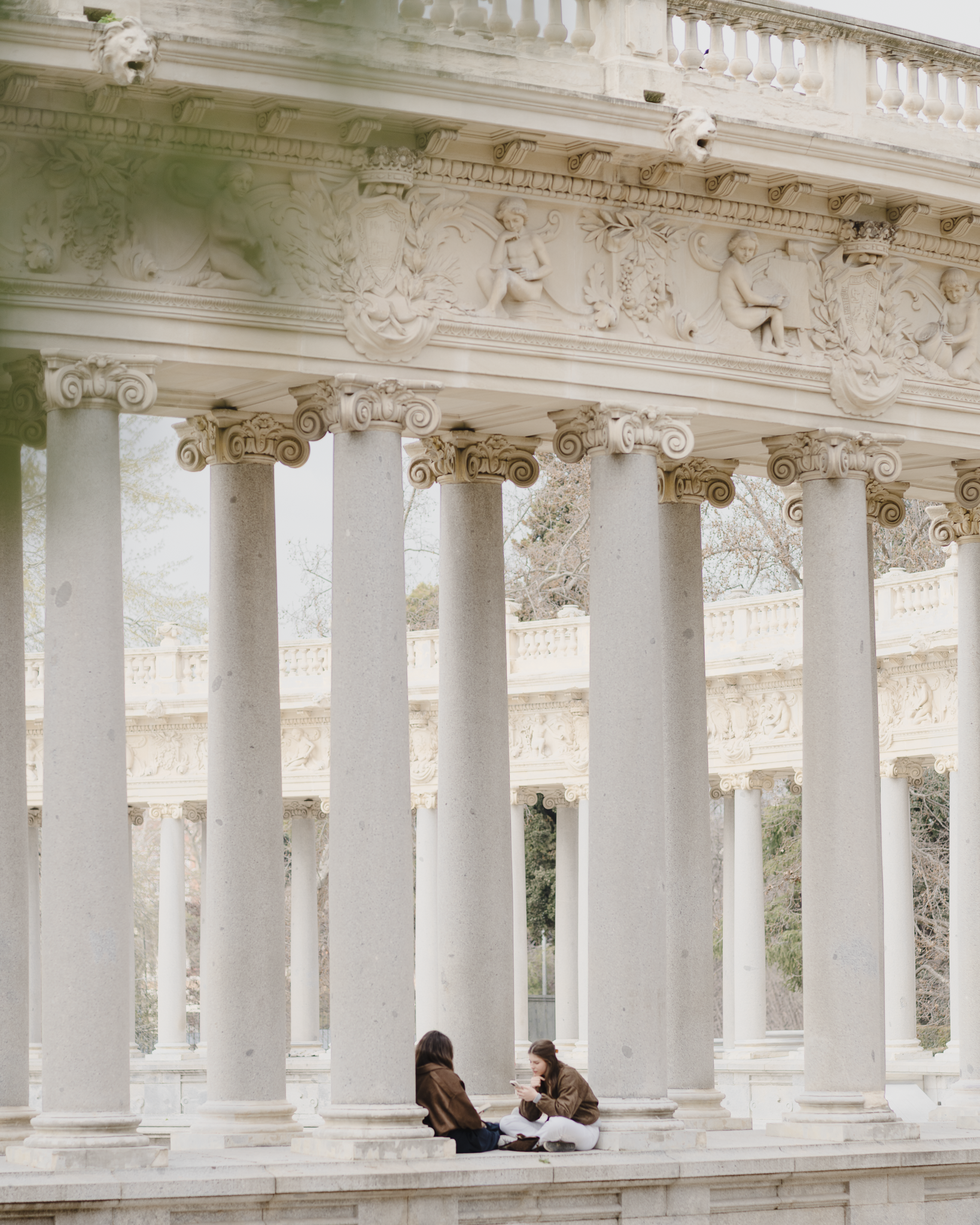
The most instructive photograph shows two visitors seated beneath the colonnade. Without performing any calculation, they selected high thermal mass, overhead protection, reduced wind exposure, a controlled view of the sky and a defensible back. The monument was conceived as dynastic rhetoric, yet its geometry produces one of the park's most occupiable microclimates.
This is the recurring lesson: buildings and public spaces are occupied according to their physics, not only according to their stated intentions.
People Complete the Environmental System
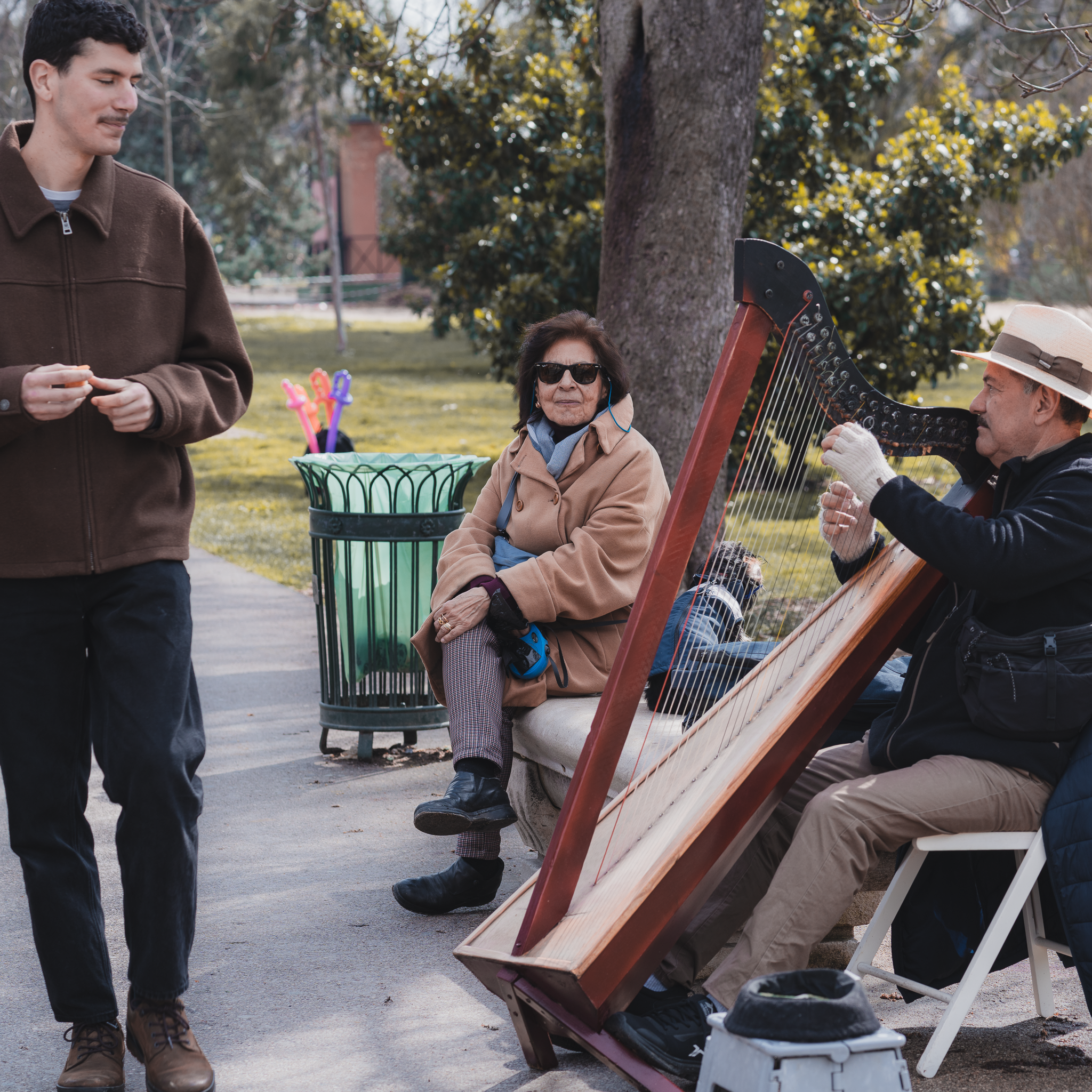
The street musicians provide another form of evidence. A harp is comparatively quiet and can hold an audience only where background noise is sufficiently low. Vegetated ground, distance from traffic and tree buffers create a setting in which listeners can stop, sit and hear detail without amplification.

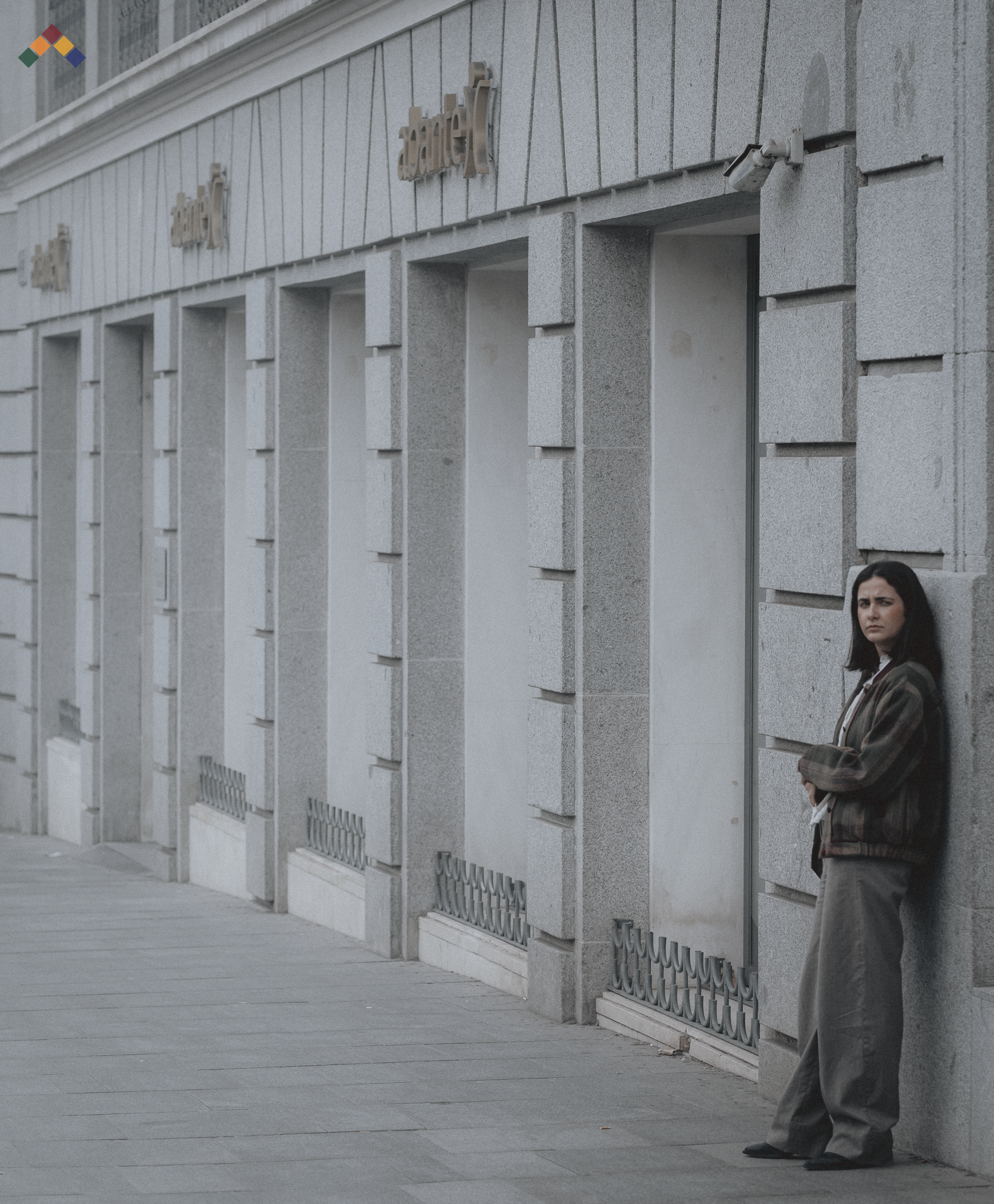
A short distance outside the park, the photographs show people using granite façades and doorways for momentary shelter rather than chosen occupation. The same weather produces different behaviour because the environmental support is different. Where the setting provides comfort, people linger, listen and interact. Where it does not, they transit.

Occupancy is therefore not a secondary social outcome. It is an accessible performance metric with direct implications for dwell time, commercial activity, perceived safety and civic value.
The Asset Is Not Permanent
The yellow forsythia among bare branches is a phenological record. It documents the timing of spring development and can become valuable when observations are repeated over time.
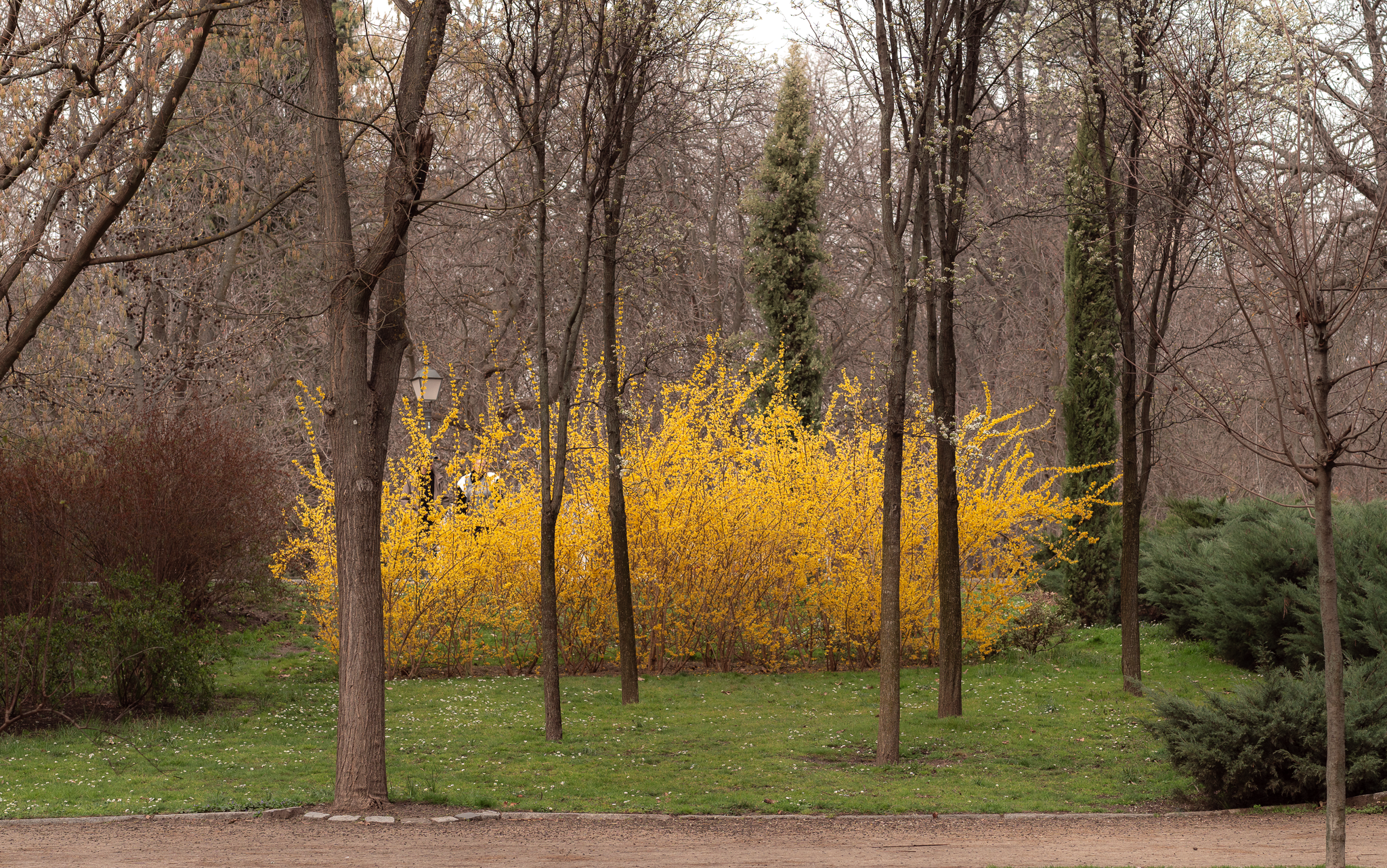
The downside risk is equally visible. Storm Filomena deposited approximately 52.9 cm of snow on Madrid in January 2021. A peer-reviewed assessment reported the loss of roughly 11 percent of the city's winter vegetation cover, rising to about 14 percent in districts containing major green space. Evergreen conifers were particularly vulnerable because retained foliage accumulated snow load.
A mature canopy may require decades to establish and can experience major loss in a single extreme event. It belongs on a resilience risk register, supported by species diversity, inspection, succession planting and recovery planning—not only in an annual landscape-maintenance budget.
What I Would Put to a Board
First, canopy is measurable thermal infrastructure. The observed urban heat-island difference between El Retiro and Madrid's hottest built fabric is large enough to influence cooling-load assumptions, public-realm usability and asset value.
Second, cooling is a plume rather than a fence. Research reviews find that park-cooling effects can extend hundreds of metres beyond park boundaries, and in some cases farther for large parks. The implication is that adjacency to green space should be treated as a quantifiable attribute of an address, while networks of well-positioned parks may distribute benefit more effectively than a single remote landscape.
Third, section beats plan. The contrast between the exposed parterre and enclosed cypress allée demonstrates that canopy height and spatial enclosure decide much of the human thermal experience. Requiring environmental sections at concept review is a low-cost, high-leverage governance change.
Charles III's programme joined an observatory, botanical garden, art museum, water system and monumental gateway within one civic project. Two and a half centuries later, measurement has caught up with the intuition. The question is no longer whether landscape and architecture affect climate, comfort and behaviour. It is whether we will value and fund those effects deliberately rather than inherit them by accident.
Note on Method
These observations were made during fieldwork in El Retiro and along the Paseo del Prado axis on 11 March 2026. Quantitative claims are referenced below. Site-specific microclimatic conclusions would require calibrated measurements and modelling before use in a formal design case.
References
Tutiempo. “Madrid-Retiro Observed Weather, 11 March 2026,” based on AEMET station observations.
Madrid City Council. “Daily Air-Quality Bulletin: Information for 11 March 2026.” Published 12 March 2026.
Madrid City Council. “History of El Retiro.”
UNESCO World Heritage Centre. “Paseo del Prado and Buen Retiro, a Landscape of Arts and Sciences.”
Arup. “Madrid Suffers Most Extreme Urban Heat-Island Hot Spot—New International Survey Shows.”
Pérez-González, María Eugenia, José María García-Alvarado, María Pilar García-Rodríguez, and Raimundo Jiménez-Ballesta. “Evaluation of the Impact Caused by the Snowfall after Storm Filomena on the Arboreal Masses of Madrid.” Land 11, no. 5 (2022): 667.
Norouzi, Maryam, Hing-Wah Chau, and Elmira Jamei. “Design and Site-Related Factors Impacting the Cooling Performance of Urban Parks in Different Climate Zones: A Systematic Review.” Land 13, no. 12 (2024): 2175.