Color as a Communication Medium: Facade Lighting Design Testing for Jakarta Cathedral
Project Overview
As one of Jakarta's most recognizable heritage landmarks, Jakarta Cathedral has been an integral part of the city's history since the Dutch colonial period. The cathedral stands not only as a place of worship, but also as a living witness to the social, cultural, and architectural evolution of Indonesia's capital.
Over the decades, the cathedral has become a powerful symbol of religious harmony, demonstrating how faith, culture, and community can coexist within a diverse urban society. Its presence within Jakarta's historic civic district continues to contribute to the city's cultural identity and collective memory.
To preserve this legacy, Jakarta Cathedral remains committed to the continuous conservation and enhancement of its architectural environment. These efforts ensure that the cathedral continues to serve both as a treasured heritage building and as a vibrant spiritual home for the Catholic community in Jakarta.
One of these efforts is exploring how Jakarta Cathedral tells its story at night through architectural lighting. Architectural lighting is often perceived as a tool for visibility and aesthetics. However, within civic, cultural, and religious architecture, light can serve a much broader role—as a medium of communication.
“Cultural and historical heritage is an irreplaceable and invaluable treasure. It represents an essential legacy for local communities, nations, and all humankind, connecting past generations with the present and future.”
The facade lighting color testing study for Jakarta Cathedral was developed to explore how different lighting colors influence public perception, emotional atmosphere, symbolic meaning, and the cathedral's relationship with the city at night.
As one of Indonesia's most important religious and cultural landmarks, Jakarta Cathedral regularly hosts major liturgical celebrations, national commemorations, interfaith events, and international visits. The project investigated how facade lighting could provide the flexibility to communicate these different occasions while preserving the dignity, heritage value, and sacred character of the cathedral.
Rather than viewing color-changing lighting as a decorative feature, the study approached color as a visual language capable of expressing identity, celebration, remembrance, solidarity, and spirituality.
Architectural lighting is not merely about illumination. Color becomes a visual language capable of communicating meaning, celebration, remembrance, spirituality, and cultural identity.
The facade lighting color testing for Jakarta Cathedral explored how different colors influence public perception, emotional response, and the symbolic expression of one of Indonesia's most important religious landmarks.
The study investigated how lighting could support:
Religious celebrations
Liturgical seasons
National commemorations
Cultural events
Interfaith harmony initiatives
Special ceremonial occasions
without compromising the dignity and heritage value of the cathedral.

Building Facade Contour, Light and Shadow Near Sunset
The Challenge
Historic religious buildings carry a unique responsibility within the urban environment.
Unlike commercial buildings, where dynamic lighting is often used for branding and attraction, heritage religious architecture requires a more sensitive approach. Every lighting intervention must respect the building's architectural integrity, cultural significance, and spiritual atmosphere.
The primary challenge was balancing:
Heritage conservation principles
Architectural authenticity
Sacred identity
Public communication needs
Nighttime landmark visibility
Environmental responsibility
The project also needed to address an important question:
How can a historic cathedral communicate different messages and ceremonial occasions through light without compromising its timeless architectural character?
The design team recognized that color has the ability to evoke emotional responses and symbolic meanings. However, excessive use of color or inappropriate lighting compositions could easily diminish the solemnity and dignity expected from a sacred landmark.
The testing process therefore focused on identifying lighting approaches that could enrich communication while maintaining respect for the cathedral's religious significance.

Building Facade Contour Analysis, Lighting Position Testing, and the Perception of Light and Shadow
Our Approach
In developing the nighttime lighting strategy, we first studied how the architectural contours, proportions, and visual hierarchy of the cathedral are perceived during daylight conditions. Understanding the building's form in natural light allowed us to identify the key architectural elements that define its character and historical significance.
We then conducted a series of lighting models and simulations, evaluating various illumination levels, light quality, color compositions, fixture locations, and beam angles. These simulations enabled us to assess how different lighting approaches would interact with the cathedral's Neo-Gothic architecture and influence its nighttime identity.
Through this process, we analyzed how the balance between light and shadow could reveal the building's contours, architectural details, and vertical expression. Rather than simply making the cathedral brighter, the objective was to create a visual composition that communicates peace, dignity, grandeur, and a sense of wonder—allowing visitors to appreciate both the spiritual presence and the rich historical legacy of one of Indonesia's most important religious landmarks.
The study explored a series of facade lighting color scenarios to understand how different lighting compositions influence architectural perception and emotional response. Rather than evaluating color purely from an aesthetic perspective, the testing examined:
Symbolic meaning
Cultural associations
Religious significance
Emotional perception
Architectural readability
Nighttime urban identity
Multiple lighting scenarios were developed and visually assessed to understand how the cathedral's Neo-Gothic architectural features responded to different color palettes. Particular attention was given to preserving:
Architectural detail visibility
Material authenticity
Visual hierarchy
Building proportions
Sacred atmosphere
The testing process allowed stakeholders to compare how different colors transform the perception of the same building while maintaining a coherent architectural identity.
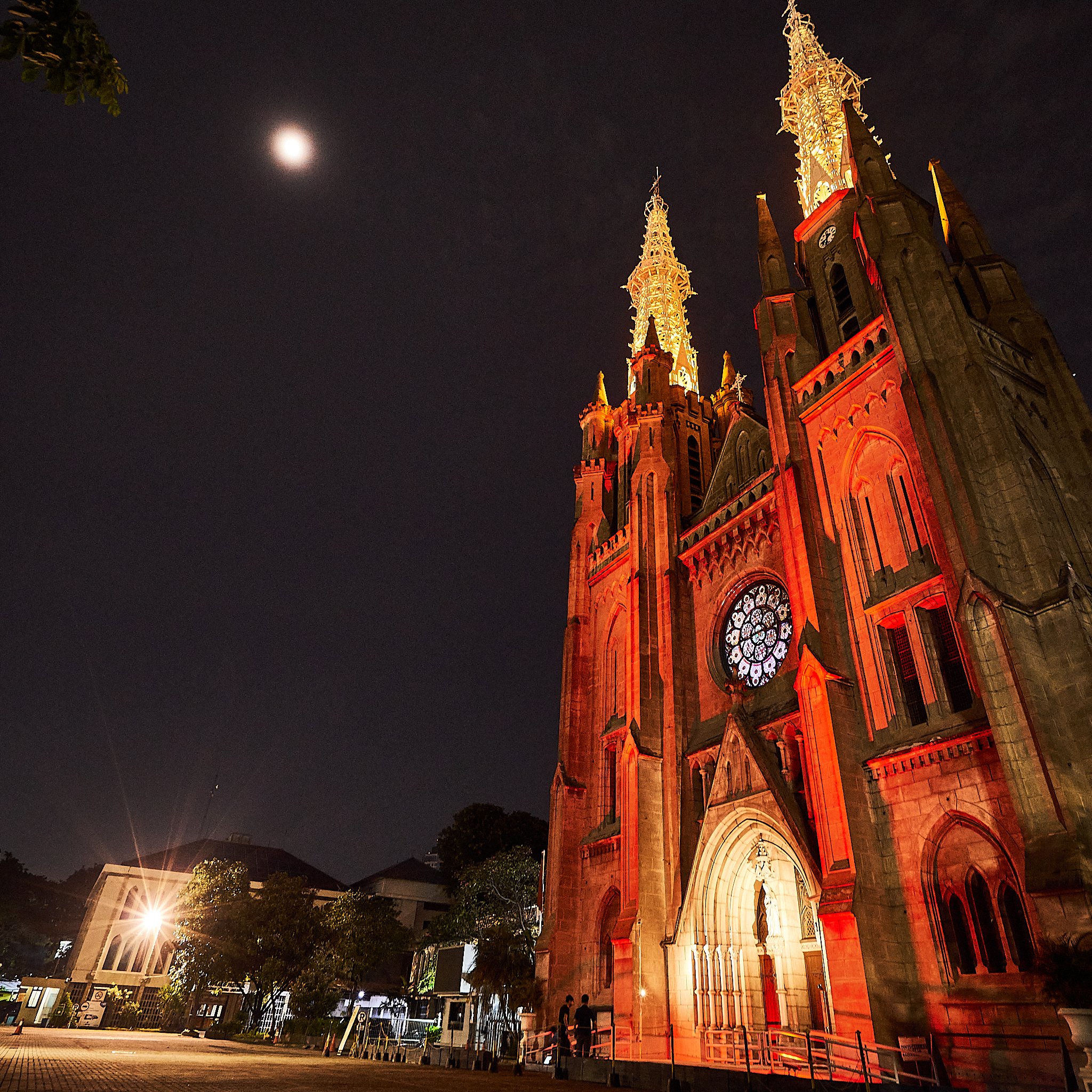
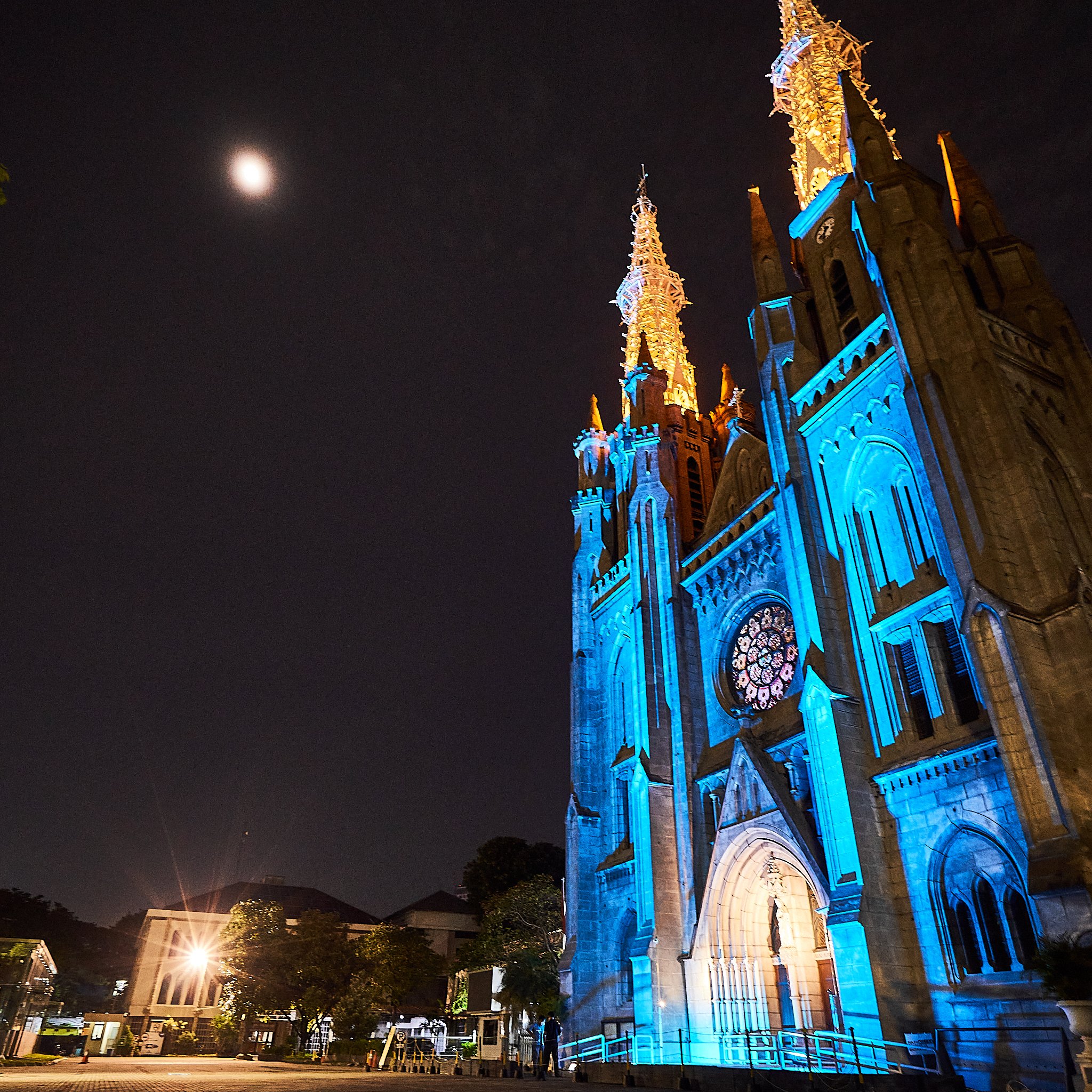
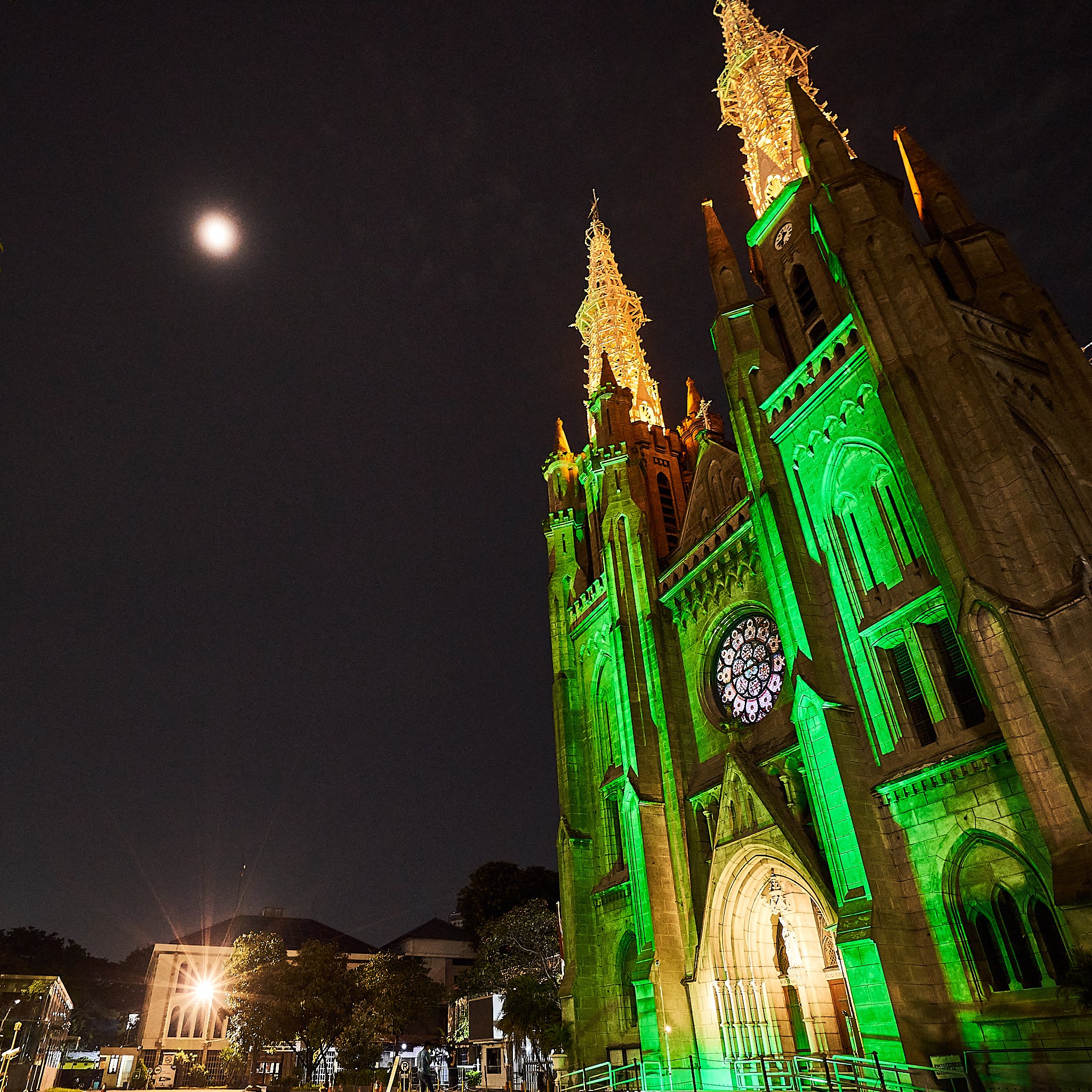
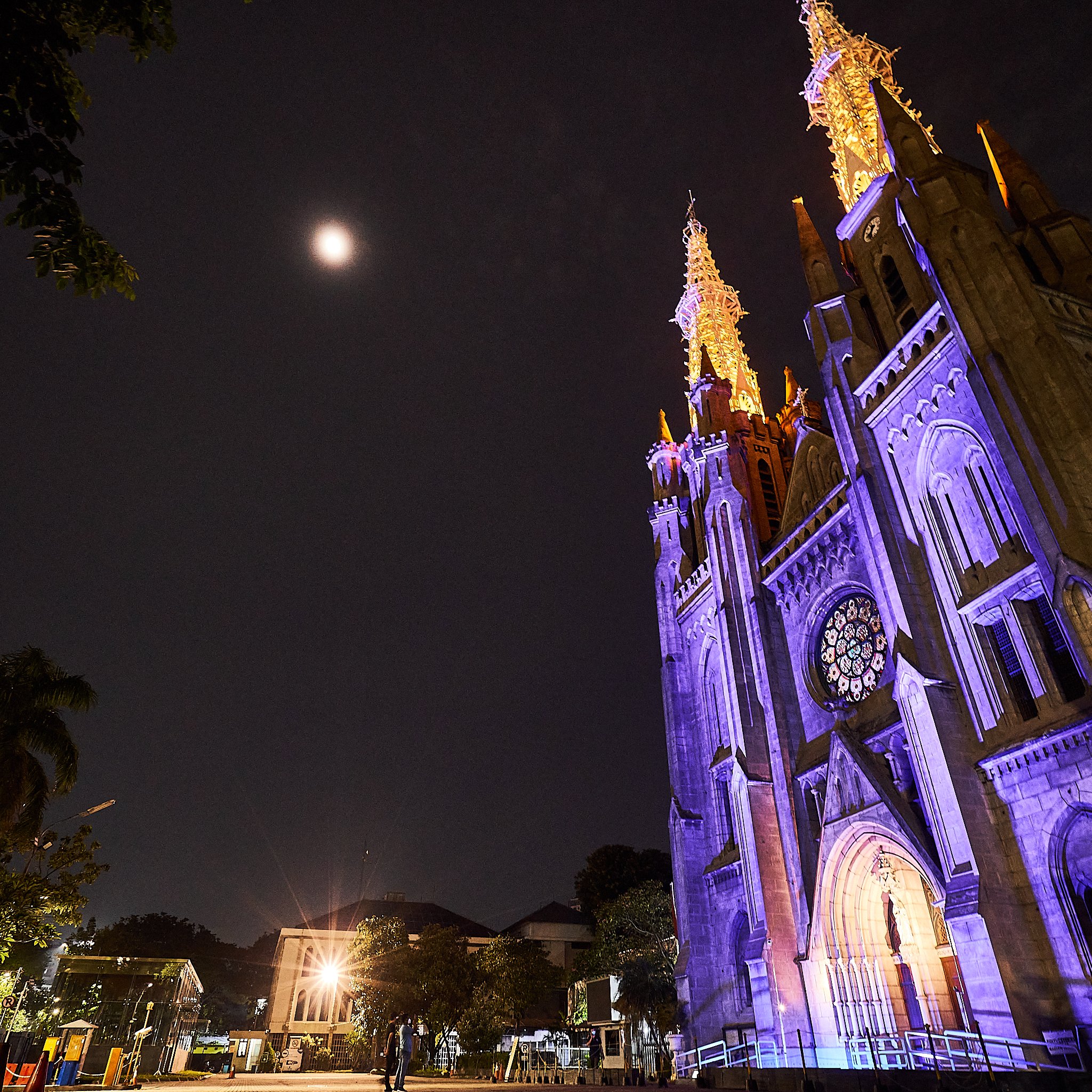
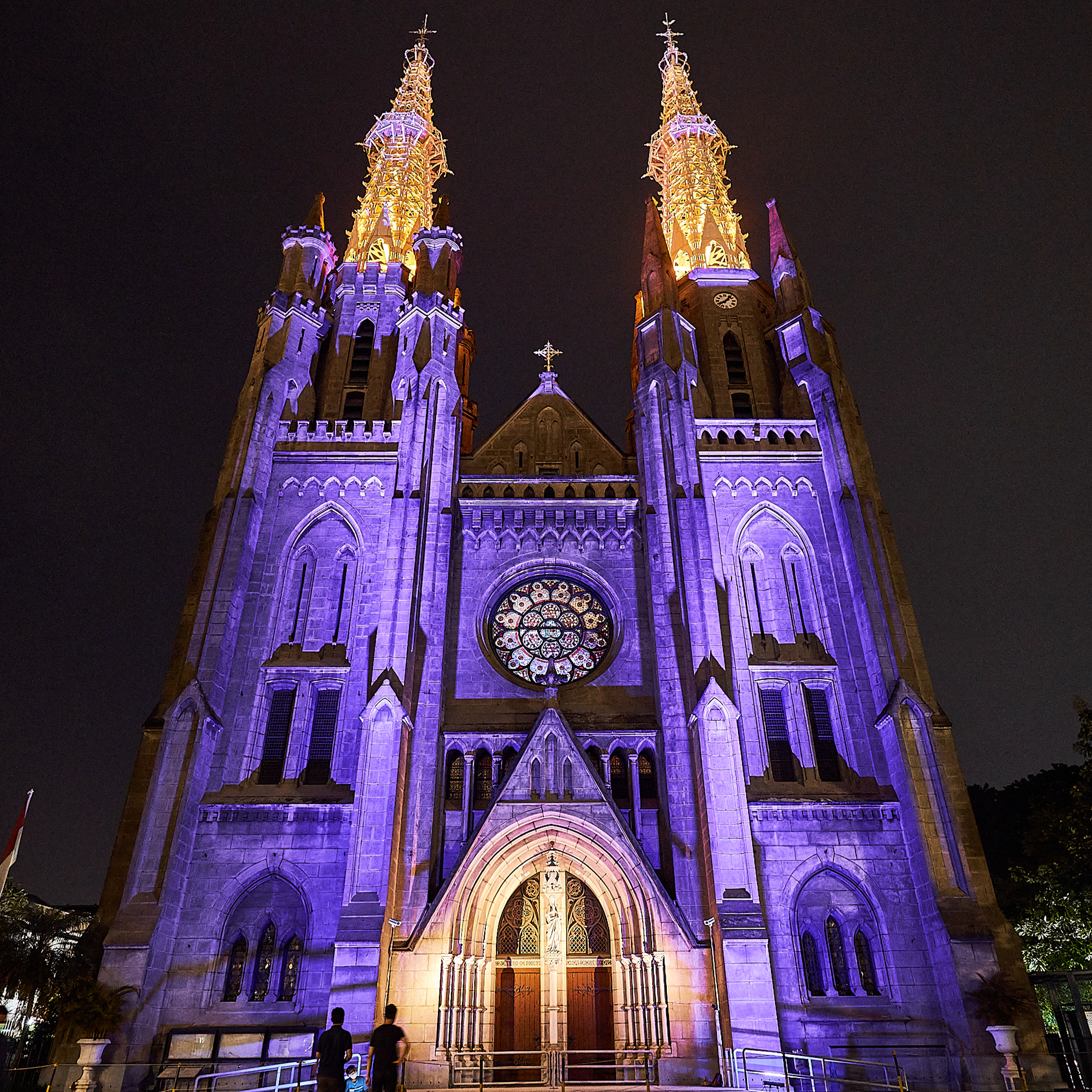
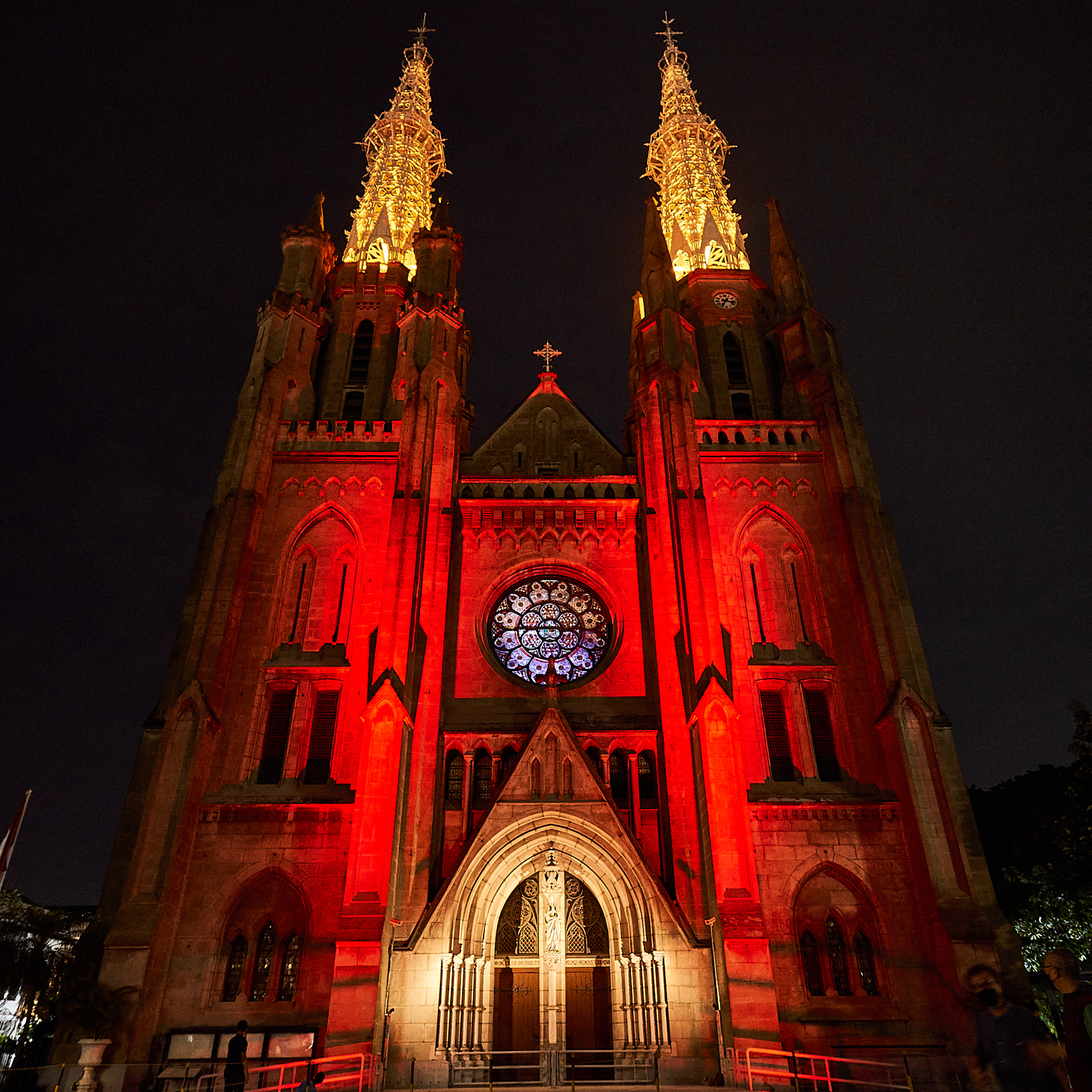
Color: Liturgical Meaning and Emotional Perception
The project adopted a human-centered lighting philosophy that recognizes that people do not simply see color—they emotionally interpret it. Different colors can communicate different messages and create distinct emotional experiences.
Warm White
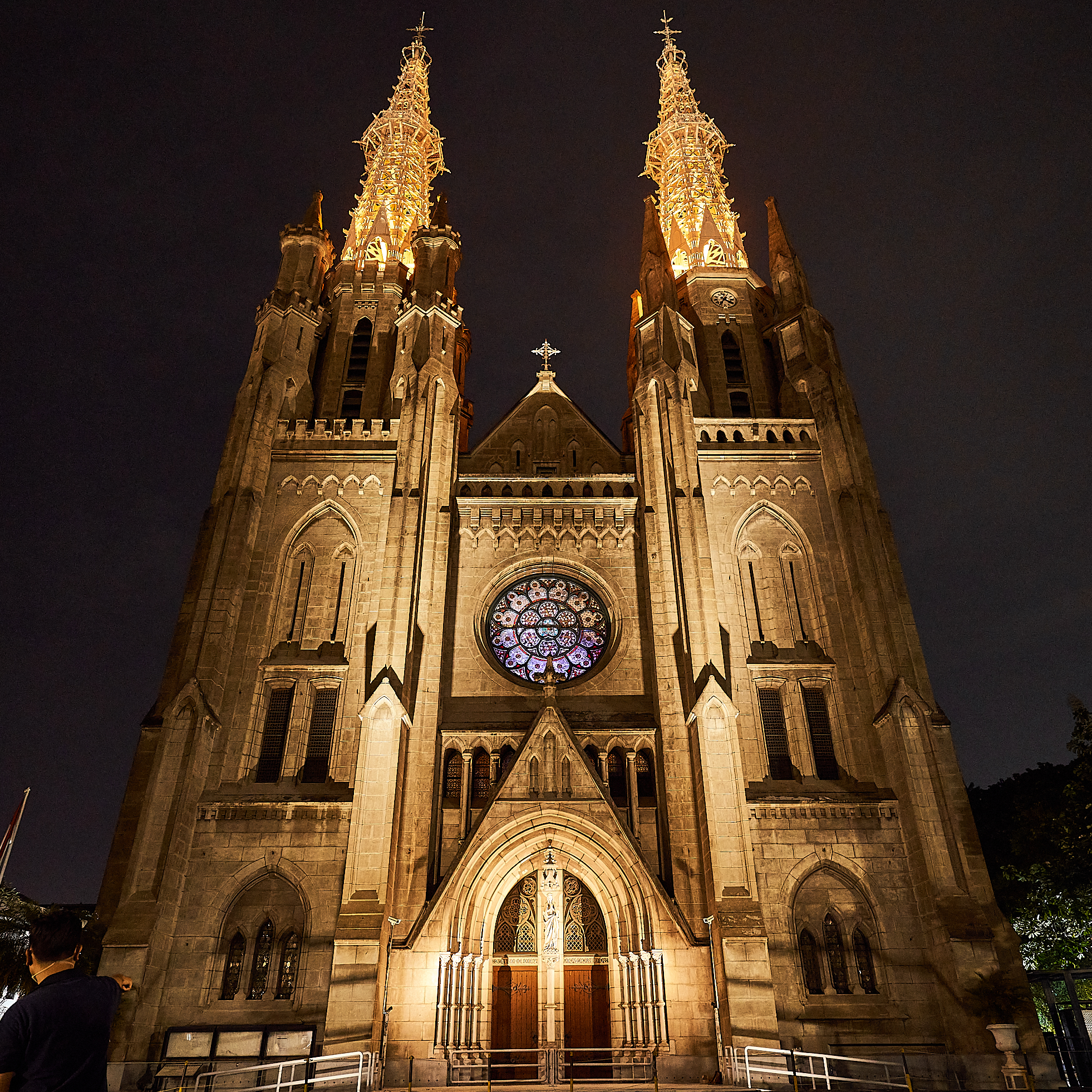
Warm white lighting reinforces the cathedral's timeless elegance and architectural authenticity while creating a sense of spiritual calmness and visual comfort. By revealing the building in a manner that closely reflects its natural appearance and material character, this lighting approach supports the everyday worship atmosphere and presents the cathedral in its most historically respectful and enduring form.
Gold and Amber
Golden and amber lighting tones communicate a sense of celebration, joy, and religious festivity while enhancing the cathedral's monumental presence and spiritual warmth. These colors create a welcoming and uplifting atmosphere that highlights the significance of special occasions, making them particularly suitable for major religious celebrations, festive seasons, and important ceremonial events.
Green
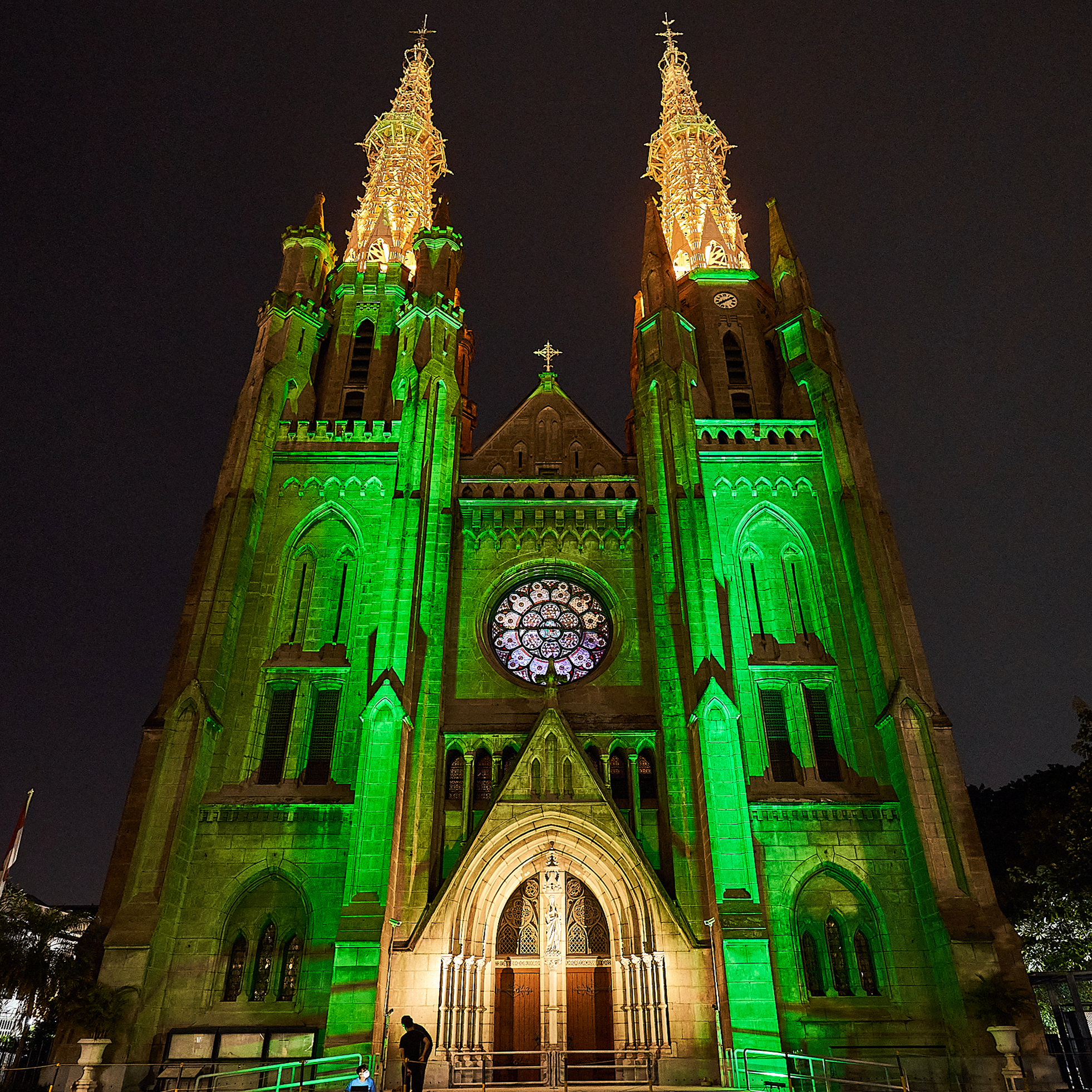
Green carries rich symbolic meaning within both Christian tradition and human perception, representing hope, renewal, growth, and spiritual vitality. In the Catholic liturgical calendar, green is associated with Ordinary Time, symbolizing perseverance in faith, ongoing spiritual growth, and the everyday journey of Christian life. Emotionally, green evokes a sense of harmony, balance, peace, and connection with nature, creating a welcoming and restorative atmosphere.
Blue
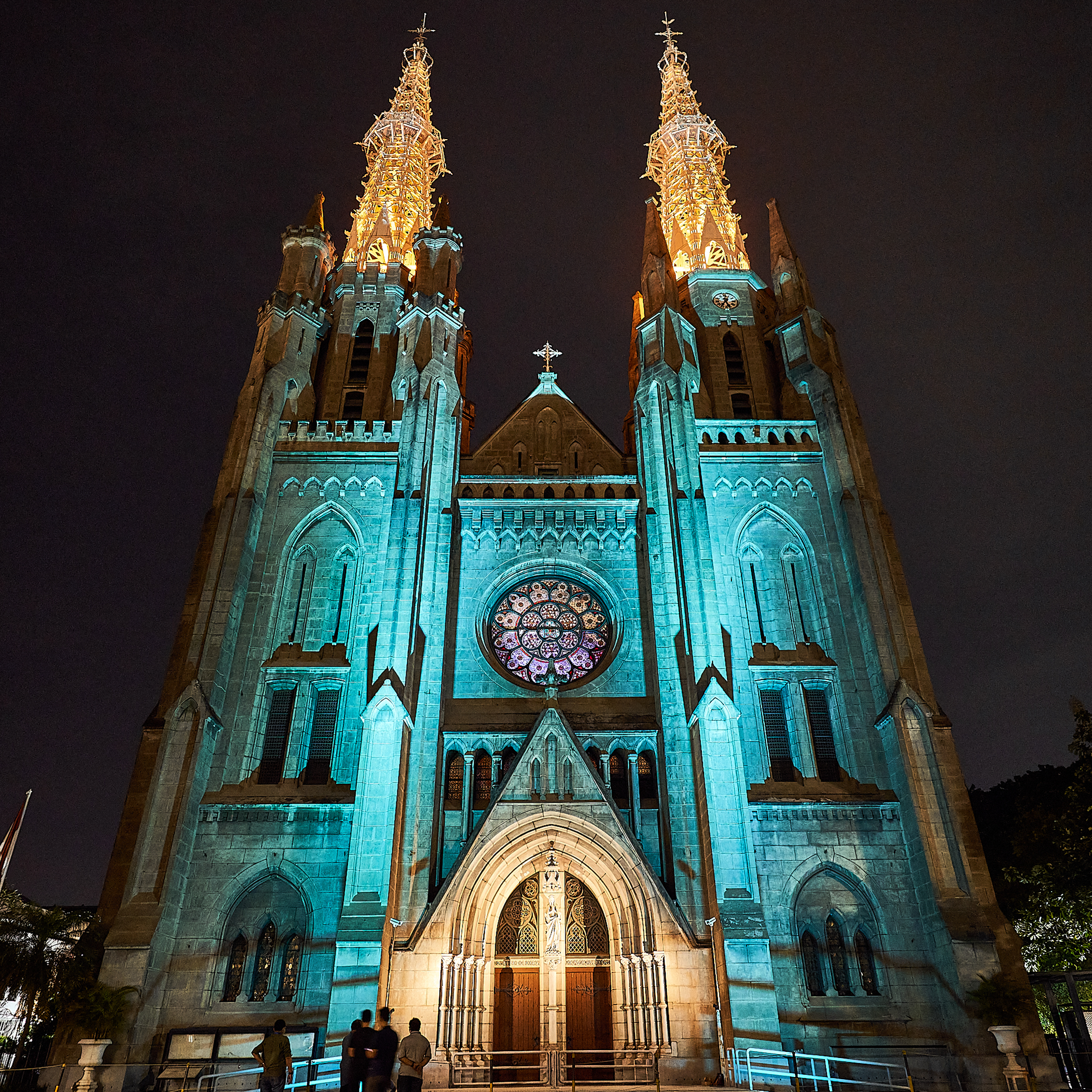
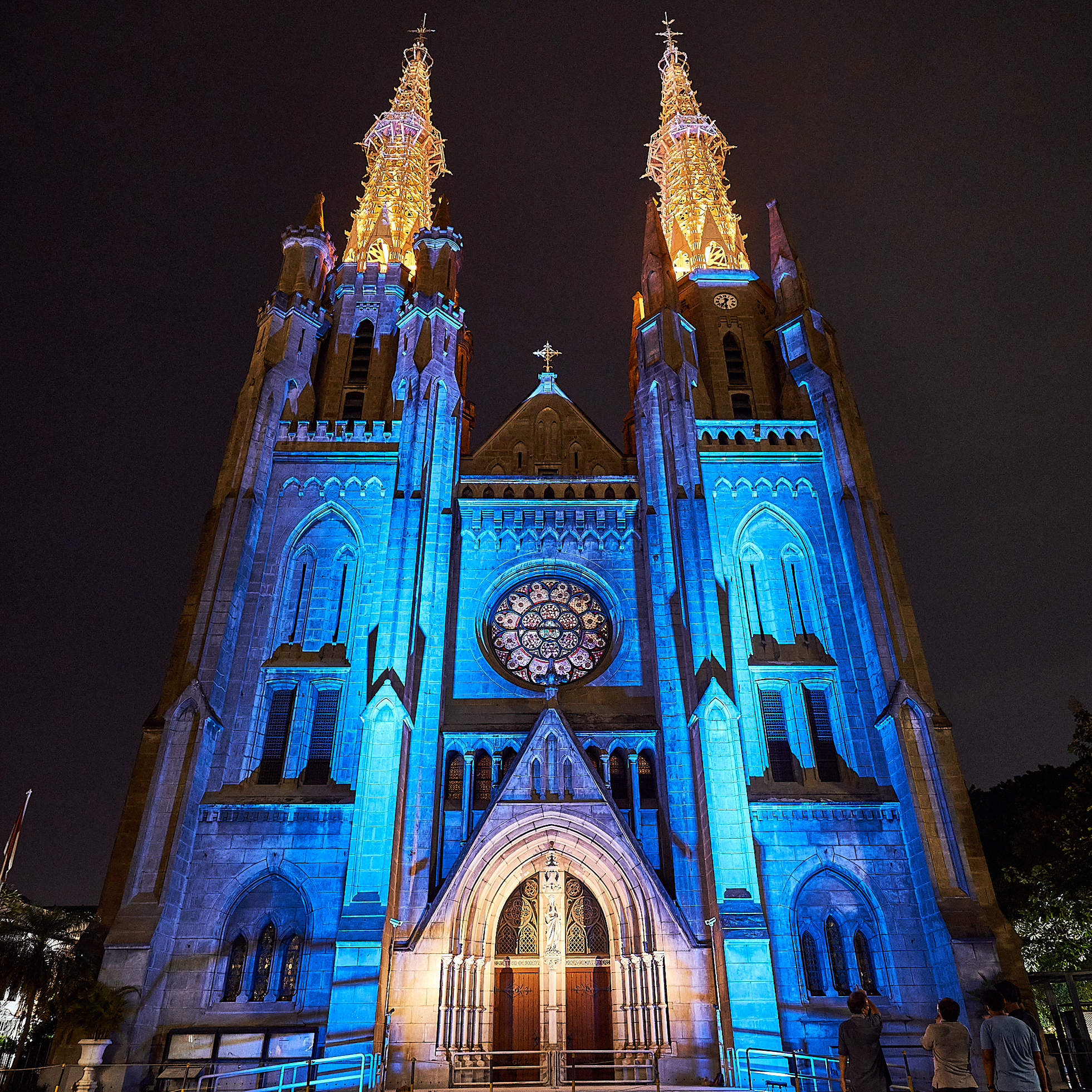
Blue lighting evokes a sense of peace, reflection, contemplation, hope, and serenity, creating a calm and introspective atmosphere around the cathedral. Its gentle and tranquil character encourages moments of personal reflection and spiritual connection, making it particularly effective for occasions that call for remembrance, prayer, unity, and emotional calmness.
Purple
Purple carries deep liturgical significance within the Catholic tradition and is closely associated with the seasons of Advent and Lent. The color symbolizes spiritual preparation, reflection, and repentance, encouraging a period of introspection and renewal. When applied to the cathedral facade, purple lighting creates a solemn and contemplative atmosphere that reflects the spiritual journey of faith, anticipation, and personal transformation.
Red
Red carries profound symbolic meaning within the Catholic tradition, representing the Holy Spirit, martyrdom, courage, and passion. The color is often associated with significant religious celebrations and solemn commemorations, conveying a sense of spiritual strength, sacrifice, and devotion. When applied to the cathedral facade, red lighting creates a powerful and emotionally resonant presence that reflects both the vitality of faith and the enduring legacy of those who have courageously borne witness to it.
By understanding these emotional and symbolic associations, lighting becomes a communication tool that supports meaningful human experience rather than merely changing visual appearance.
Heritage Conservation and Technical Integration
Beyond designing visual beauty, symbolic meaning, and emotional perception, the lighting strategy also had to respect the principles of heritage conservation and long-term building preservation.
As a designated heritage building, any lighting intervention must minimize physical impact on the historic structure. The installation of luminaires, cabling, mounting brackets, and supporting infrastructure was therefore carefully coordinated to comply with conservation guidelines. Particular attention was given to avoiding invasive installation methods, such as drilling or creating new openings in the historic fabric, which could potentially compromise the building's integrity or cause irreversible damage in the future.
The placement of lighting fixtures was also carefully evaluated to prevent excessive heat accumulation near sensitive architectural elements. Improper fixture positioning can trap heat and accelerate the deterioration of historic materials over time. Therefore, thermal considerations formed an important part of the design evaluation process.
Environmental sustainability was equally important. The lighting strategy prioritized energy-efficient light sources while carefully controlling brightness levels and light distribution to minimize unnecessary light spill and light pollution. This approach ensures that the cathedral remains visually prominent within the nighttime cityscape while maintaining environmental responsibility and preserving the dignity of one of Indonesia's most significant cultural heritage landmarks.
This integrated methodology demonstrates how architectural lighting can simultaneously support heritage conservation, environmental sustainability, technical performance, and meaningful nighttime storytelling. The project required the integration of architecture, heritage conservation, lighting technology, and cultural symbolism.
Special attention was given to ensuring that dynamic lighting scenarios remained subordinate to the architecture itself. The objective was not to transform the cathedral into a digital display, but to allow light to respectfully complement the building's architectural expression and ceremonial role. This approach ensures that the lighting enhances communication while preserving the cathedral's identity as a sacred and historic landmark.

Outcome
The color testing study demonstrated that facade lighting can serve as a powerful communication medium within heritage architecture.
Different lighting colors create different perceptions, emotions, and symbolic meanings while influencing how people connect with the building and the events it represents.
The project established a framework for future lighting scenarios capable of supporting:
Religious celebrations
Liturgical seasons
National commemorations
Interfaith solidarity events
International visits
Cultural celebrations
Civic recognition programs
Most importantly, the study demonstrated that dynamic lighting can coexist with heritage conservation when guided by thoughtful design principles and respect for architectural identity.
The Jakarta Cathedral facade lighting color testing project illustrates how light can become more than illumination—it can become a meaningful language that connects architecture, culture, faith, and community within the nighttime cityscape.
ALTA Integra is a Building Science and Technology consultancy dedicated to creating human-centered environments through evidence-based design. By studying the relationship between light, sound, space, technology, and human emotion, we help transform buildings into places that inspire wellbeing, strengthen identity, and support a more sustainable future.
Every building has a story to tell. Through thoughtful architectural lighting design, we help reveal that story—enhancing heritage, enriching human experience, and creating meaningful connections between architecture, culture, and community. Visit our lighting design service page to discover how lighting can bring new life and meaning to your project after dark.