Sacred Architectural Lighting Mock-Up Study for Jakarta Cathedral
Lighting within sacred architecture is not merely about visibility. It is about shaping spiritual atmosphere, emotional perception, and the relationship between human experience and sacred space.
With great enthusiasm in welcoming the Apostolic Visit of Pope Francis to Jakarta Cathedral in September 2024, Herwin Gunawan and ALTA Integra Lighting Design team contributed to enhancing the interior lighting quality of the historic cathedral through a series of architectural lighting mock-up studies.
The mock-up lighting study was developed to explore how different lighting strategies can influence visual hierarchy, contemplative ambience, architectural depth, and the perception of religious art and liturgical elements within the cathedral interior.
Rather than focusing solely on brightness, the study investigated how controlled contrast, color rendering quality, luminance balance, and focal illumination could create a more human-centered and spiritually immersive worship environment.
Through a series of lighting mock-ups and visual evaluations, the project examined how light can respectfully reveal the architectural richness, sacred symbolism, and emotional atmosphere of one of Indonesia’s most important religious heritage buildings.
Altar Main Table
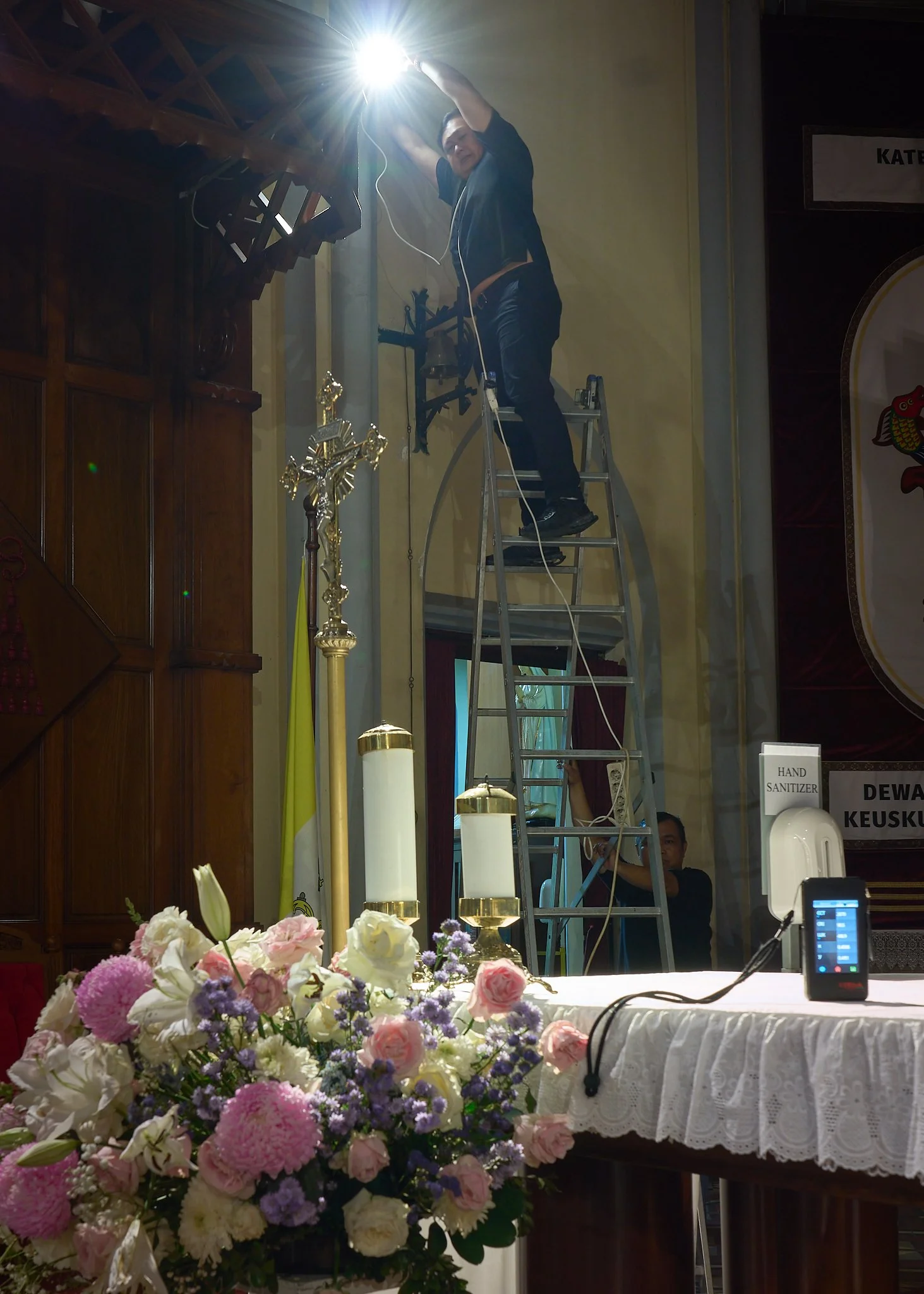
Michael Ho from ERCO Singapore assisting Jakarta Cathedral during the lighting mock-up process, testing luminaire positioning, beam angles, and lighting quality to evaluate architectural perception, visual comfort, and worship experience within the historic cathedral interior.
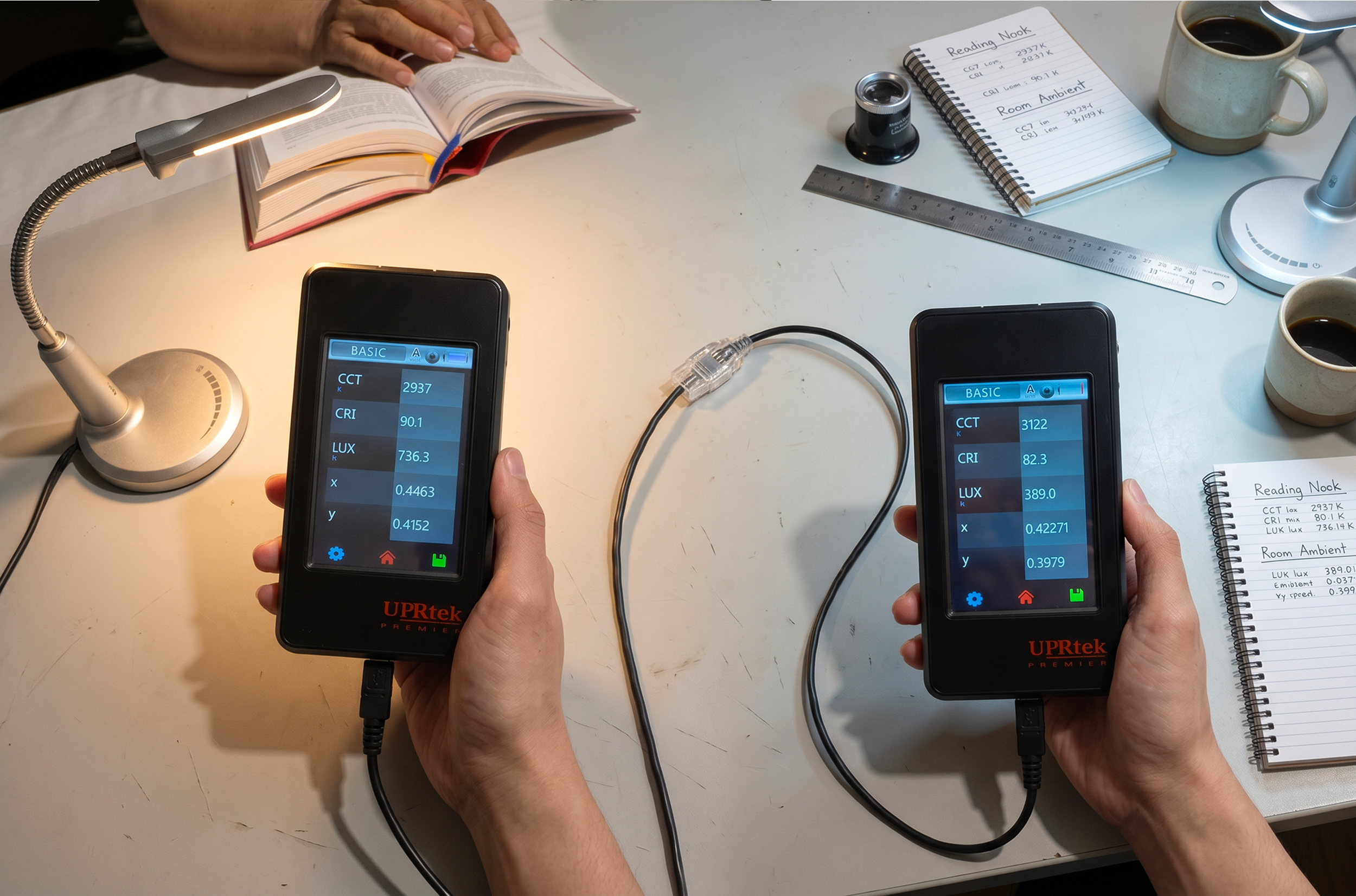
A comparative mock-up evaluation was conducted between the proposed ERCO lighting solution (left) and the existing lighting system (right). Using a professional spectrometer, the assessment measured illuminance (lux), correlated color temperature (CCT), and color rendering quality (CRI) to understand how different lighting technologies influence visual perception and worship experience.
The results showed that the ERCO lighting achieved a higher illuminance level (736 lux vs. 389 lux) while maintaining a warm color temperature and superior color rendering performance (CRI 90 vs. CRI 82). This improvement allows priest face expression, architectural details, religious artwork, and liturgical elements to be perceived more naturally and accurately.
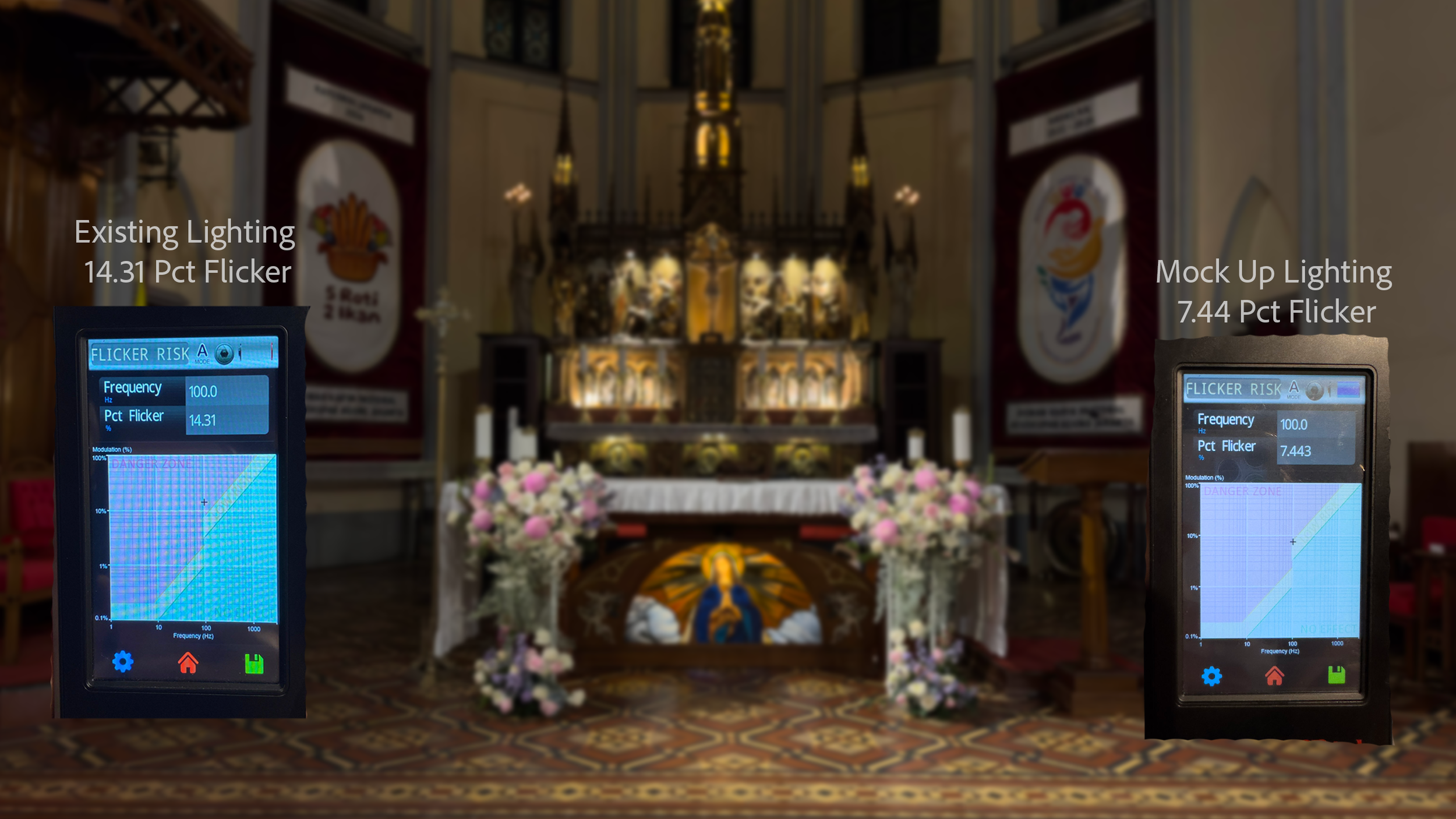
Flicker measurements were conducted to compare the performance of the existing lighting system and the proposed ERCO lighting solution. Flicker is an important lighting quality parameter that can affect visual comfort, concentration, camera recording quality, and the overall worship experience.
The measurement results showed that the existing lighting system exhibited a 14.31% flicker level, while the proposed ERCO lighting achieved a significantly lower 7.44% flicker level, representing nearly a 48% reduction in flicker. This improvement contributes to a more stable visual environment, reducing the risk of visual fatigue and discomfort during extended worship activities.
Tabernacle Lighting Mock Up
The comparison between the two lighting approaches demonstrates how lighting strategy significantly influences the visual perception, emotional atmosphere, and spiritual experience of the church tabernacle. Although both scenes illuminate the same sacred architectural object, the difference in lighting composition creates entirely different spatial qualities and emotional responses.
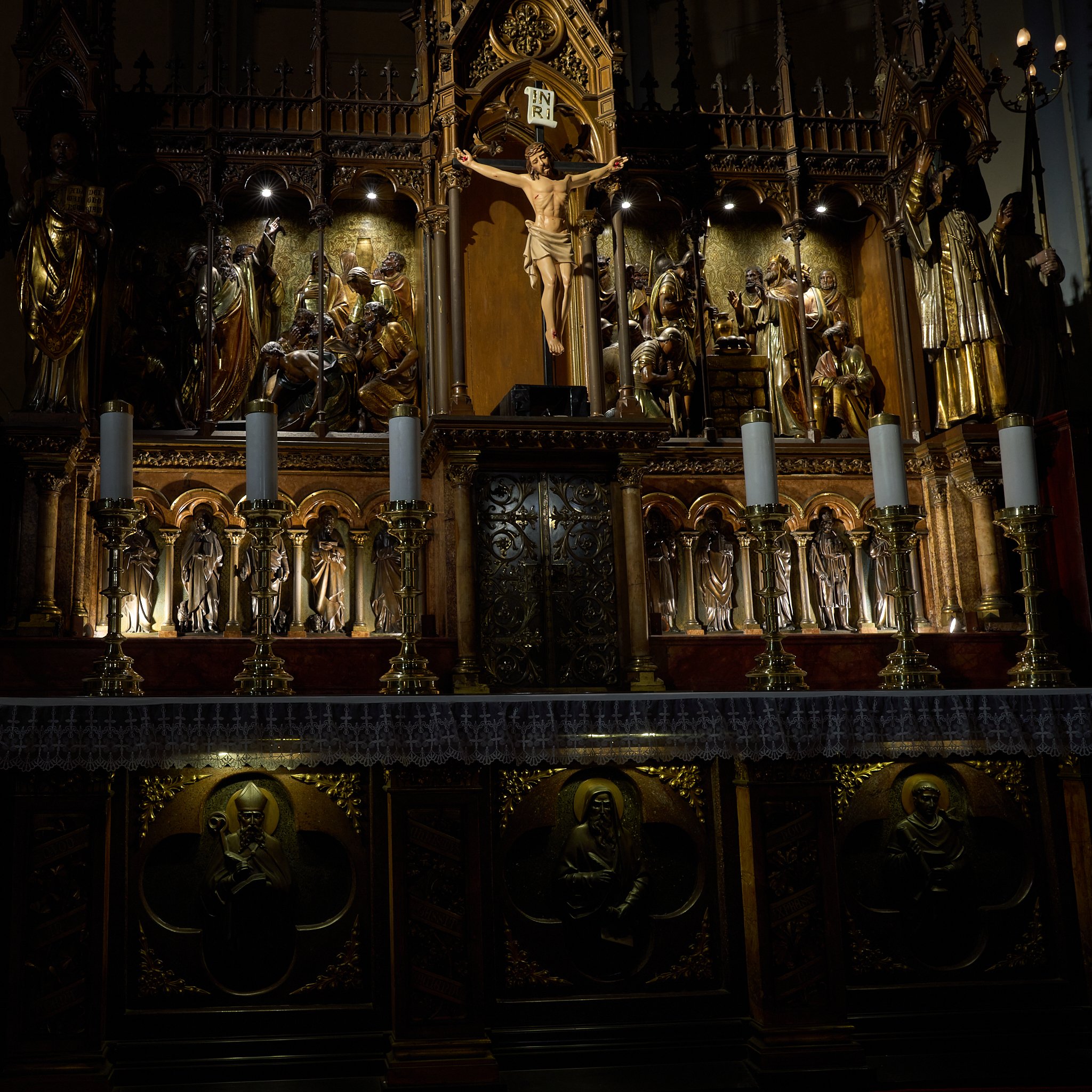
Existing Lighting - small spotlight create glare spot and exesive dart spot
Existing Tabernacle Lighting Strategy
Multiple Small Spotlights with Fragmented Illumination
The existing tabernacle is illuminated using multiple small spotlight sources with narrow beam distributions. While this strategy increases localized brightness, it also creates: excessive reflective glare, fragmented illumination, harsh bright-dark transitions, visual clutter, uneven brightness distribution and no focal points.
The multiple bright hotspots generate a visually busy environment where the eye continuously shifts between isolated illuminated areas rather than perceiving the altar composition as a unified sacred focal point. The lighting perception feels: overly contrasty, fragmented, visually loud and noisy, less calm and less spiritually immersive.
The narrow beam spotlights also create excessive dark pockets between illuminated surfaces, causing the sculptural narratives and architectural carvings to appear disconnected from one another. Although dramatic, the lighting lacks overall compositional harmony and reduces the contemplative quality expected within sacred architecture.
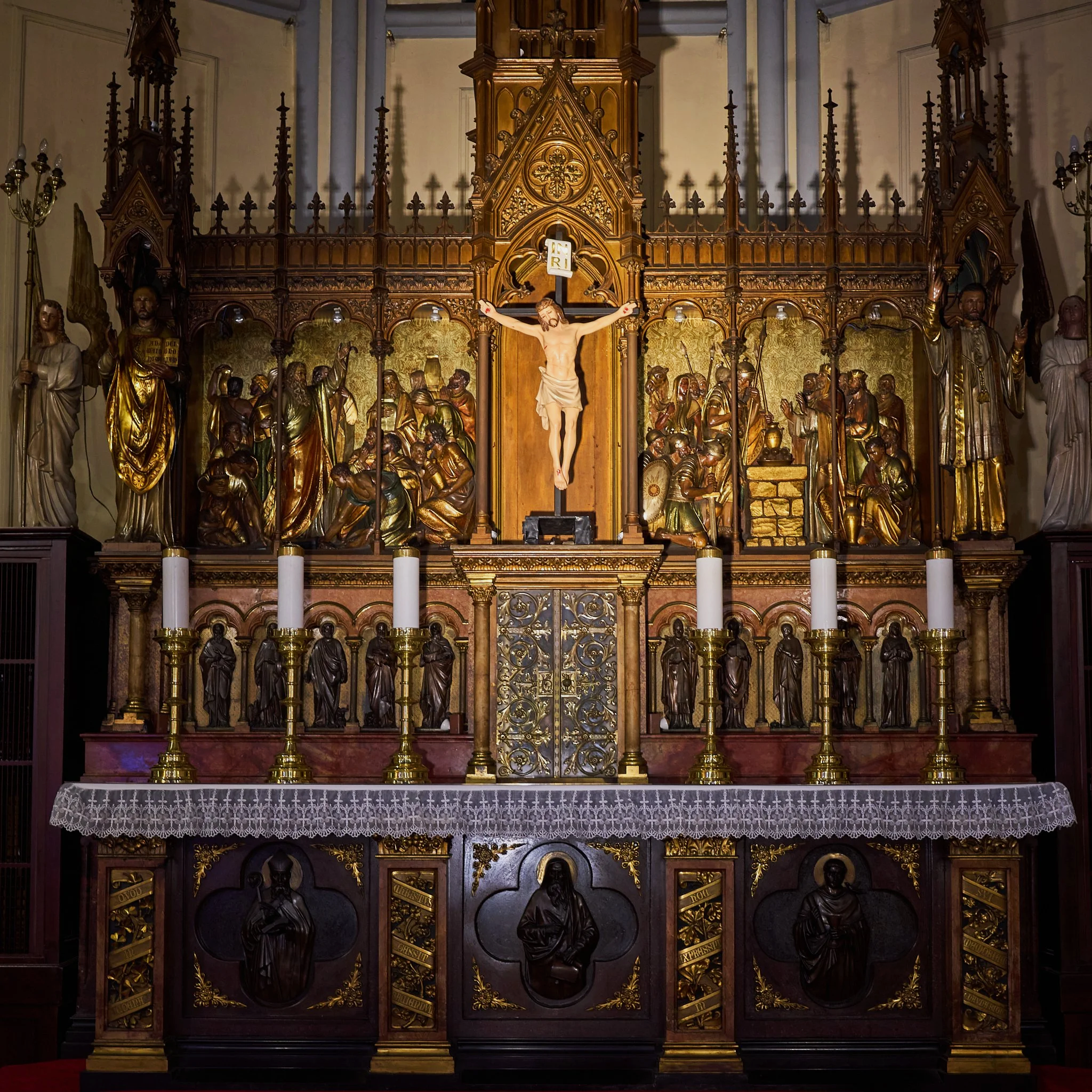
Mock Up Testing - Reveal Golden Color and Visual Hierarchy
Mock Up Tabernacle Lighting
Layered and Hierarchical Illumination
The mock up lighting strategy shifts toward a more integrated and layered composition with improved visual hierarchy and controlled luminance balance. The mock-up lighting creates a more refined and cohesive sacred atmosphere by revealing the natural golden warmth and material richness of the historic altar architecture.
This strategy creates: stronger visual hierarchy, better luminance balance, reduced glare perception, improved spatial continuity, greater visual depth, enhanced sacred atmosphere and reveal the golden color paint.
The crucifix becomes the primary spiritual focal point, while the surrounding relief sculptures and ornamental carvings remain visually connected without competing excessively for attention. The lighting perception now feels: more sacred and contemplative, more visually organized, richer in depth and texture, more emotionally immersive, calmer and more reverent
Rather than fragmented the tabernacle composition, the lighting now creates layered depth and gentle contrast that guide the eye naturally through the altar narrative. The result is a lighting environment that feels more harmonious, contemplative, and emotionally immersive while maintaining appropriate visual focus and reverence within the sacred space.
Subject to Background Light Ratio
The lighting study explores how subject-to-background illumination ratio influences visual perception, emotional atmosphere, and spatial hierarchy within a sacred architectural environment.
Rather than relying solely on overall brightness, the design approach evaluates how controlled contrast between the subject and background can shape focus, depth perception, and human emotional response.
Subject to Background High Contrast Ratio
Stronger Focus and Dramatic Emphasis
In the high contrast lighting, the lighting composition applies a higher subject-to-background contrast ratio by reducing background illumination and increasing visual separation between the speaker and surrounding architecture.
This strategy creates:
Stronger visual focus on the subject
Greater sense of depth
More dramatic atmosphere
Reduced background distraction
Enhanced subject prominence
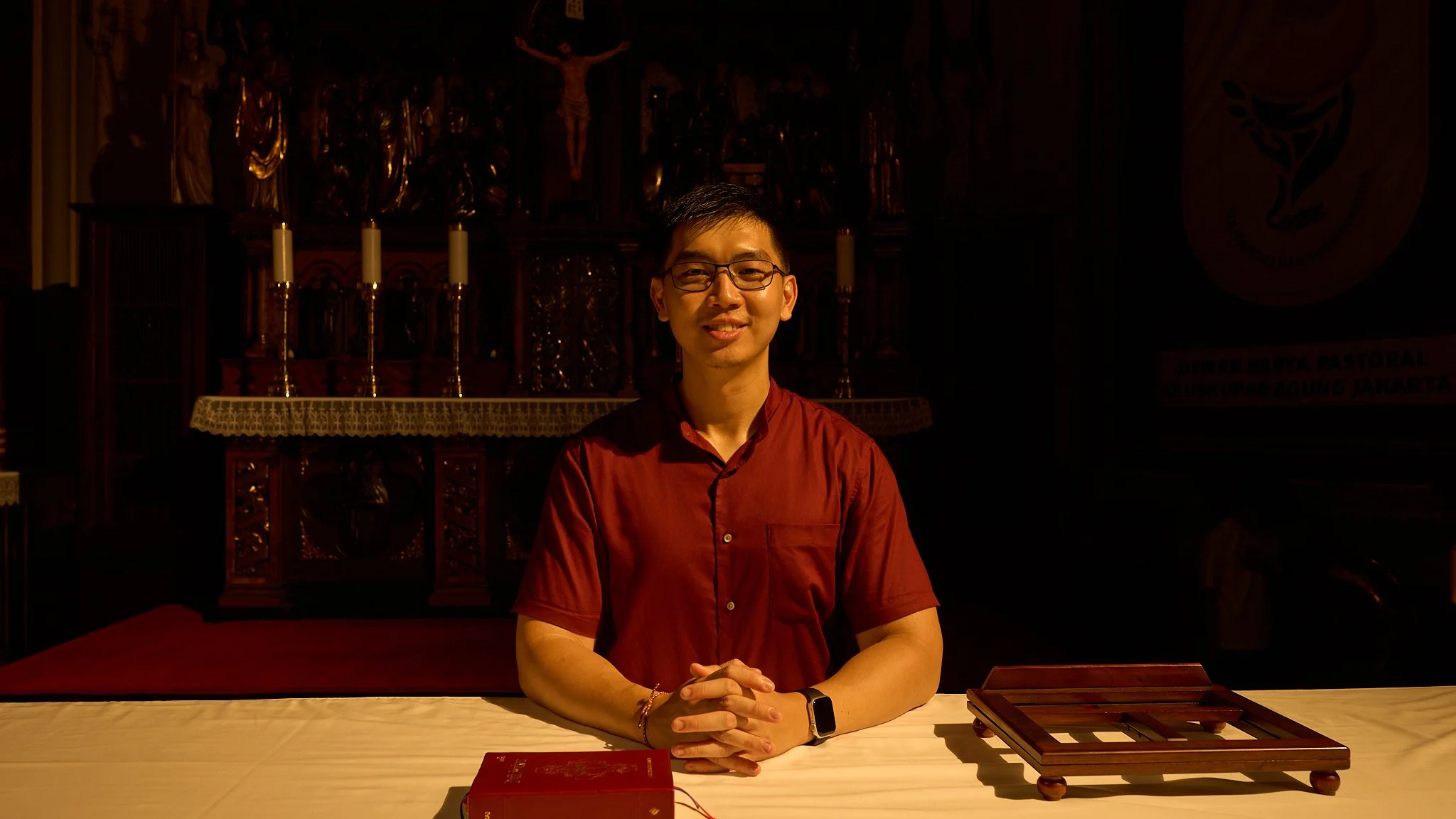
Subject - Background Illumination Ratio - High Contrast
The darker background allows the human figure to emerge more clearly from the space, improving visual hierarchy and directing audience attention more intentionally toward the speaker. The lighting perception feels: More intimate, More cinematic, More emotionally focused, More visually dramatic and More contemplative.
This approach is particularly effective for: Camera-focused communication settings, Recorded presentations, Broadcast environments, Emotional or reflective moments and Dramatic or Contemplative Sermons storytelling,
Subject to Background Medium Contrast Ratio
Balanced Visibility and Spatial Integration
In Medium Contrast Ratio Lighting, the lighting composition applies a medium subject-to-background contrast ratio, where both the subject and altar background remain visibly connected within the visual field. This approach creates: Softer visual transition, Balanced spatial perception, Comfortable facial visibility, Natural skin tone rendering and Greater contextual awareness of the architectural background.
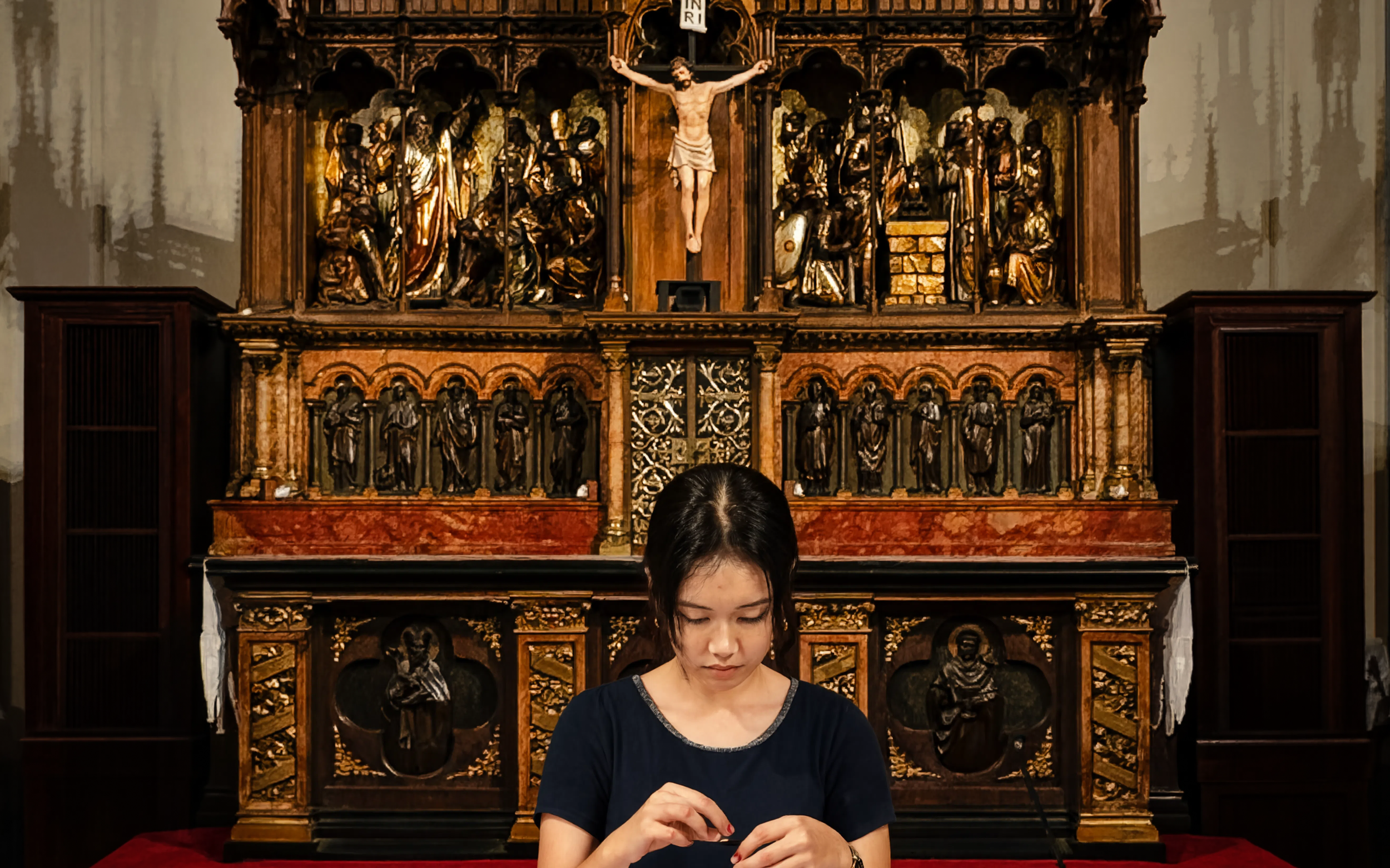
Subject - Background Illumination Ratio - Medium Contrast
The medium contrast ratio allows the speaker to remain visually dominant while maintaining the sacred altar as an important spatial backdrop. The lighting perception feels: Warm and approachable, Spatially balanced, Calm and conversational and Architecturally integrated.
This lighting condition is suitable for: Religious talks, Community interaction, Hybrid worship streaming, Educational or pastoral communication and Situations requiring both subject clarity and environmental context.
Via Crucis Mural Paint by Theo Molkenboer
The lighting study demonstrates how color rendering quality and illumination level significantly influence the visual perception, emotional atmosphere, and artistic readability of the Via Crucis mural painting by Theo Molkenboer.
Rather than functioning solely as illumination, the lighting becomes a medium for revealing artistic detail, material color richness, and spiritual narrative within the sacred artwork.
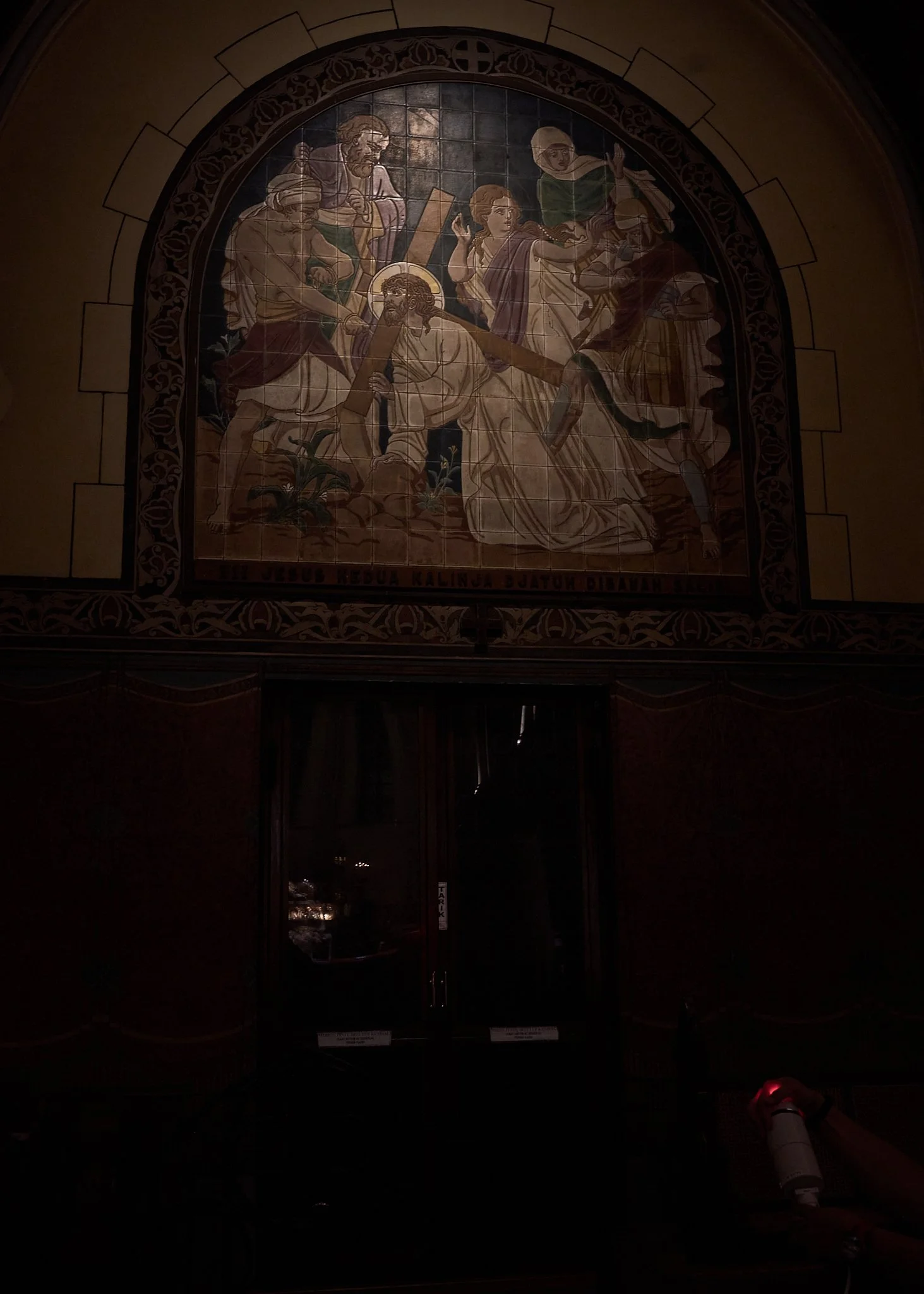
Existing Lighting - Low Color Rendering Index - Low Lux Level
Existing Lighting Mural Painting
Low Color Rendering Index — Low Lux Level
The existing lighting condition produces limited visual clarity due to insufficient illumination level and poor color rendering quality.
The mural appears:
Dim and visually compressed
Lacking tonal separation
Low in material richness
Reduced in artistic legibility
Flat in color perception
Visually muted and less emotionally engaging
The low Color Rendering Index (CRI) reduces the ability of the lighting to accurately reveal the original pigments, textures, and chromatic nuances of the artwork.
As a result:
Skin tones appear dull
Warm color layers become muddy
Fine artistic details are lost
Depth and dimensionality are weakened
The mural narrative becomes less visually expressive
The low lux level further diminishes the mural’s visual prominence within the sacred interior, causing the artwork to recede into darkness rather than serving as an important spiritual and artistic focal point.
The overall perception feels:
Dark and visually subdued
Less inviting
Less emotionally immersive
Less connected to the sacred storytelling intention of the artwork
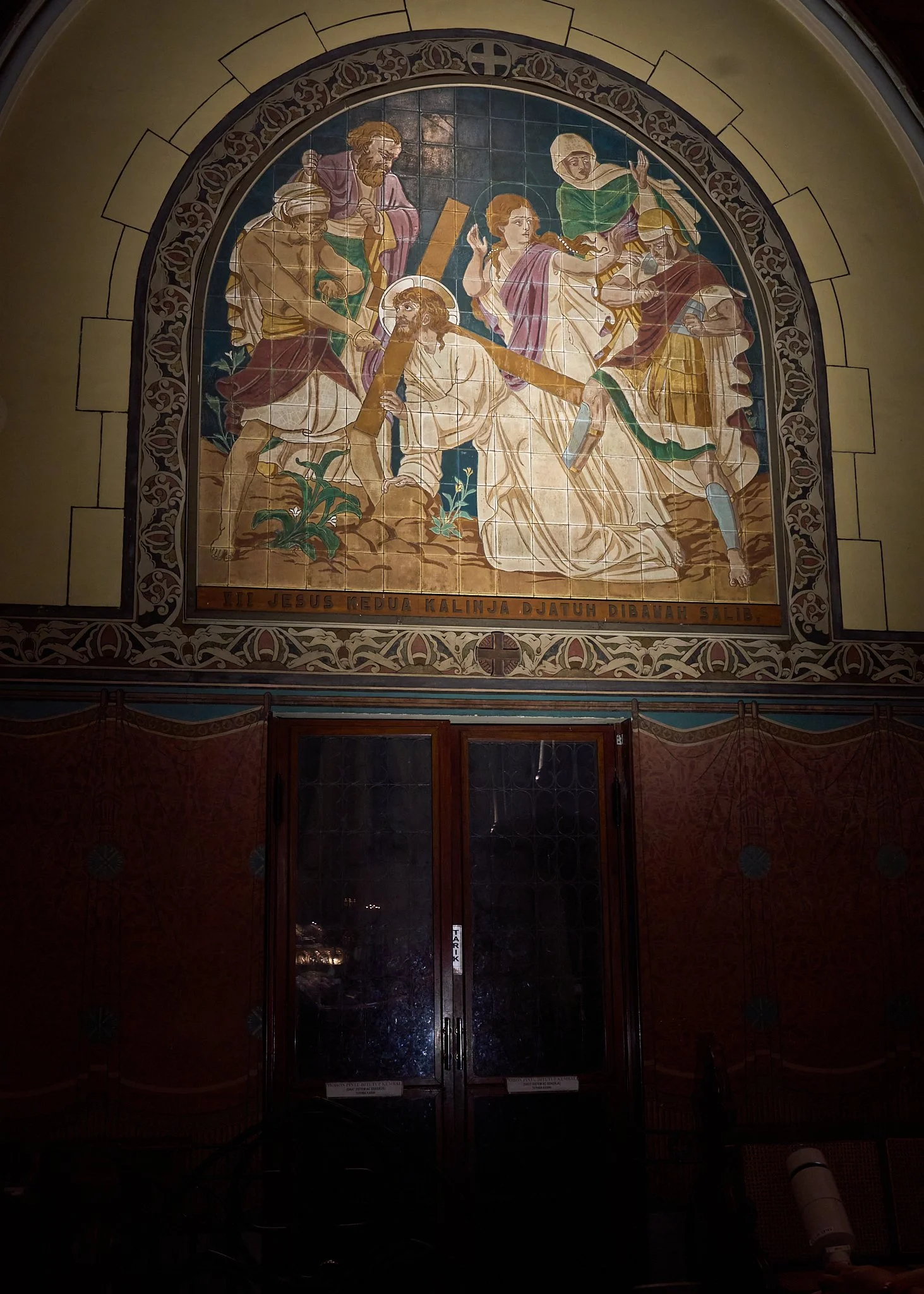
Erco Mock Up Lighting - Higher Color Rendering Index - Higher Lux Level
Mock Up Lighting Mural Painting
Higher Color Rendering Index — Higher Lux Level
In the lower image, the improved lighting condition significantly enhances the visual and emotional perception of the mural through higher CRI illumination and increased, yet controlled, lux levels.
The lighting now reveals:
Richer color fidelity
Greater tonal separation
Improved material texture
Enhanced artistic detail
Better visual hierarchy
Stronger narrative readability
The higher CRI lighting restores the warmth and complexity of the original mural palette, allowing:
Skin tones to appear more natural
Gold and earth-tone pigments to emerge more vividly
Fine brushwork and texture to become visible
Visual depth and layering to feel more dimensional
The increased illumination level improves visibility while maintaining a warm and contemplative sacred atmosphere.
Rather than appearing flat or faded, the mural now becomes:
More visually alive
More emotionally engaging
More spiritually expressive
More architecturally integrated within the church interior
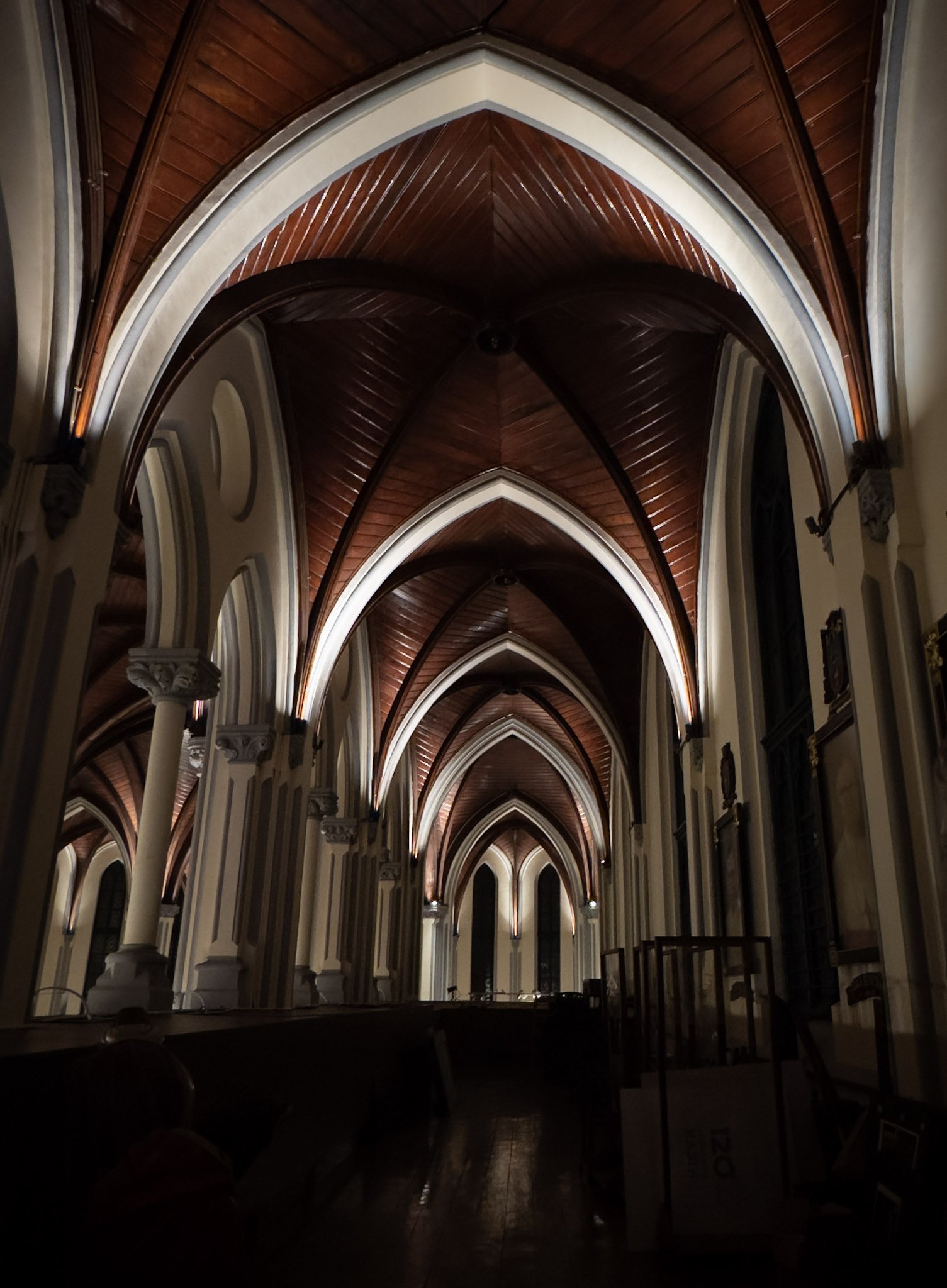
Lighting Mock-Up on vault balcony
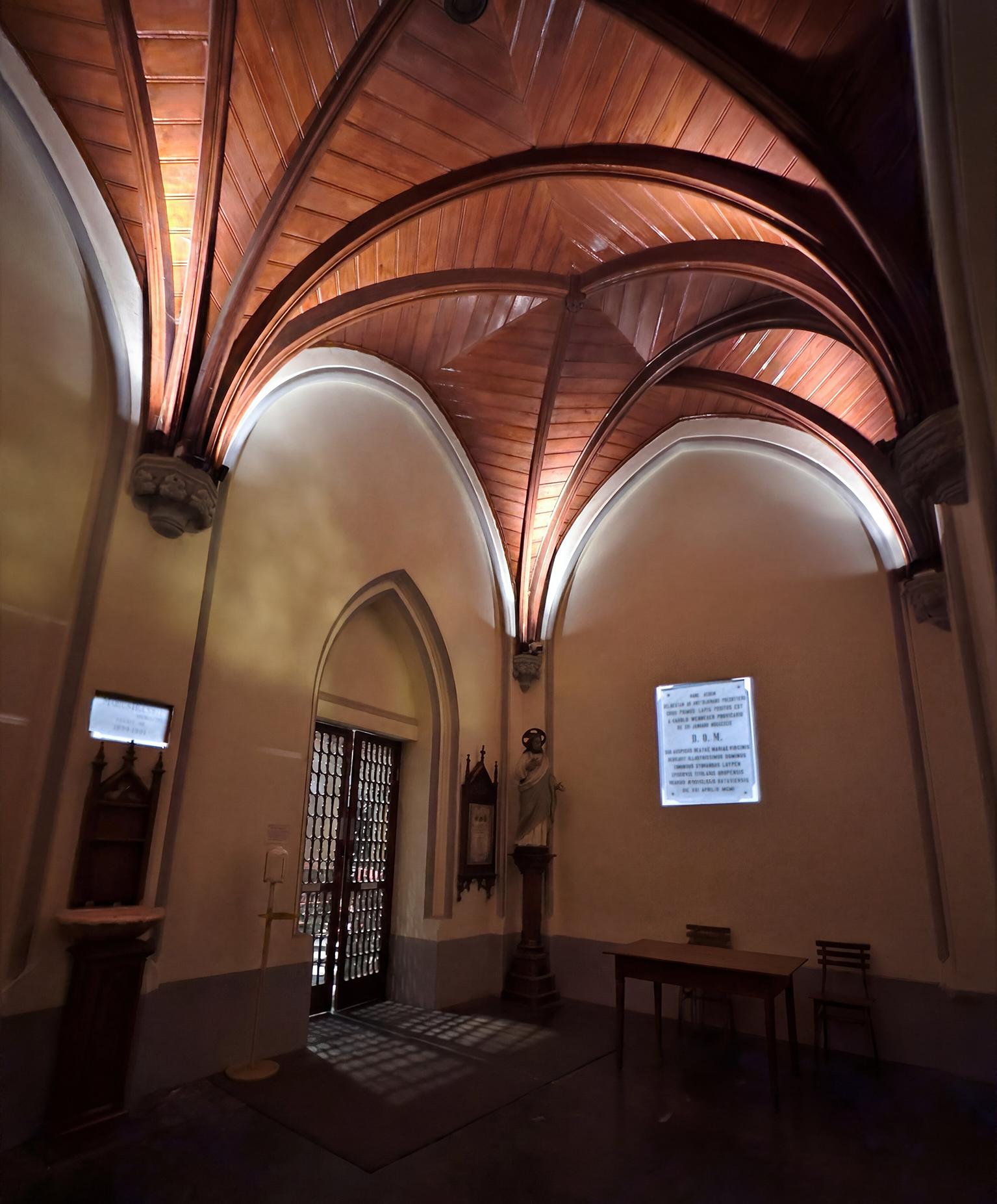
Lighting Projection Mock-Up for the Memorial Plaque in the Foyer of Jakarta Cathedral
What is sacred architectural lighting concept?
The mock-up lighting study demonstrates that lighting quality within sacred architecture cannot be measured only by illumination level alone.
Different lighting strategies create fundamentally different perceptions of atmosphere, spirituality, emotional comfort, and architectural experience. Through careful control of luminance hierarchy, color rendering, contrast, and visual focus, lighting becomes more than technical illumination — it becomes an instrument for contemplation, reverence, and human connection.
For historic religious spaces such as Jakarta Cathedral, sensitive lighting design plays an important role in preserving not only architectural heritage, but also the emotional and spiritual qualities experienced by worshippers and visitors.
This study reflects a broader human-centered lighting approach where light is designed not to dominate the space, but to quietly support sacred atmosphere, visual comfort, and meaningful spiritual experience.
Project Information
Project: Jakarta Cathedral Architectural Lighting
Location: Jakarta, Indonesia
Service: Sacred and Heritage Architectural Lighting Design
Scope: Lighting Mock-Up, Visual Evaluation, Lighting Quality Assessment
Consultant: Herwin Gunawan / ALTA Integra
Year: 2024