At ALTA Integra, we believe that lighting within sacred architecture should do more than provide visibility. It should reveal architectural beauty, support spiritual experience, and strengthen the emotional connection between people and place.
The comparison between the existing and redesigned lighting at Jakarta Cathedral demonstrates how lighting quality influences the way architecture is perceived and experienced. While the original lighting relied primarily on bright point sources that created glare and visual distraction, the redesigned approach focuses on luminance balance, visual hierarchy, architectural emphasis, and human comfort.
By carefully illuminating the cathedral's historic murals, architectural rhythm, and timber ceiling, the lighting transforms the worship environment from a visually functional space into a more contemplative and spiritually immersive experience. The result is not simply a brighter cathedral, but a more meaningful one—where light supports prayer, reinforces sacred symbolism, and reveals the architectural heritage of one of Indonesia's most significant religious landmarks.
WEST VIEW REGULAR MASS SCENARIO
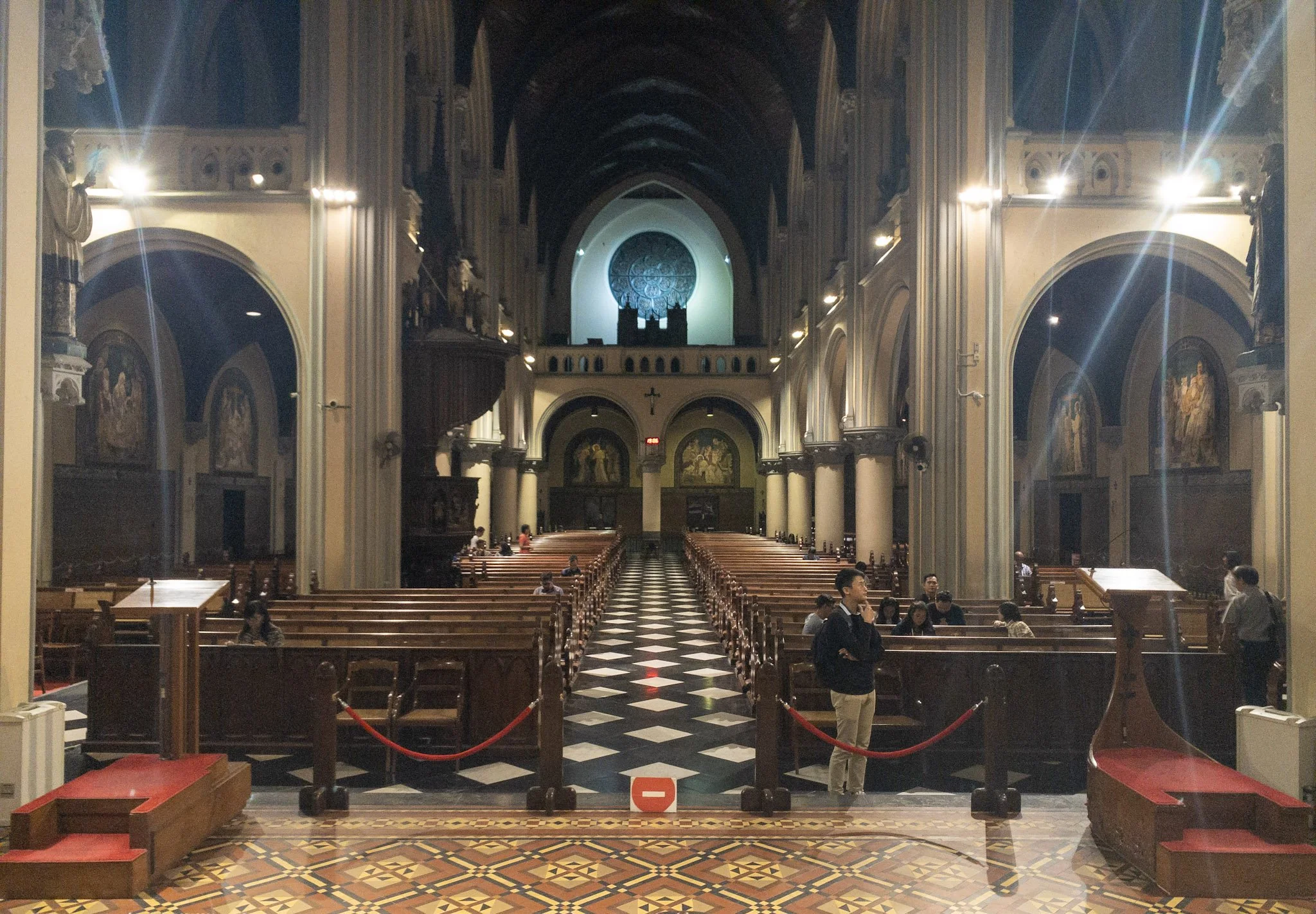
West View Before Lighting Design
Visual Perception
The existing lighting appears bright in isolated areas but dark throughout much of the worship space. The eye is immediately drawn toward multiple exposed luminaires rather than the architecture itself.
Key Lighting Characteristics
Excessive Glare
High-intensity point sources create visible glare and starburst effects.
Luminaires become visual focal points instead of the architectural space.
Visual comfort is reduced, particularly during extended worship activities.
Poor Visual Hierarchy
Multiple bright points compete for attention.
No clear progression of visual focus through the nave.
Architectural elements such as murals, columns, and timber ceiling are not effectively accentuated.
Flat Architectural Perception
Gothic proportions and verticality are difficult to perceive.
Ceiling volume appears visually disconnected from the worship space.
Limited perception of spatial depth and grandeur.
Uneven Luminance Distribution
Bright hotspots adjacent to dark areas create visual imbalance.
Human adaptation shifts continuously between bright and dark zones.
Sacred artwork becomes less discernible.
Emotional Experience: the atmosphere feels and visually busy. while the lighting provide enough brightness for visibility, it does little to create a sense of reflection or emotional connection. As a result, the atmosphere feels less immersive and does not fully support the spiritual character of the space.
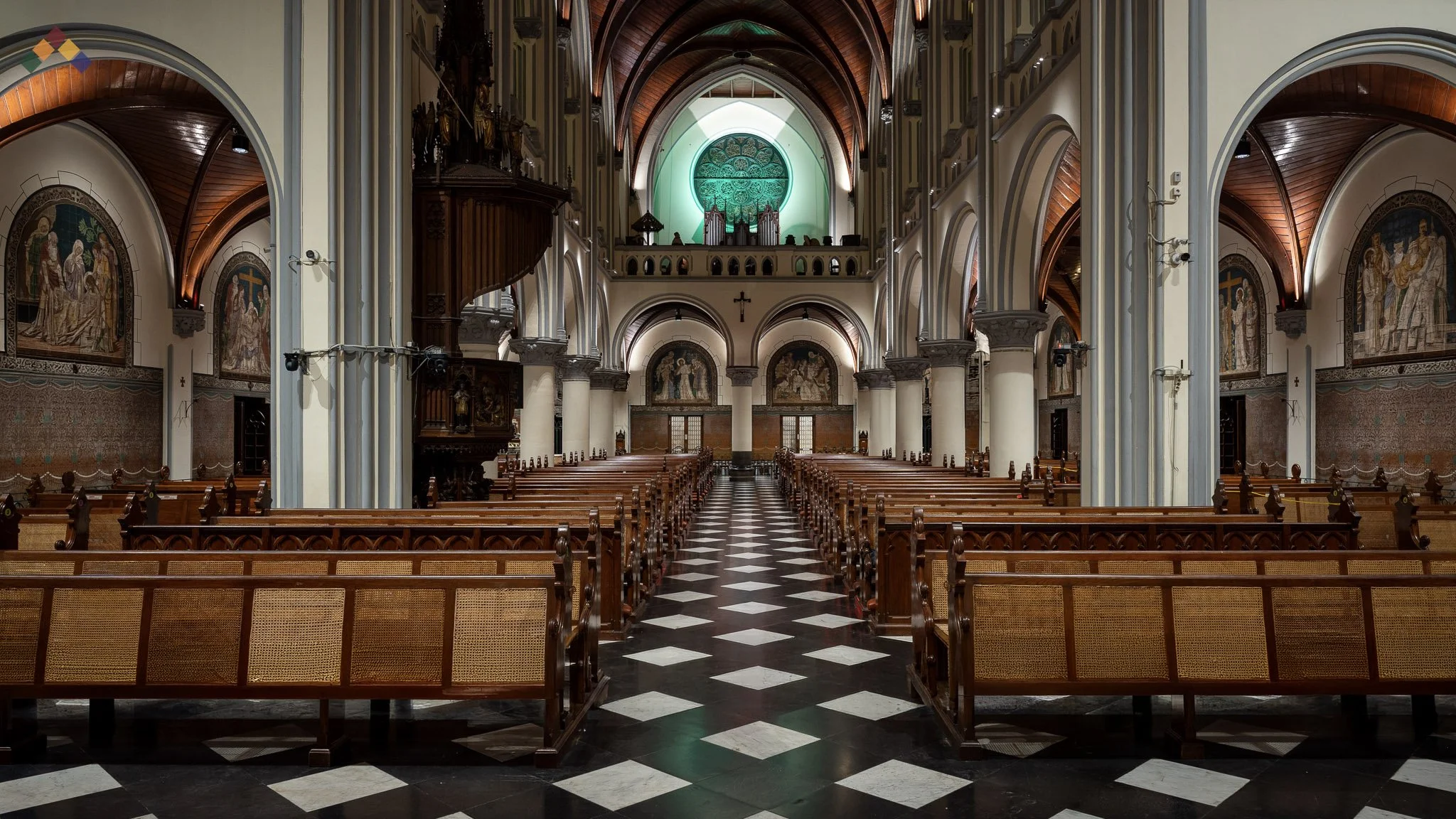
West View After Lighting Design
Visual Perception
The redesigned lighting shifts focus from the luminaires to the architecture. Light is no longer perceived as individual fixtures but as an integrated part of the sacred environment.
Key Lighting Characteristics
Glare-Controlled Environment
Light sources are visually discreet.
Architectural surfaces become the primary visual experience.
Improved visual comfort for worshippers.
Strong Visual Hierarchy
The central aisle naturally guides movement and attention.
Architectural rhythm is clearly articulated.
The rose window and rear liturgical elements become meaningful focal points.
Enhanced Architectural Legibility
The cathedral's scale and proportions are revealed.
Vertical columns gain definition and depth.
The timber ceiling becomes a celebrated architectural feature.
Balanced Luminance Distribution
Smooth transitions between light and shadow.
Improved adaptation across the visual field.
Greater perception of depth and volume.
Improved Material Rendering
Warm timber surfaces reveal texture and craftsmanship.
Murals become more visible and expressive.
Historic architectural details gain visual prominence.
Emotional Experience: the atmosphere feels calm, sacred and contemplative. The lighting enhances the sense of spacious and elegance, creating a more spiritually engaging environment. Compare to existing lighting condition, the new lighting design better supports the emotional and spiritual character of worship.
EAST VIEW FROM BALCONY
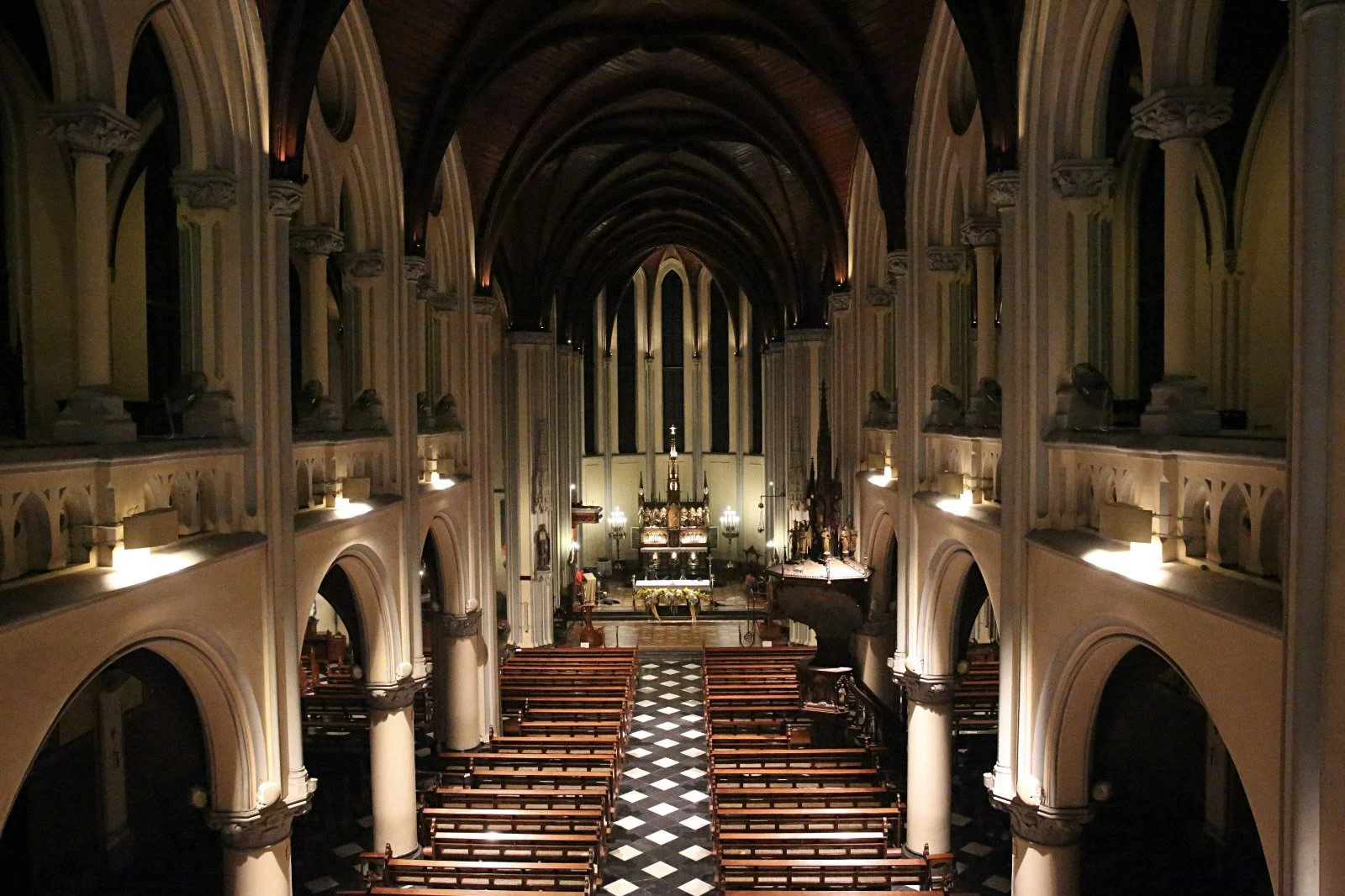
Altar View Before Lighting Design
Limited Architectural Hierarchy
The existing lighting primarily illuminates horizontal surfaces and circulation areas, while the cathedral's most significant architectural feature—the timber vaulted ceiling—remains largely concealed in darkness.
The result is a more limited architectural presence. The cathedral’s vertical scale is diminished. Gothic proportions are difficult to perceive, the spatial volume appears compressed and architectural rhythm is visually weakened.
Focal Competition
The altar is illuminated, but the surrounding architecture contributes little to the visual narrative. The eye is drawn toward isolated bright elements rather than experiencing a coherent sequence of architectural focal points.
Reduced Spatial Depth
The nave, columns, ceiling vaults, and upper architectural elements merge into dark background surfaces. This reduces depth perception, spatial layering, architectural legibility, sense of grandeur. Emotional Perception the atmosphere feels: functional, quiet, dimly illuminated, and architecturally under-expressed. The lighting supports worship activities but does not fully communicate the beauty and significance of the sacred architecture.
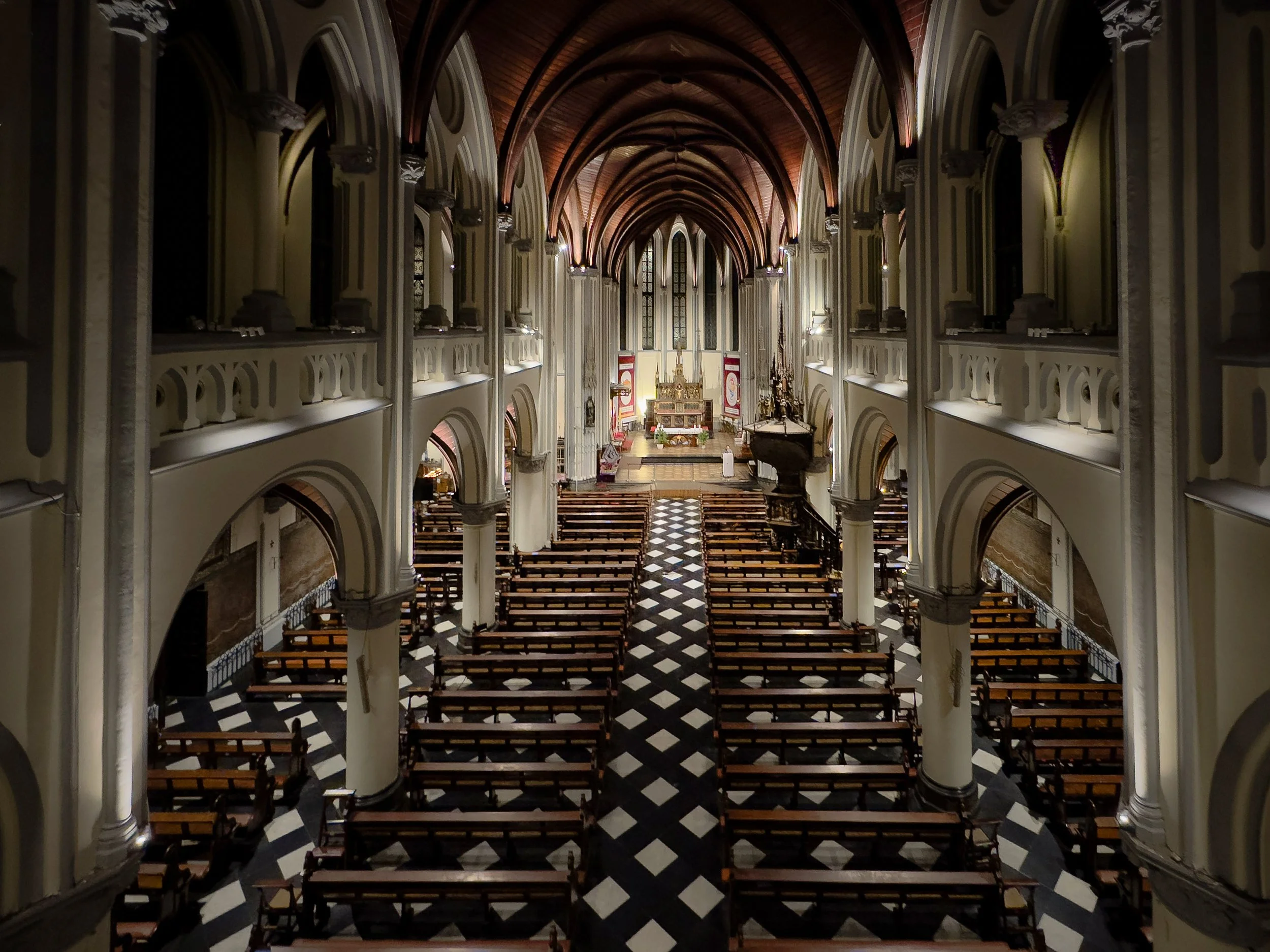
Altar View After Lighting Design
Revealing Architectural Identity
The redesigned lighting establishes the timber ceiling as a primary architectural feature. Carefully controlled uplighting reveals: vault geometry, material texture, structural rhythm and architectural craftsmanship. The ceiling becomes part of the worship experience rather than disappearing into darkness.
Improved Visual Hierarchy
The lighting now creates multiple layers of visual interest:
Altar and sanctuary
Vertical columns
Timber vaults
Nave and circulation areas
This hierarchy naturally guides attention through the space.
Enhanced Spatial Depth
The relationship between foreground, midground, and background becomes significantly more legible. The eye can now appreciate: Verticality, Depth, Architectural scale and Sacred procession toward the altar.
Better Luminance Distribution
The lighting is distributed more evenly throughout the architectural volume. Instead of isolated bright surfaces, the cathedral feels visually connected as a single spatial experience. Material Expression: The warm timber ceiling gains richness and texture.
The contrast between: Timber vaults, Stone columns and White wall surfaces creates greater visual depth and architectural clarity.
VIA DOLOROSA COLUMN VIEW
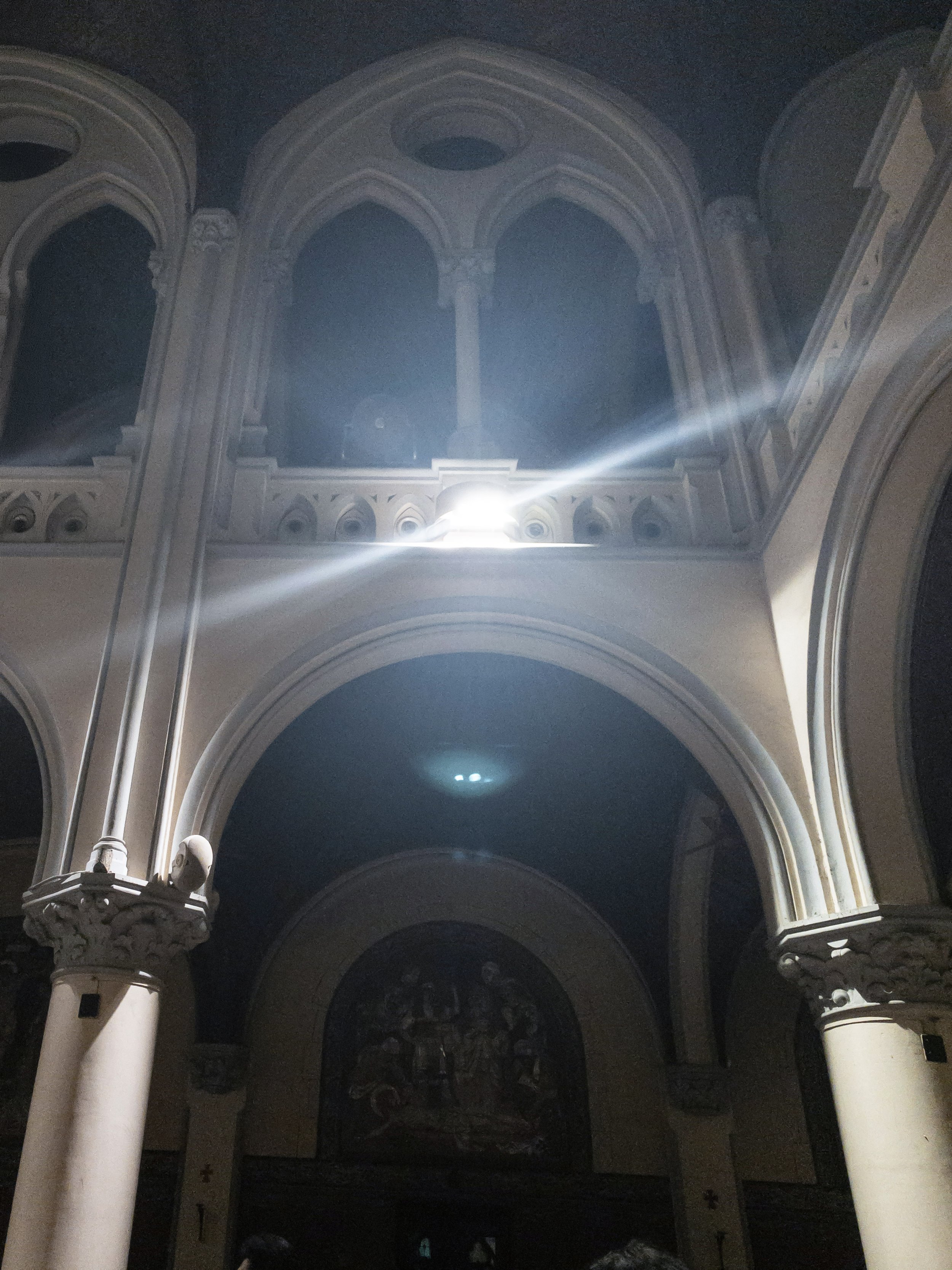
Via Dolorosa View Before Lighting Design
Lighting Quality Assessment
In the existing condition, a high-intensity luminaire is positioned within the field of view, becoming the brightest object in the scene.
Excessive Glare
From the mobile phone camera we can see the luminaire creates: direct glare, disability glare, lens flare and visual discomfort. Rather than appreciating the architecture, visitors are immediately drawn toward the light source itself.
Poor Visual Hierarchy
The brightest element is not the architecture, the mural, the column capitals and the gothic arch. Instead, attention is unintentionally captured by the exposed fixture.
Architectural Compression
The upper vaults and timber ceiling disappear into darkness. As a result: verticality is diminished, architectural scale feels smaller, spatial depth is reduced and the richness of the Gothic detailing is difficult to perceive.
Limited Material Expression
The architectural surfaces appear flat and visually disconnected. Important details such as: capitals, arches, moldings, vault geometry receive minimal visual emphasis.
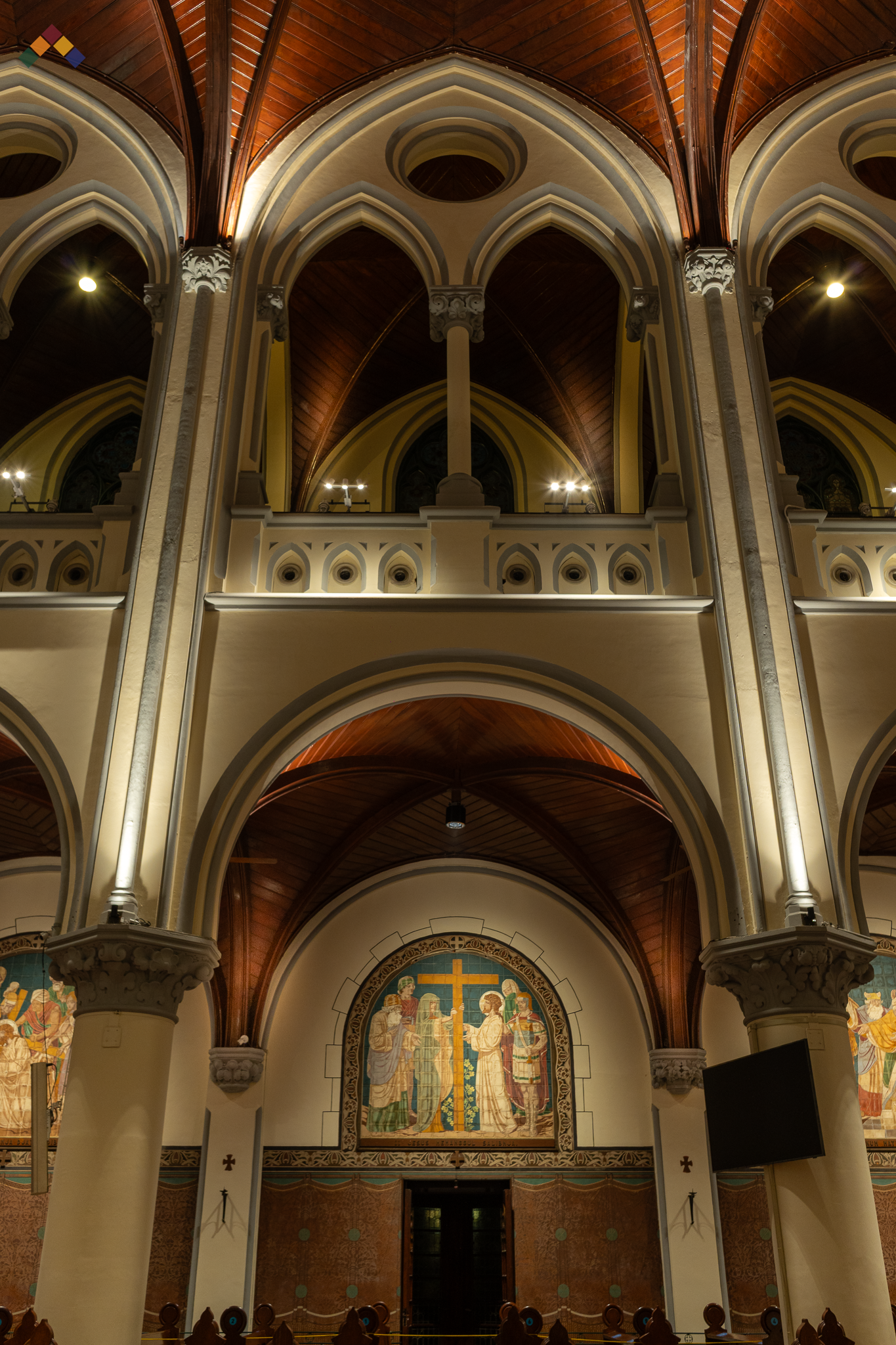
Via Dolorosa View After Lighting Design
Lighting Quality Assessment
The redesigned lighting strategy fundamentally changes how the architecture is experienced.
Glare-Controlled Environment
The luminaires are no longer the visual focus. Instead: Architectural surfaces become illuminated. Light sources visually recede. Visual comfort is significantly improved.
The visitor perceives architecture rather than equipment. Enhanced Architectural Legibility. The lighting reveals: gothic arches, vault geometry, column proportions and historic detailing.
The architecture becomes readable as a complete composition.
Strong Vertical Emphasis. Light is carefully distributed along: columns, capitals, arches and timber vaults. This strengthens the perception of height and grandeur.
Improved Material Rendering
The timber ceiling becomes a dominant architectural feature. Warm illumination reveals: texture, craftsmanship and material richness. The contrast between wood, plaster, and decorative artwork becomes more pronounced and visually engaging.
Integration of Art and Architecture
The mural gains greater visibility and becomes integrated within the overall architectural composition. Rather than appearing as an isolated artwork, it becomes part of the spatial narrative.
West View Contemplative Scenario
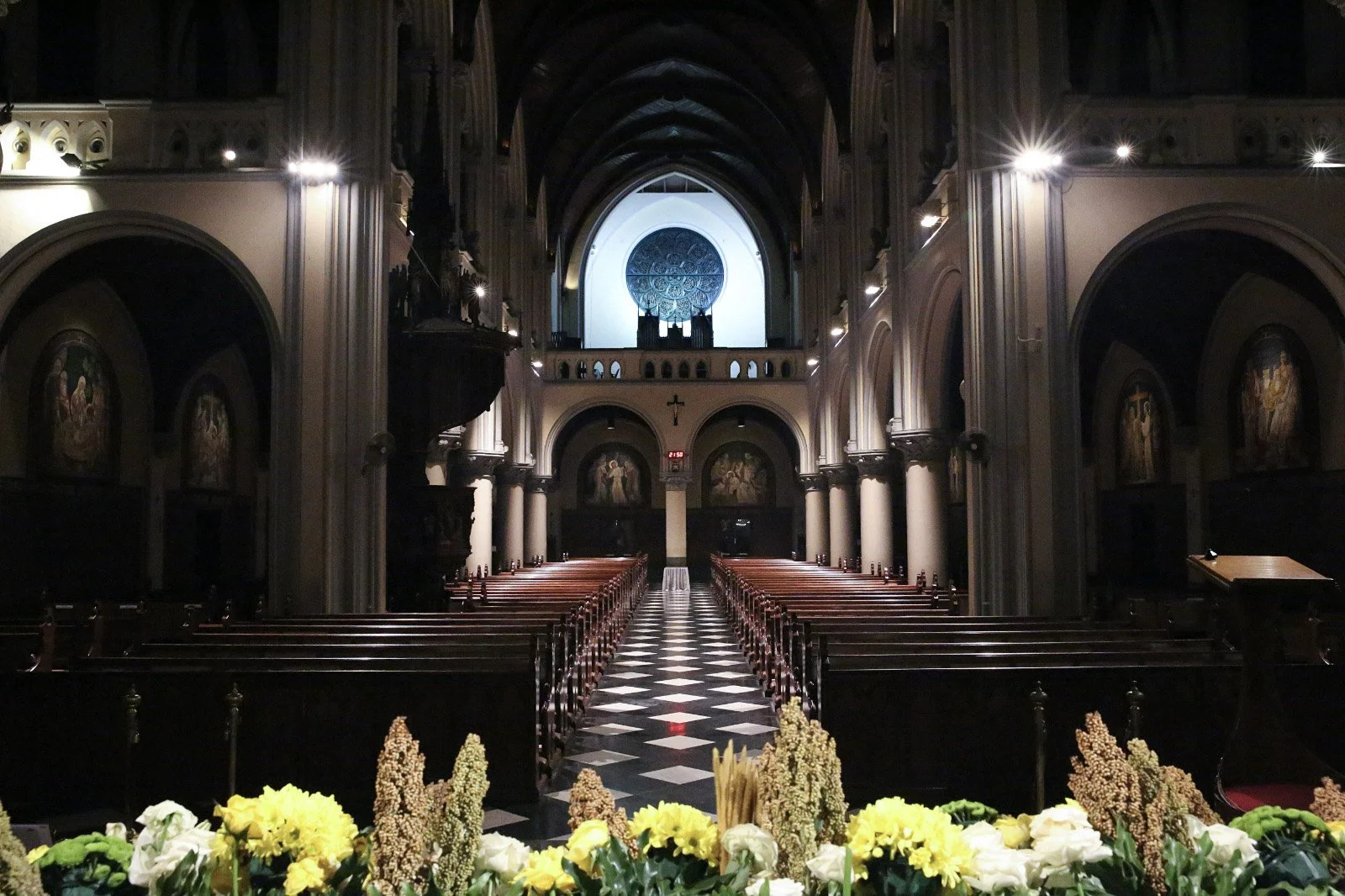
West View - Contemplative Scenario Before Lighting Design
Functional Visibility, Limited Spiritual Atmosphere
In the before lighting condition, the space relies heavily on exposed bright luminaires positioned along the nave and clerestory levels.
Glare-Dominated Environment
Multiple visible light sources create intense brightness contrasts.
The eye is repeatedly attracted to the luminaires themselves.
Starburst effects generate visual distraction.
Reduced Visual Comfort
High luminance sources cause continuous visual adaptation.
Long periods of worship may result in visual fatigue.
Compressed Spatial Perception
The vaulted timber ceiling remains largely hidden in darkness.
The cathedral's verticality and grandeur are difficult to perceive.
Limited Architectural Legibility
Murals, columns, and heritage details become secondary elements.
The architecture serves primarily as a backdrop rather than an active participant in the worship experience.
Spiritual Perception
The space feels: functional, dimly illuminated, visually fragmented, less immersive and less contemplative. While sufficient for visibility, the lighting contributes little to the emotional and spiritual narrative of the cathedral.
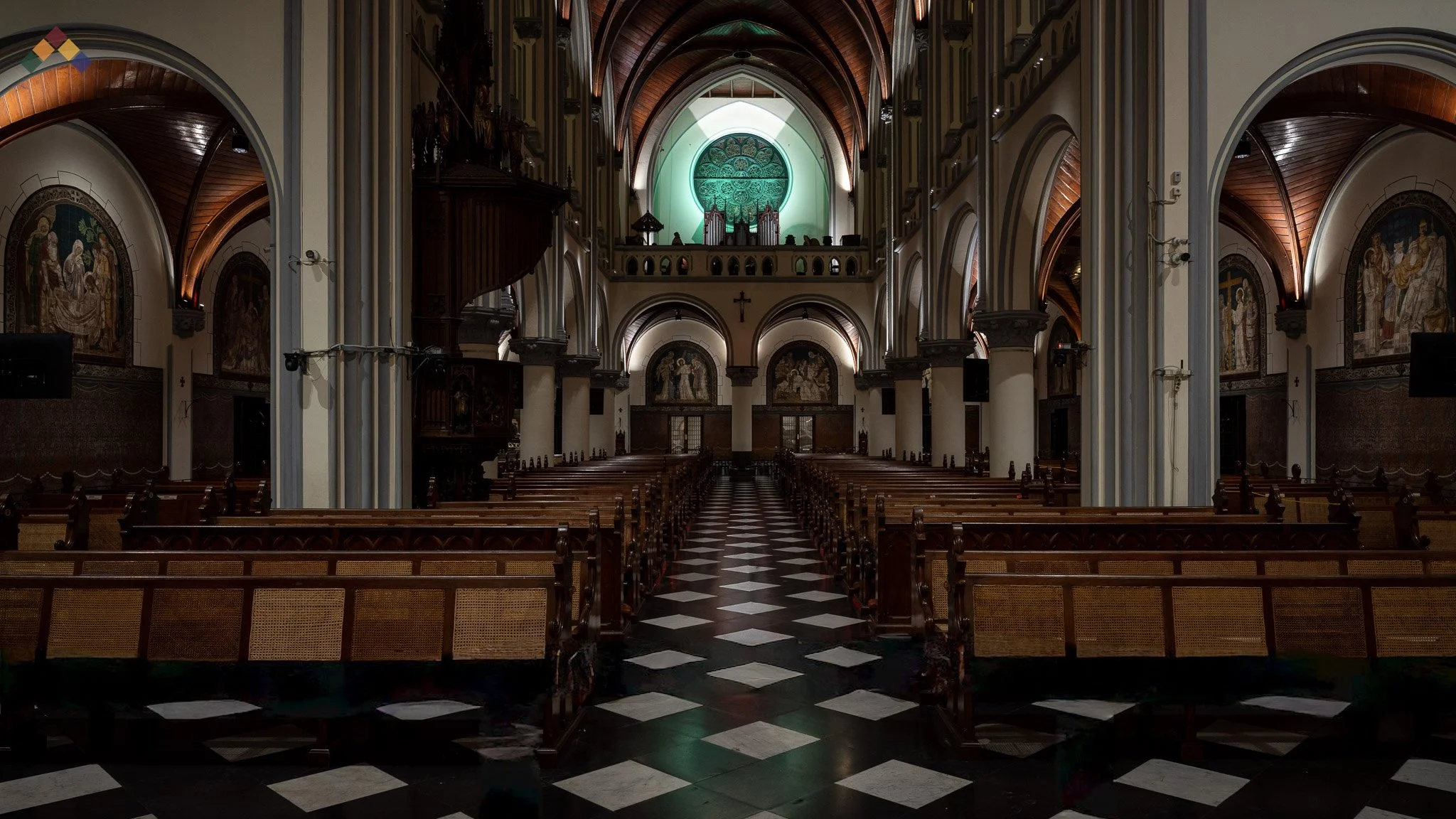
Worship Through Light
The redesigned lighting (bottom image) takes a fundamentally different approach.
Instead of illuminating the space uniformly, the design carefully shapes how worshippers perceive architecture, symbolism, and sacred space.
Reduced Glare and Improved Comfort
Direct visibility of luminaires is minimized.
Architectural surfaces become the primary visual focus.
The eye can comfortably explore the space.
Revealed Architectural Volume
The timber vaults become visible and expressive.
The rhythm of the Gothic arches is clearly articulated.
The cathedral's vertical dimension becomes part of the experience.
Enhanced Visual Hierarchy
The central aisle naturally guides the eye.
Murals gain greater prominence and legibility.
Architectural elements support the spiritual journey toward the sanctuary.
Balanced Light and Shadow
Darkness is preserved where appropriate.
Contrast is controlled rather than eliminated.
Spatial depth and mystery are maintained.
Spiritual Perception
Now the atmosphere now feels: sacred, calm, reverent, intimate, contemplative and emotionally engaging. The cathedral becomes a place that invites reflection rather than simply accommodating occupancy.
ALTAR LIGHTING
The comparison between the before and the after altar lighting demonstrates how lighting strategy fundamentally influences the perception of sacred architecture, emotional atmosphere, and spiritual focus within the church interior. Although both scenes illuminate the same altar, the difference in luminance balance, visual hierarchy, and ambient control produces entirely different spatial and emotional experiences.
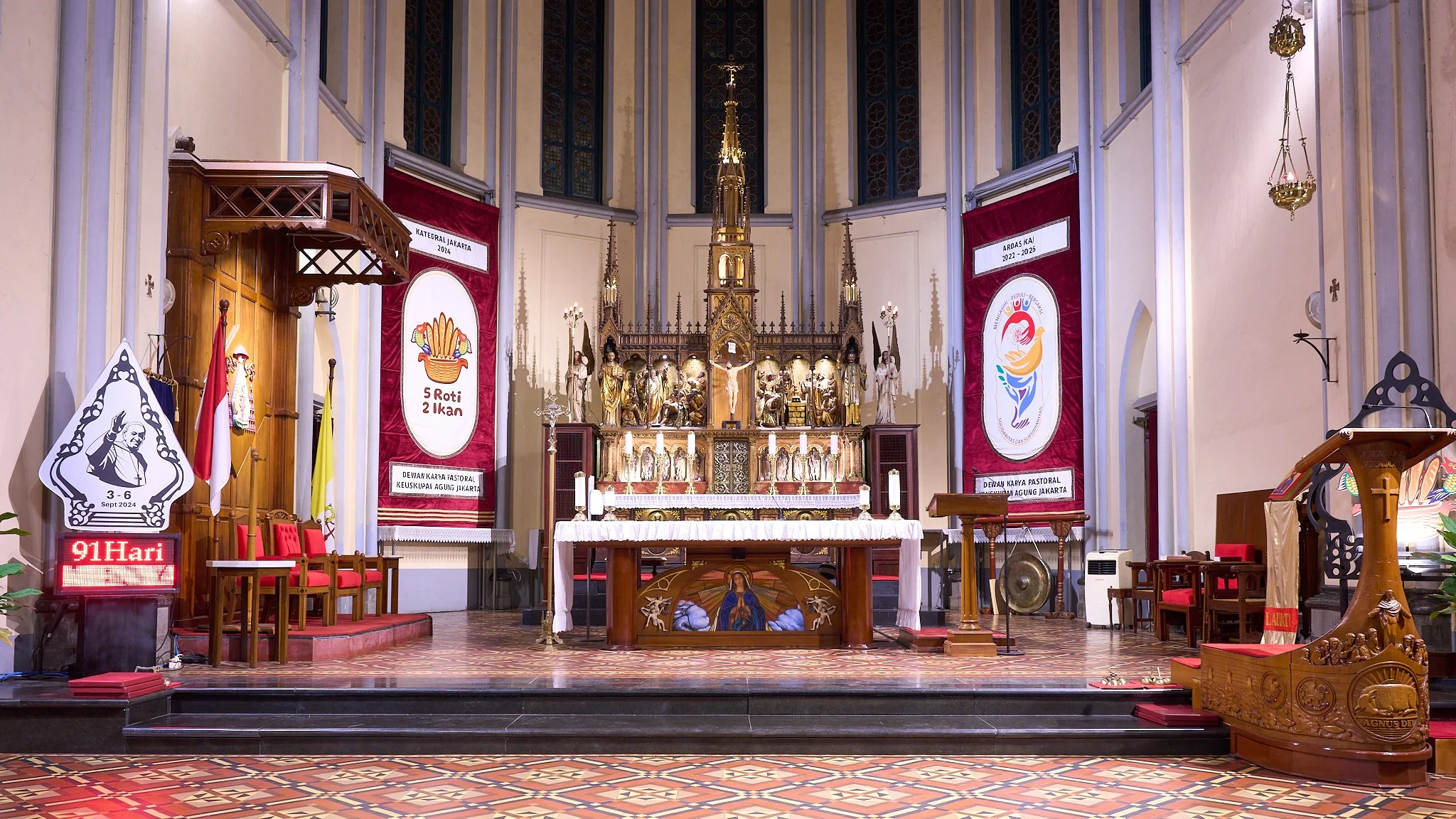
Existing Altar Lighting
Bright but Visually Flat
In the existing lighting condition, the church interior appears generally bright due to high ambient illumination distributed relatively evenly throughout the sanctuary. While the increased brightness improves overall visibility, the lighting lacks: Strong visual hierarchy, Spatial depth, Focal emphasis, Emotional layering and Architectural contrast.
As a result, the altar competes visually with the surrounding walls, floor, banners, and architectural surfaces instead of emerging as the primary sacred focal point. The lighting perception feels: Visually flat, Overly uniform, Spatially shallow, Visually noisy, Less contemplative and Less emotionally immersive.
Although the space appears brightly illuminated, the lighting lacks visual hierarchy and spatial depth. The excessive brightness creates a visually noisy environment that diminishes the sense of serenity, contemplation, and sacred atmosphere within the church interior.
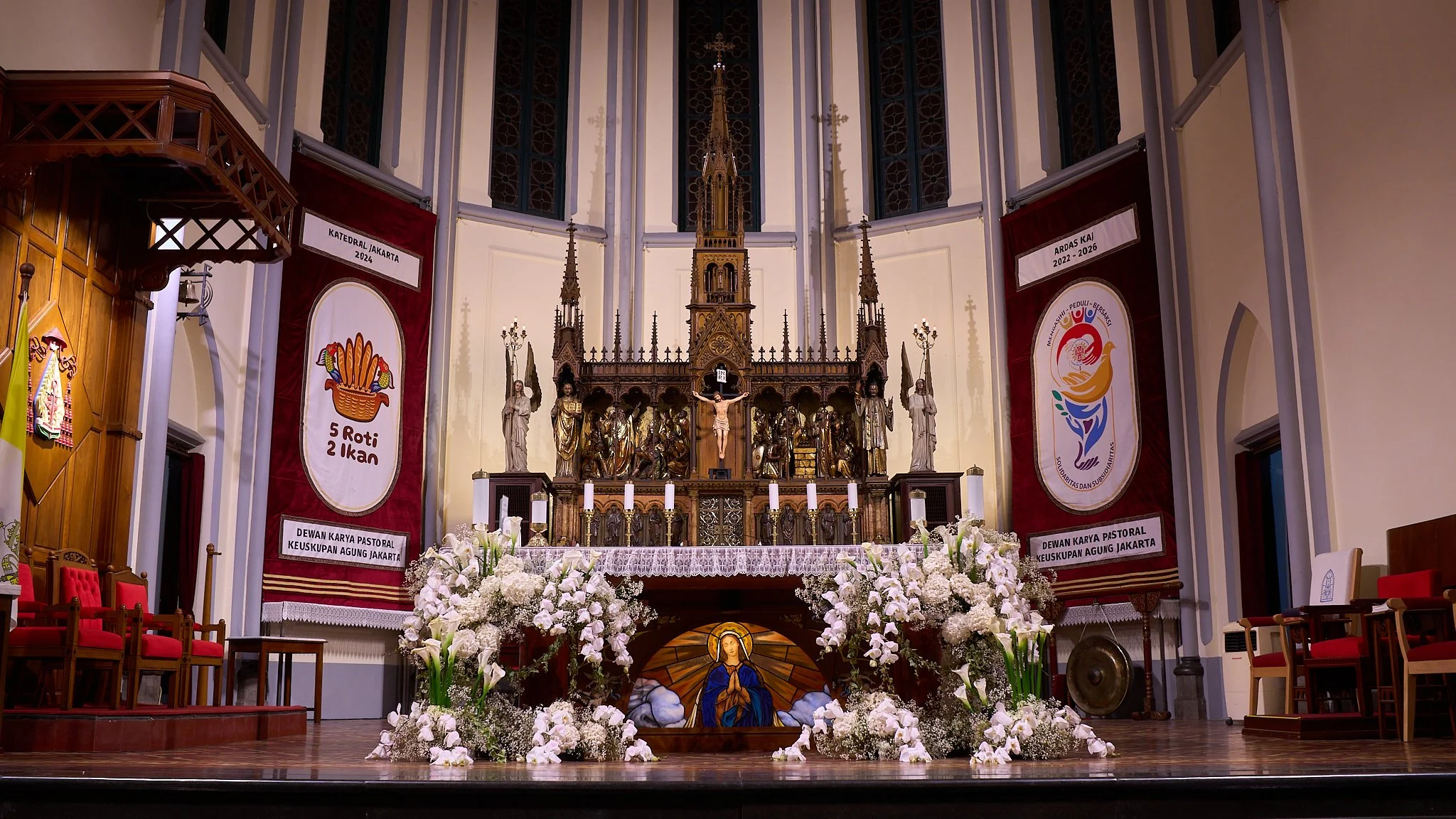
Mock Up Altar Lighting
Layered Hierarchy and Sacred Atmosphere
The mock-up lighting adopts a more intentional and human-centered lighting strategy by reducing unnecessary ambient brightness and strengthening focal illumination around the altar composition. Rather than uniformly illuminating the entire sanctuary, the lighting carefully guides visual attention toward the liturgical center through: Controlled luminance hierarchy, Reduced ambient spill, Focused altar illumination, Balanced shadow retention and Improved contrast layering.
This approach allows the altar to visually emerge from the surrounding architecture, creating stronger depth perception and a more contemplative sacred atmosphere. The lighting perception now feels: Warmer and calmer, More intimate, More spiritually engaging, Richer in spatial depth, More visually organized and More emotionally immersive.
The mock up lighting creates a warmer and more contemplative atmosphere with improved visual depth and hierarchy. By reducing excessive ambient brightness and emphasizing focal illumination around the altar, the space feels calmer, more intimate, and spiritually engaging.
Face and Tabernacle
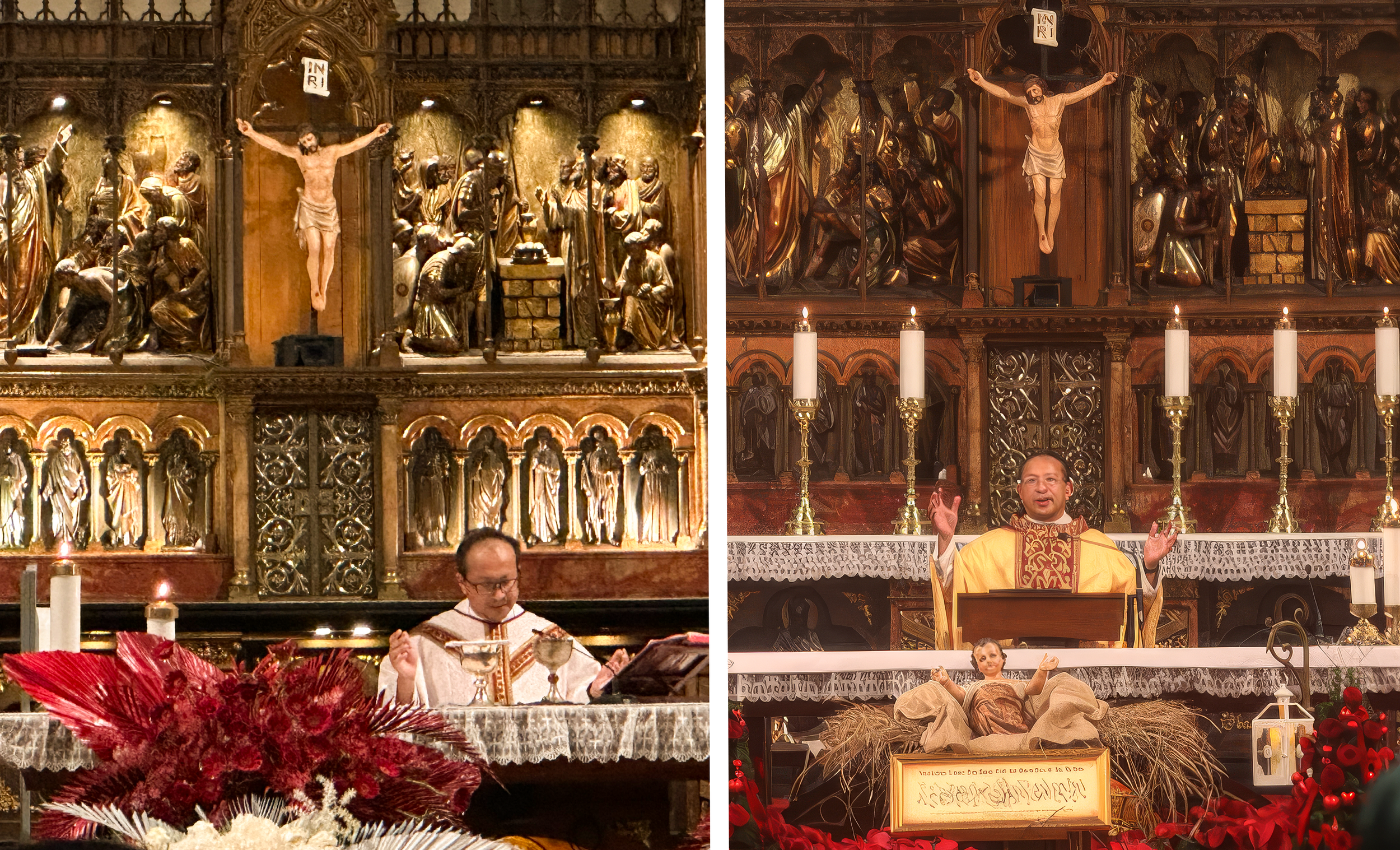
Photo of Father Hani Rudi SJ
Before Lighting Design (Left)
Limited Facial Recognition
In the existing lighting condition, excessive brightness from the altar backdrop creates an unbalanced visual hierarchy, causing the priest's face to appear partially dark and reducing facial recognition, emotional connection, and liturgical communication with the congregation. Several issues are visible: Facial features are difficult to distinguish, Eyes and expressions are not clearly perceived, Reduced visual connection between priest and congregation, Lower emotional engagement during liturgical celebrations.
In worship environments, facial expressions play an important role in communication, empathy, and participation. When faces are poorly illuminated, the congregation loses an important part of the liturgical experience.
Uneven Tabernacle and Crucifix Illumination
The altar backdrop appears bright in isolated areas but lacks balance. Observations include: Excessive brightness and reflective glare around some decorative elements, Reduced visibility of carved details, Limited tonal separation between foreground and background, Important symbolic elements visually compete with one another. The crucifix remains visible, but its prominence is weakened by surrounding brightness and inconsistent contrast.
Reduced Color and Material Perception
The existing lighting struggles to reveal: wood grain textures, carved craftsmanship, material depth and artistic details. As a result, much of the cathedral's heritage craftsmanship becomes visually flattened.
Enhanced Lighting Strategy (Right)
Improved Facial Rendering
One of the most noticeable improvements is the visibility of the celebrant. The upgraded lighting provides: Better facial modeling, More natural skin tones, Improved visibility of expressions, and Stronger visual connection between clergy and congregation. The priest becomes easier to see without appearing overlit. This is particularly important in large cathedrals where worshippers may be seated far from the sanctuary.
Enhanced Crucifix and Tabernacle Hierarchy
The lighting establishes a clear visual hierarchy: Priest, Crucifix , Tabernacle, religious artwork and architectural background. The eye naturally understands where to focus. The priest and crucifix becomes the dominant spiritual focal point while remaining visually integrated within the historic altar composition.
Superior Rendering of Religious Artwork
The improved lighting reveals: sculptural details, carved figures, decorative ornamentation and historical craftsmanship. The altar is no longer perceived as a dark background but as a rich visual narrative supporting worship.
Improved Color Rendering
The enhanced lighting allows worshippers to appreciate: liturgical vestments, natural skin tones, wood finishes, and sacred artwork. Colors appear warmer, richer, and more authentic. This contributes to a more emotionally engaging worship experience.
Lighting Design Outcome
At ALTA Integra, we believe that lighting within sacred architecture should do far more than provide visibility. Light has the power to shape perception, influence emotion, reinforce spiritual symbolism, and deepen the relationship between people and place.
Our work at Jakarta Cathedral explored how lighting quality influences the worship experience through the careful integration of visual comfort, architectural perception, and spiritual atmosphere. Rather than simply increasing brightness, the design focused on reducing glare, improving visual hierarchy, revealing architectural craftsmanship, enhancing facial and artwork visibility, and creating a more contemplative environment for prayer and reflection.
Guided by principles of human-centered building performance, the project investigated how worshippers perceive architecture, liturgical elements, and sacred rituals through light. By balancing luminance, contrast, color rendering, and focal emphasis, the lighting strategy strengthens the visual connection between congregation, clergy, sacred symbols, and the cathedral's historic architecture.
The transformation demonstrates how evidence-based lighting design can elevate both the functional and emotional performance of sacred spaces. Through a deeper understanding of the relationship between visual perception, architecture, emotion, and spirituality, lighting becomes more than a technical system—it becomes a medium for enhancing worship, revealing heritage, and creating meaningful human experiences.
This project reflects ALTA Integra's multidisciplinary approach to integrating building science, lighting design, and human-centered environmental strategies to create places that are not only visually effective, but emotionally meaningful, spiritually engaging, and culturally enduring.
Project Information
Project: Jakarta Cathedral Architectural Lighting
Location: Jakarta, Indonesia
Service: Sacred and Heritage Architectural Lighting Design
Scope: Visual Evaluation, Lighting Quality Assessment
Consultant: Herwin Gunawan / ALTA Integra
Year: 2024