Research Publication: RECAV 2017 Advance Performance through Acoustic Modeling and Experimental
The advancement of acoustic engineering relies on the continuous development of research that bridges scientific investigation with real-world applications. As building performance expectations continue to evolve, acoustical engineers are increasingly challenged to develop practical solutions that improve occupant comfort, privacy, communication quality, and environmental performance. Research plays a critical role in expanding the industry's understanding of how sound behaves within buildings and how innovative engineering strategies can enhance acoustic outcomes.
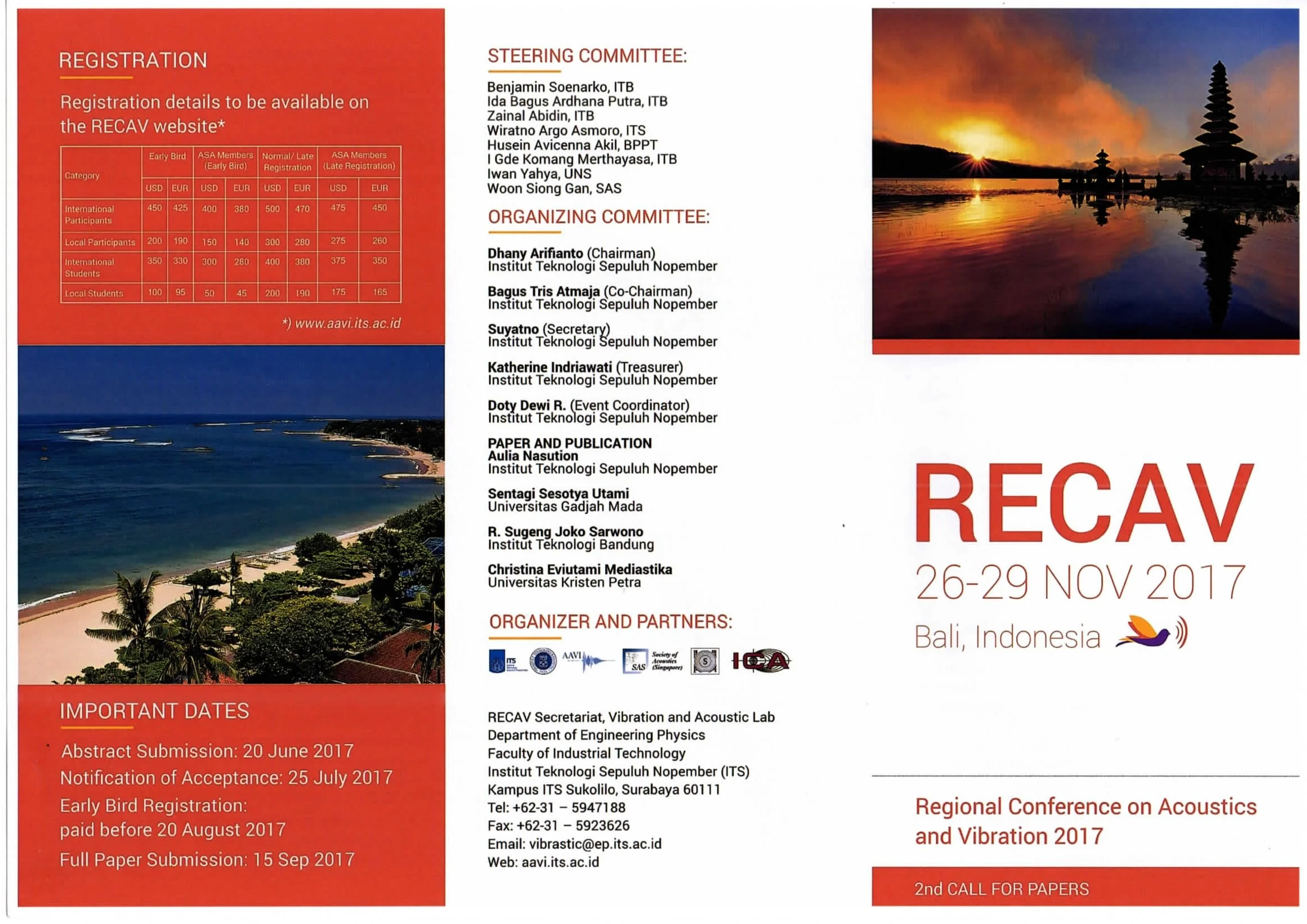
As part of the Regional Conference on Acoustics and Vibration (RECAV) 2017 in Bali, Indonesia, I contributed research publications focused on architectural acoustics and building sound insulation performance. Organized by leading academic and professional institutions within the acoustics community, RECAV provides a platform for researchers, engineers, academics, and industry practitioners to exchange knowledge and advance the science of acoustics, vibration, and environmental performance.
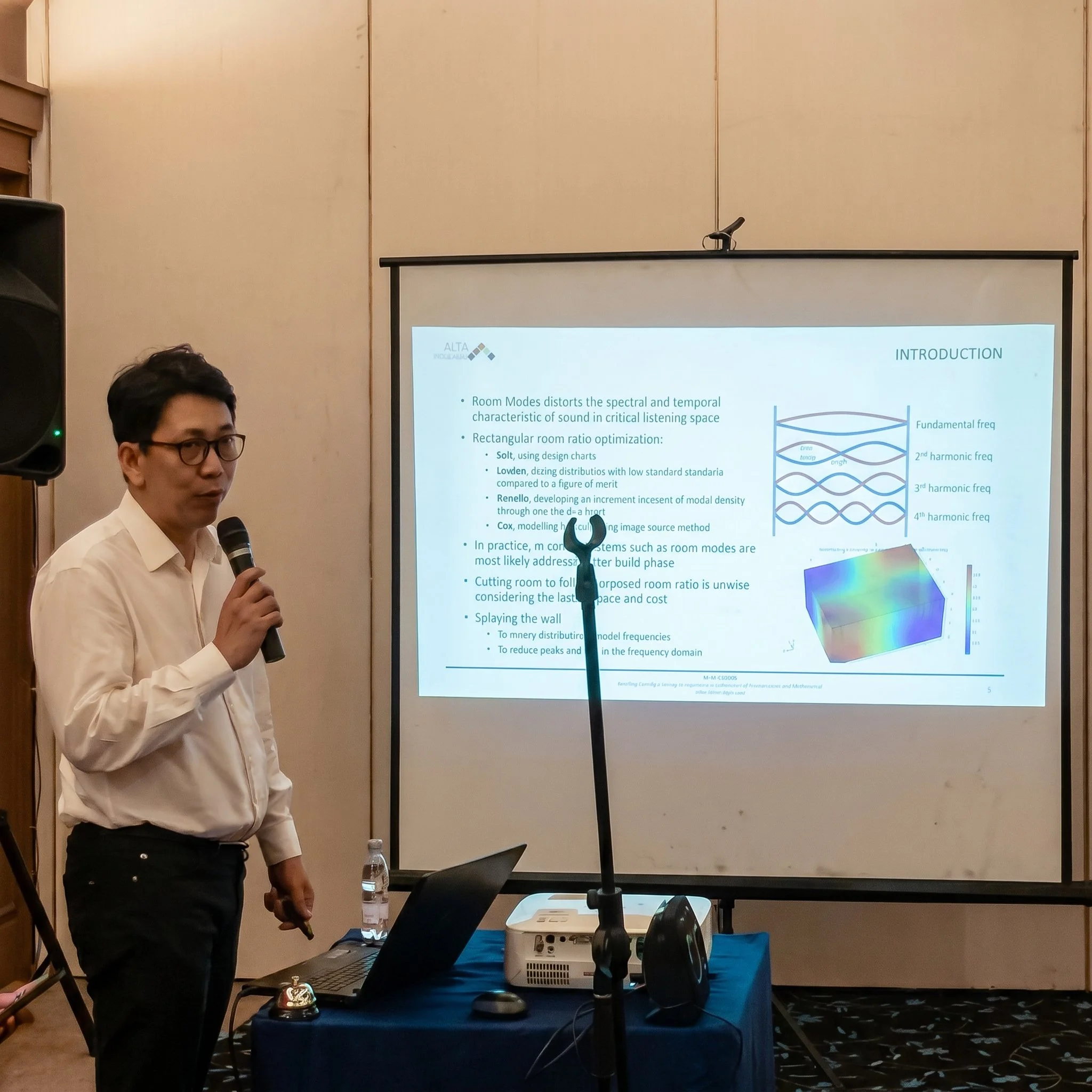
One of the research studies, “Study of the Effect of Splaying Wall to Modify Acoustic Modes Distribution in Small Room,” investigated how geometric modifications within enclosed spaces can influence room acoustic behavior. The research explored the relationship between wall configuration and acoustic mode distribution, providing insight into how architectural design decisions can contribute to improved acoustic performance in small rooms. Understanding room modes is particularly important in spaces where speech clarity, recording quality, listening experience, and acoustic accuracy are critical design considerations. The study demonstrated how relatively simple architectural interventions can influence sound distribution and reduce undesirable acoustic effects associated with modal concentration.
A second research publication, “Transmission Loss Improvement of Sound Insulation Panel with Viscoelastic Material,” focused on enhancing building sound insulation performance through material innovation. The study evaluated the effectiveness of viscoelastic materials in improving transmission loss characteristics within acoustic panel systems. Sound insulation remains one of the most important aspects of building acoustics, influencing privacy, comfort, environmental noise control, and occupant satisfaction across residential, commercial, educational, hospitality, and healthcare environments. The research contributed valuable findings regarding the potential application of damping materials to improve acoustic separation between spaces.
Together, these studies reflect two important dimensions of contemporary acoustic engineering: controlling sound behavior within spaces and controlling sound transmission between spaces. While room acoustics focuses on optimizing the quality of sound experienced by occupants, building acoustics focuses on minimizing unwanted noise transfer. Both disciplines are essential components of creating high-performance environments that support communication, concentration, wellness, productivity, and user comfort.
For our practice, participation in RECAV 2017 as a research contributor reinforced the importance of evidence-based design and scientific investigation within acoustic consulting. Research not only advances technical knowledge but also strengthens the ability to develop practical engineering solutions that respond to real-world building challenges. The experience reflects our ongoing commitment to integrating research, innovation, and professional practice in the pursuit of healthier, more comfortable, and higher-performing built environments.
As buildings continue to demand higher standards of environmental quality and occupant experience, the role of applied acoustic research will become increasingly important. Through continued engagement with the academic and professional acoustics community, we remain committed to advancing knowledge that supports better building performance and more meaningful human experiences.