Darkness Engineering: The Immersive Lighting Experience for "The Mystery Coaster" at Dunia Fantasi Ancol
In modern theme park design, a roller coaster is no longer just a feat of mechanical engineering; it is an exercise in narrative immersion. When Fantasy World (Dunia Fantasi or Dufan) Ancol introduced Kereta Misteri (The Mystery Coaster)—an indoor, horror-themed Intamin family launch coaster spans over 5,500 square meters—the challenge shifted from standard structural design to experiential engineering. How do you maintain the intense psychological thrill of a 64 km/h ride through the dark while establishing precise visual storytelling?
The answer lies in the physics and art of specialized, immersive lighting design.
ALTA Integra as the Human-Centered Consultant behind the professional lighting design concept for this flagship attraction, approach theme park design through a strict lens of human-centered performance engineering. Below is an authoritative technical breakdown of how we translated a high-speed werewolf narrative into a synchronized, immersive lighting design environment that balances psychological manipulation, occupant safety, and technological innovation.
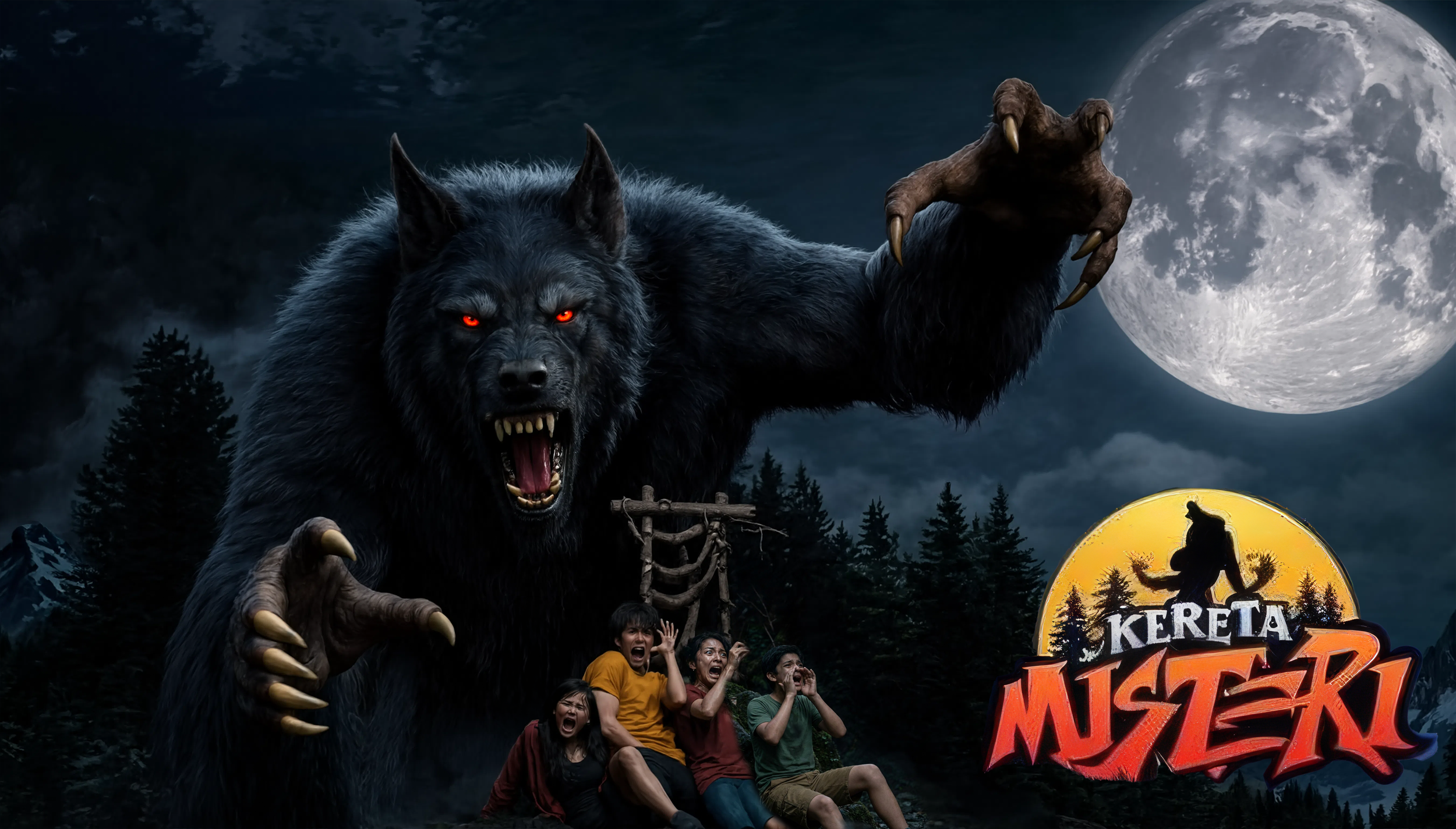
Dunia Fantasi Mystery Coaster Ride Marketing Poster
The Psychology of Dark Rides: Controlling the Visual Field
The primary objective of an indoor dark ride is to control exactly what the occupant sees, and more importantly, what they cannot see. Human eyes naturally adapt to changing light levels, but on a coaster traveling at high speeds, that adaptation must be forced and manipulated to heighten the adrenaline response.
For The Mystery Coaster, our concept utilized a layered lighting hierarchy:
The Pitch Absolute: Large expanses of the 15-meter-high indoor volume are intentionally starved of light to maximize the feeling of vulnerability and spatial disorientation.
The Focal Punch: High-contrast, narrow-beam thematic fixtures are deployed to instantly draw the eye to critical narrative triggers—such as the werewolf animatronics or sudden track switch zones—before plunging the riders back into darkness.
By using high-contrast lighting techniques, we manipulate the riders' peripheral vision, making the physical parameters of the 5,500-square-meter enclosure vanish.
Specialized Thematic Lighting: Color Theory and Contrast
Designing for a horror-themed attraction requires a sophisticated departure from standard commercial lighting metrics. General ambient illumination (lux) must be minimized while the color rendering index (CRI) and spectral distribution are tailored to specific materials and scenic paints.
Spectral Manipulation: We developed a concept utilizing deep crimson and eerie cyan-blue wavelengths. Red frequencies naturally trigger an evolutionary fight-or-flight biological response, while low-intensity blue-green tones mimic the natural desaturation of moonlight (the Purkinje effect), reinforcing the "nighttime werewolf hunt" narrative.
Dynamic Low-Voltage Fixtures: To execute sudden jump-scares and rapid narrative shifts, the concept calls for high-speed, intelligent LED strobe units and dynamic wash fixtures capable of instantaneous millisecond response times, tightly synchronized with the coaster's tyre-drive launch system and backwards drops.
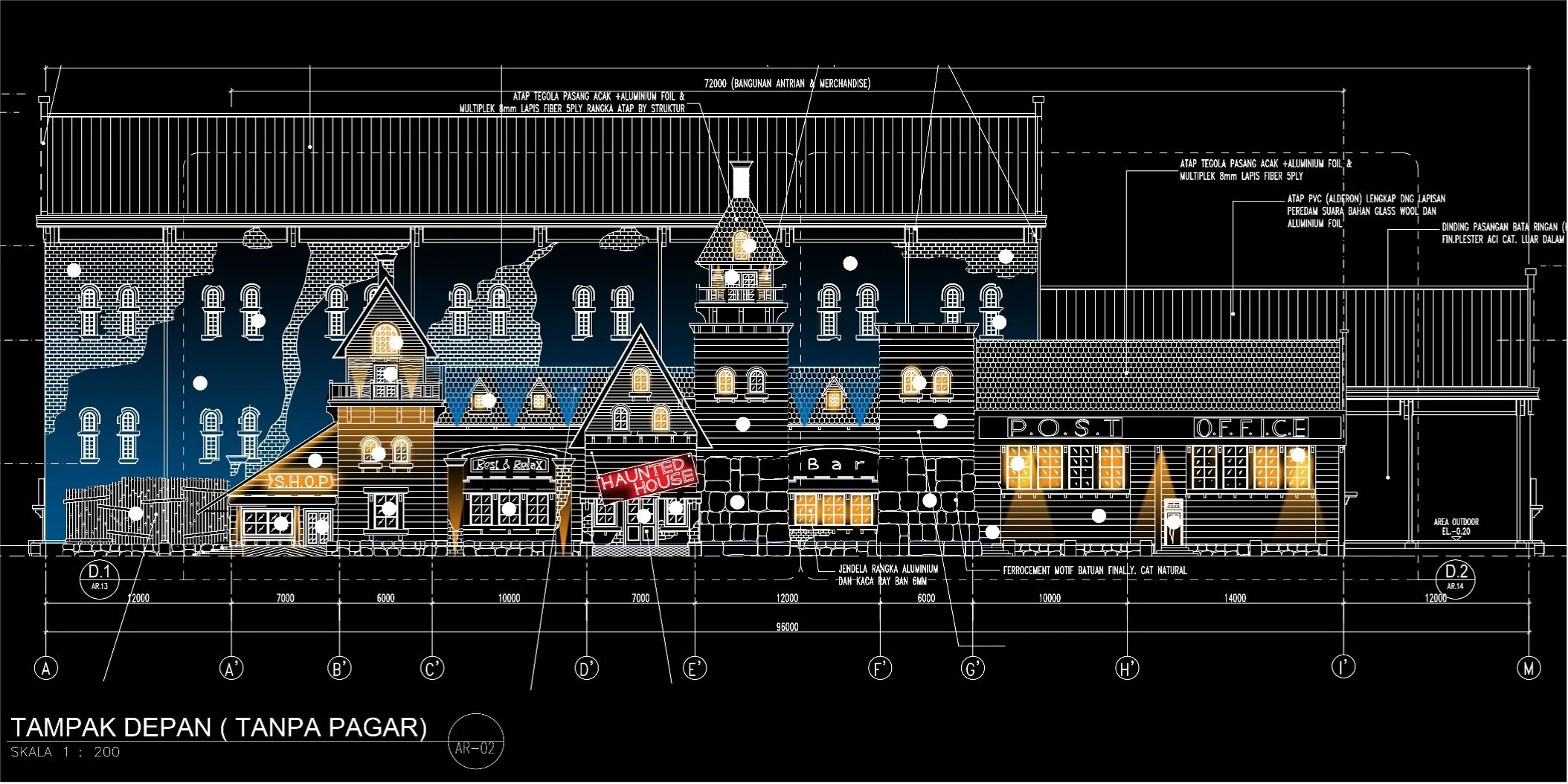
Architecture Drawing of Mystery Coaster Ride Building
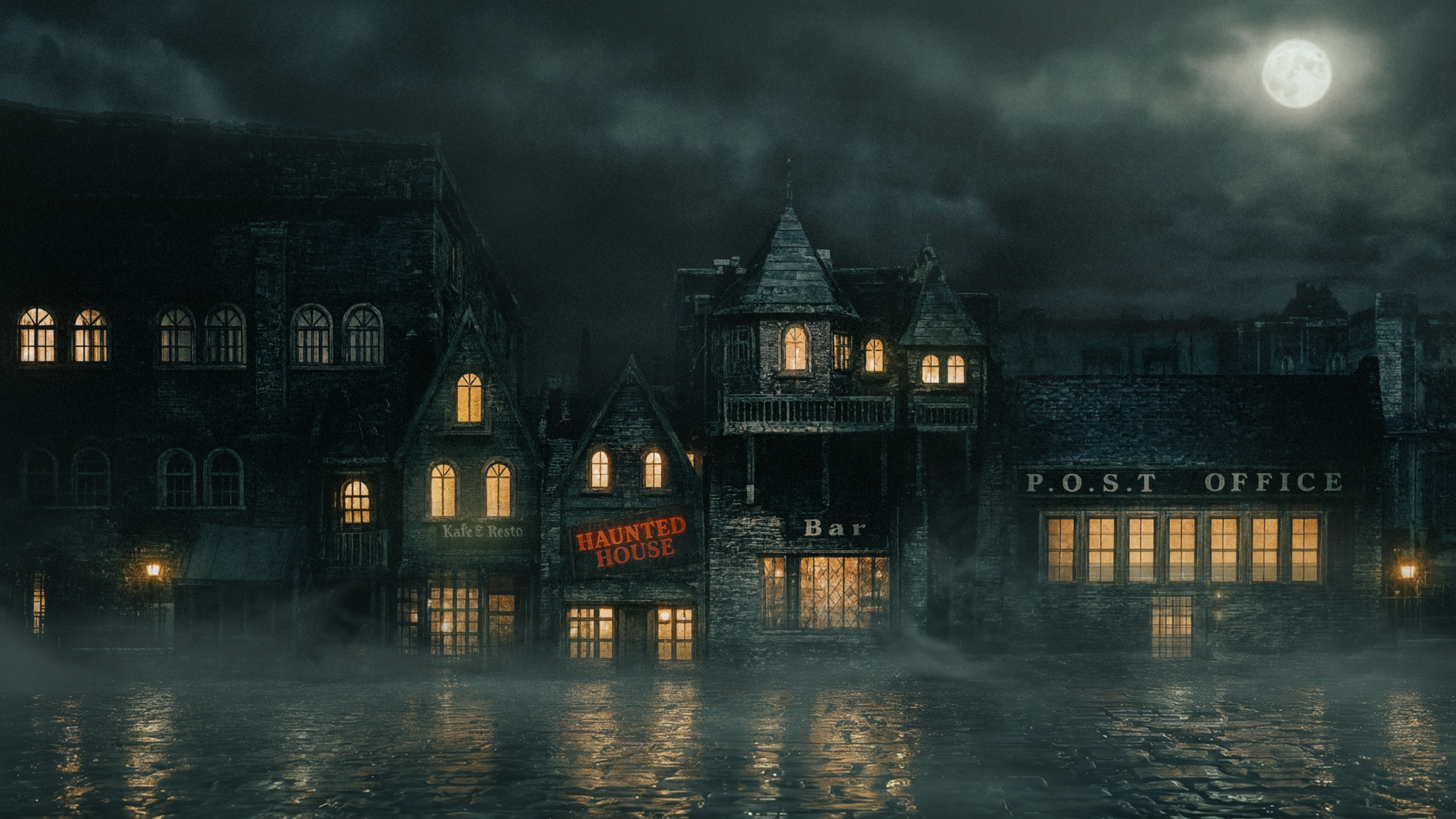
Our Lighting Design Concept Rendering of Mystery Coaster Ride Building Facade at night
The Architectural Facade: Engineering Initial Suspense
The visitor’s psychological journey begins within the general theme park landscape. The primary objective of the facade lighting is to act as a physiological and sensory decompression chamber. It forces the guests' eyes to transition away from high ambient daylight down into scotopic/mesopic (dark-adapted) vision before they cross the entry threshold.
The Low-Lux Chromatic Envelope: The primary rustic stone facade is flooded with a highly saturated, low-luminance indigo and deep cyan wash. This specific spectral output suppresses cone-cell sensitivity while maximizing rod-cell stimulation, making the massive stone fortress appear monolithically cold, imposing, and ancient.
High-Contrast Shadow Sculpting: Rather than deploying uniform vertical wash lighting, precise, low-glare linear uplights are hidden at the footings of the main stone arches and heavy timber columns. Utilizing a sharp, narrow-beam 2700K warm color profile, these luminaires graze the masonry textures at an acute angle, stretching shadows upward to enhance the building's verticality and weathered structural fissures.
The Narrative Anachronism: The Flickering Neon Sign
To disrupt the ancient architectural motif and add a layer of modern, unmaintained decay, an weathered, flickering neon sign reading "Haunted House" is structurally integrated near the main queue line portal.
The High-Voltage Failure Loop: Rather than an artificial blinking cycle, the neon sign utilizes a custom DMX-scripted macro that perfectly replicates a failing transformer and gas-tube depletion. The sign experiences erratic micro-stuttering, sudden drops in gas illumination intensity, and full blackouts lasting between 50 ms and 2.4 seconds.
Color Temperature & Spatial Spill: The sign outputs a harsh, sickly magenta or cold-gas blue >10000K, casting an aggressive, localized color spill over the nearby stone entryway. This erratic flash continually recalibrates the immediate field of view, creating high-contrast visual disruptions against the steady, deep indigo backdrop of the main facade.
Upper-Level Spectral Projection: The Flying Ghost Illusion
Behind the high, dark arched windows of the central upper tower chamber, the lighting layout delivers an unsettling volumetric reveal: a spectral, floating entity that navigates through the upper interior spaces.
The Holographic Scrim Matrix: Concealed immediately behind the window mullions is an invisible, highly transparent, black holographic projection scrim with high gain and light attenuation ratios.
High-Lumen Short-Throw Projection: A hidden, high-lumen, solid-state laser projector is positioned in the floor cavity of the upper tower room, oriented at an off-axis angle to eliminate lens glare from the guest viewpoint. The media content features a high-contrast, ethereal apparition shifting through space.
Spatial Tracking Integration: Through synchronized playback, as the projected ghost "flies" across the window plane, matching addressable internal spot fixtures pan and fade in tandem, illuminating the internal rafters and ceiling arches behind the ghost. This gives the illusion that the entity is casting its own ambient, spectral light map onto the internal architecture, giving the illusion of true three-dimensional depth.
Interior Spatial Instability: Chaotic On/Off Room Sequences
Visible through the secondary window slits and shattered stone apertures of the upper rooms, the lighting design simulates an internal environment that is structurally unstable and supernaturally haunted.
The Erratic Illumination Loop: Internal rooms are fitted with high-output, hidden white-light strobes and deep amber wash panels 2200K. These fixtures operate on a chaotic, non-repeating show control profile—suddenly firing to full intensity to expose bare interior walls, hanging chains, and skeletal structural silhouettes, before dying instantly back into absolute pitch blackness 0 lux.
Retinal Afterimage Engineering: The sudden, high-intensity interior flashes are timed to last only a fraction of a second 150ms - 300ms. This is long enough to register an image on the human eye but fast enough to leave a temporary retinal afterimage. As the light vanishes, guests continue to see the internal room outlines floating in their vision against the dark exterior sky, heightening the psychological tension.
Transition Corridors: Moving Candlelight Illumination
As guests finally step across the entry threshold and pass through the interior stone corridors, general lighting is entirely removed, replaced by an advanced application of shifting accentuation.
The Shifting Specter Effect: To simulate an unseen entity carrying a single candle flame through the corridors, a highly synchronized network of addressable, ultra-warm spot luminaires 1800K is mapped over the ceiling vaults.
Dynamic Cross-Fade Trajectories: The candlelight physically transits across the interior surfaces. As guests move forward, a pool of flickering, low-intensity warm light glides along the masonry walls ahead of or beside them. This is achieved by executing flawless, millisecond-level cross-fades between successive narrow-beam projectors hidden deep within the dark roof rafters.
Anamorphic Shadow Distortion: As this virtual candle flame moves along the pathway, it continuously alters the angle of light hitting structural columns, iron bars, and wall artifacts. This causes the shadows of these objects to stretch, rotate, and warp across the stonework in real time, tricking the human eye into perceiving physical movement within the darkness.
Safety Design within the Darkness
The ultimate paradox of a dark ride is that while the guest must experience a sense of chaotic, unlit danger, the space must simultaneously operate at the highest standards of international life safety and facility maintenance.
Our architectural lighting approach integrates these regulatory frameworks seamlessly:
Dual-Mode System Architecture (Show vs. Maintenance): The concept details a highly segmented control system. During operational hours, it executes low-lux, immersive show programming. During maintenance hours, the system transitions to a high-efficiency, high-CRI white light setup, providing technicians with full visual acuity to inspect the 596-meter Intamin track, structural supports, and mechanical switch blocks.
Integrated Emergency Pathways: Emergency egress illumination must comply with local and international building codes without bleeding light into the dark ride environment. The concept utilizes heavily shielded, low-level photoluminescent and directional LED marker lights that remain invisible to riders at speed but provide clear, glare-free exit pathways in the event of an emergency stop.
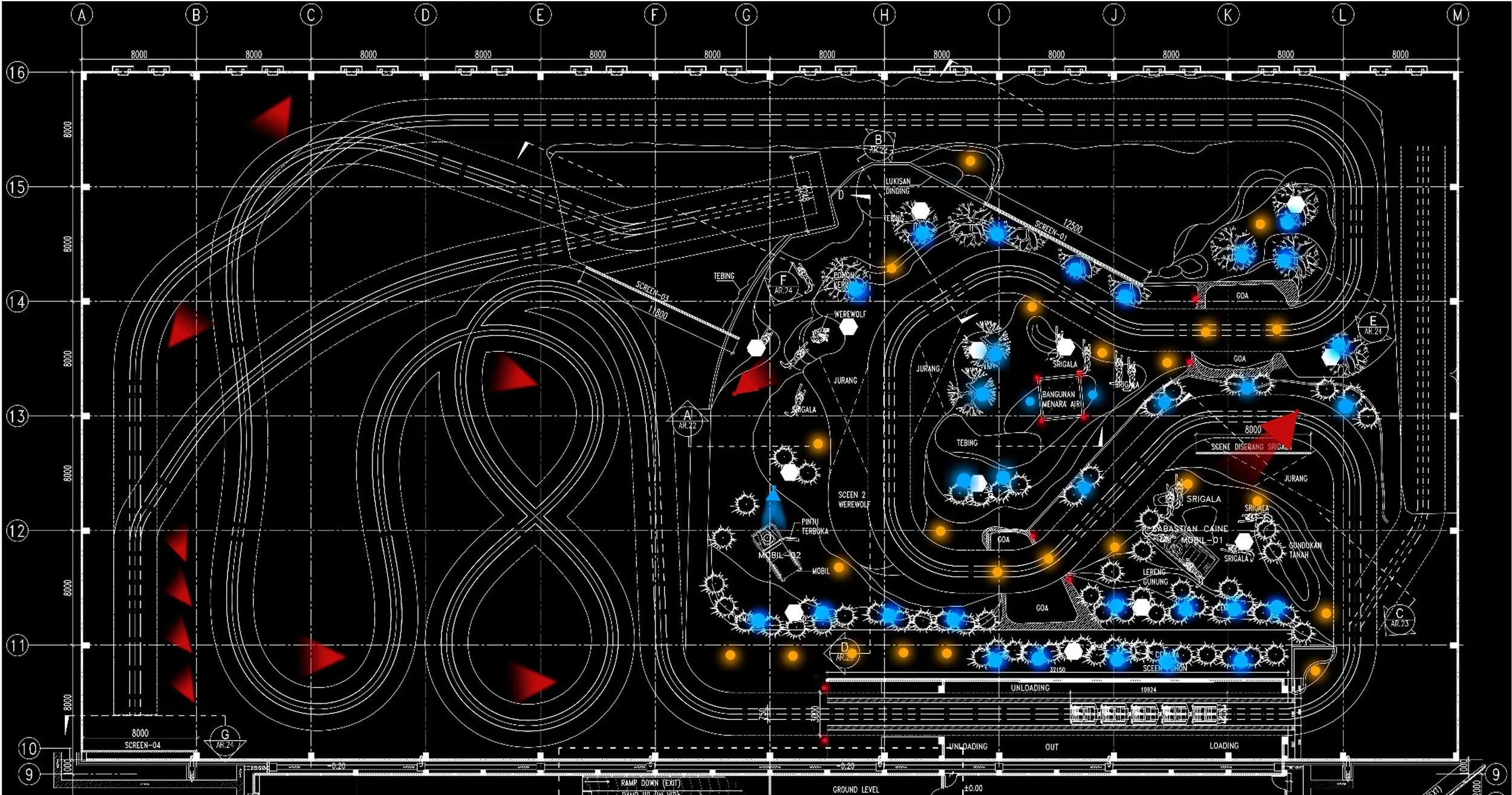
Architecture Floor Plan Lighting Design Zone Drawing
Technical Innovation: Synchronization and Longevity
High-velocity indoor theme park environments are brutal on electrical components. Dust, structural vibrations from the coaster trains, and continuous operation require industrial-grade specifications.
Show Control Integration: The lighting architecture relies on robust DMX/RDM or Art-Net communication protocols, designed to interface seamlessly with the main ride show control. Sensors along the track trigger specific lighting cues based on the exact spatial positioning of the train cars, ensuring a flawless, repeatable experience for all 60 passengers per cycle.
Thermal Management and Solid-State Reliability: Because access to a 15-meter ceiling inside a dark ride structure is logistically complex, our concept prioritizes sealed, high-IP-rated solid-state LED luminaires with advanced passive thermal management. This drastically reduces maintenance cycles, prevents lumen depreciation from dust accumulation, and ensures color consistency over years of heavy daily use.
Scene 08: Station Hall Lighting Design Concept
The overall station hall is engineered for minimal ambient illumination. All existing architectural details—stone walls, vaulted ceiling, and dark wood beams—will be allowed to fall into deep, layered shadows. This creates an immediate psychological effect of isolation and spatial disorientation, making the large hall feel contained yet boundless. Functional light will be strictly focused.
On the right wall, the large arched windows are the primary source of 'mystical' lighting. They are back-lit from outside with a dense, cool cyan-blue 'moonlight' wash. This wash will be powerful enough to cast sharp, elongated, silhouetted shadows of the iron bars onto the opposing stone walls and floor. The external area is heavily defined by controlled, rolling mist, which will be illuminated by the moonlight, making the dense, mystical fog a tangible element of the view from inside the station.
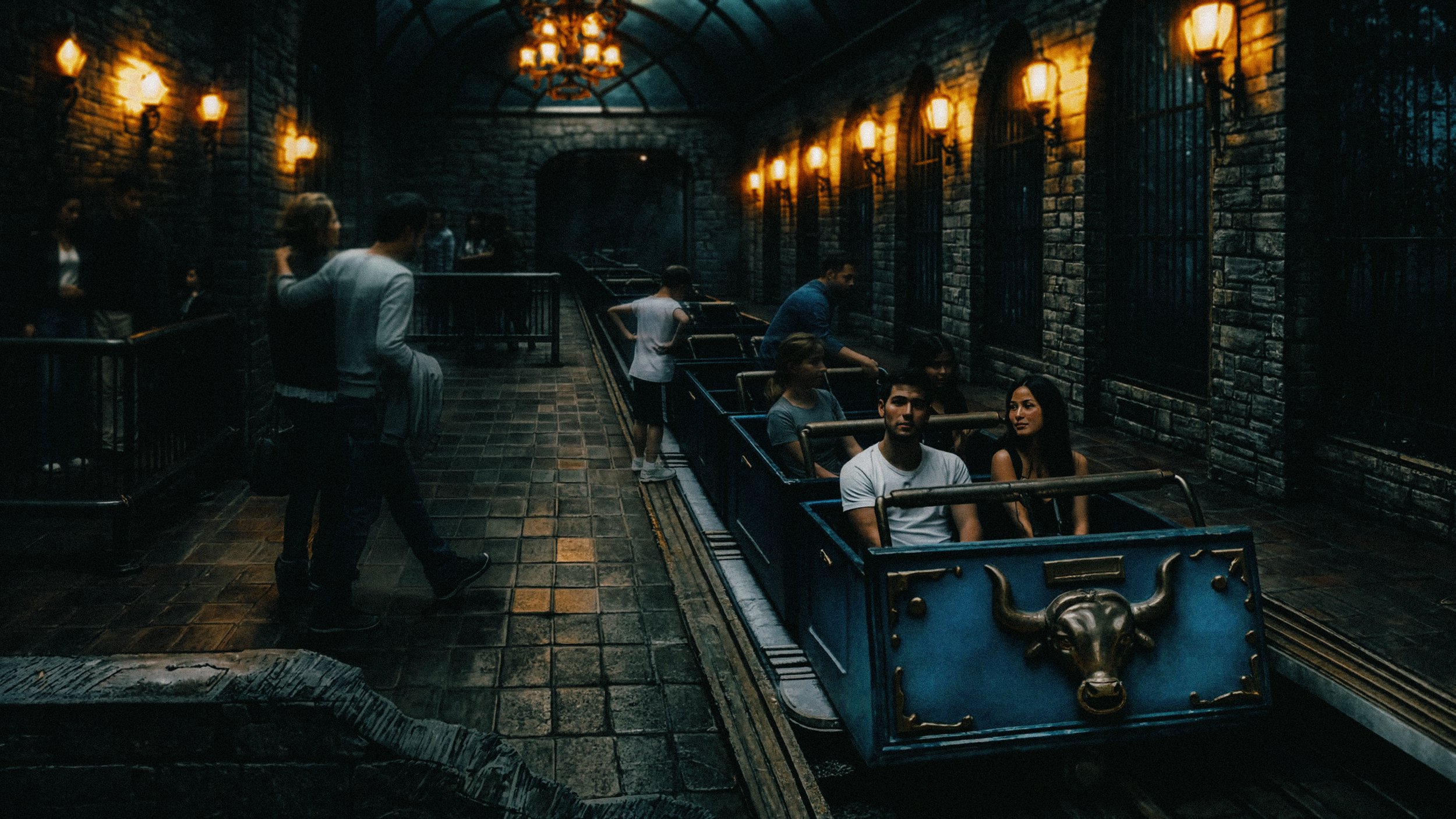
Scene 08: A station for passenger loading and unloading, featuring stone wall elements and openings with iron bars. Behind the bars, a mystical, foggy forest atmosphere at night can be seen. Illumination inside the station consists only of torches and candle lamps hanging on the stone walls. The train used is decorated with a Western motif on its front section.
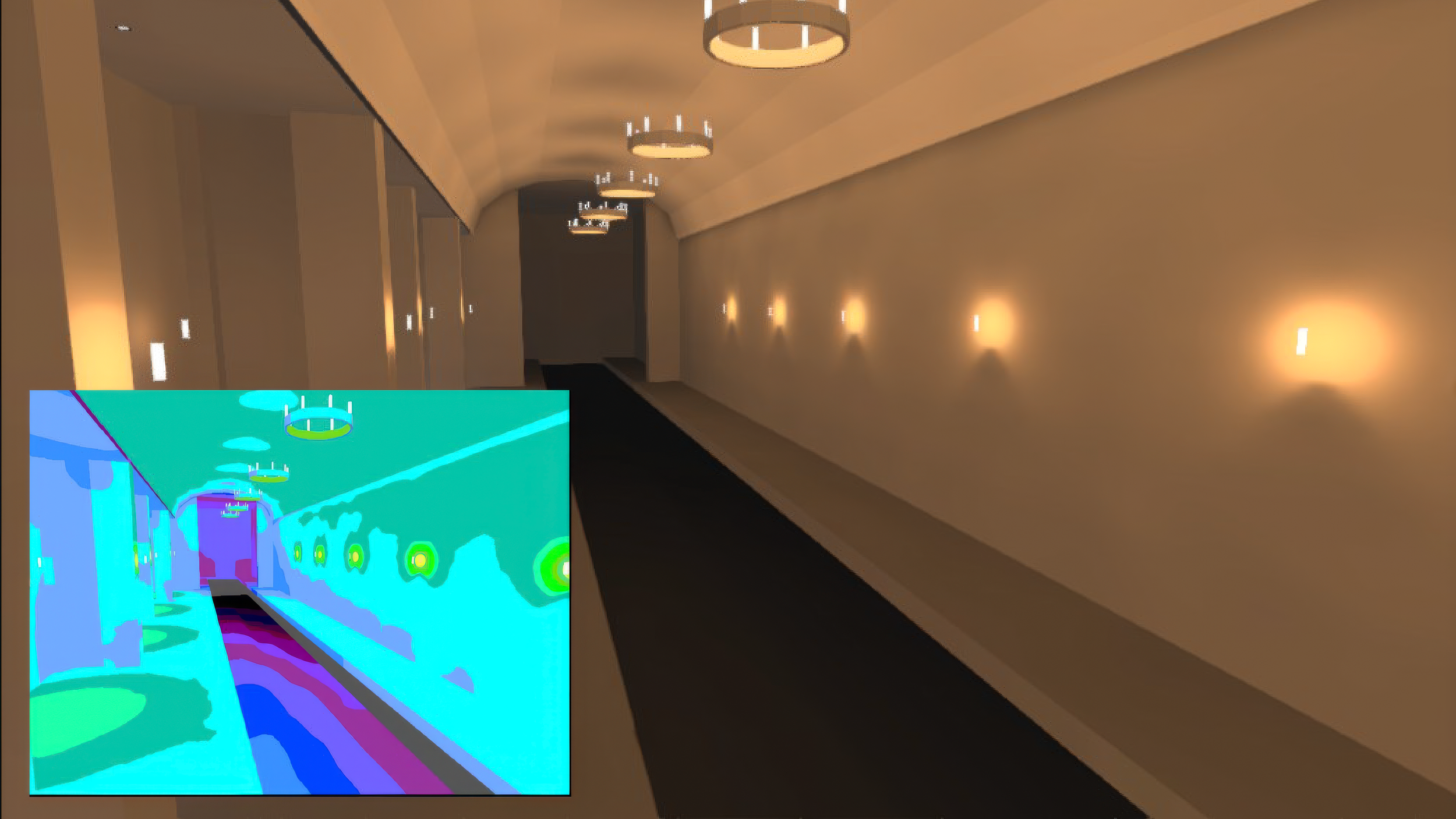
Scene 09: Graveyard Tunnel Lighting Design Concept
The lighting framework for Scene 09 transitions from the controlled enclosure of the tunnel into an expansive, psychologically jarring landscape. In this scene, darkness engineering focuses on forced visual adaptation and dynamic contrast manipulation.
By strictly controlling high-contrast illumination ratios, the lighting acts as the primary storyteller—guiding the riders' eyes through a sequence of terrifying reveals as the coaster car rounds the bend. The execution relies on a layered structure of low-ambient moonlight, backlight to create silhouete and localized thematic fixtures such as flickering vintage lamp.
The Moonlit Backdrop: Soft Spot Light Establishing Spatial Scale
The Atmospheric Wash: The entire cemetery background is bathed in a cool, low-intensity cyan-blue back-light. This technique mimics the Purkinje effect, keeping the human eye adapted to low-light conditions while artificially deepening the shadows cast by the gnarled trees and headstones.
Silhouetting: The distant pine forest and tree canopy are left completely unlit, creating a sharp, ominous silhouette against the simulated moonlit sky. This anchors the scale of the 15-meter-high indoor structure while hiding the physical ceiling.
Vintage street lamp: To anchor the historical, eerie atmosphere of the cemetery scene, the replica vintage streetlamps are engineered using an ultra-warm LED modules 2000K programmed with a custom, low-frequency pseudo-random flicker algorithm via DMX control to replicate the volatile nature of a burning gas flame light.
Skull and Wolf Glowing Eyes: The orchestration of the glowing skull and werewolf eyes serves as a core psychological tool within our darkness engineering framework, designed to build localized tension out of absolute obscurity <5 lux. Rather than relying on simple static props, the strategy deploys miniature, high-intensity monochromatic LED nodes—blue for the wolves and red for the skulls—deeply embedded and concealed within the dark undergrowth set pieces. These micro-luminaires are mapped as individual channels within the main ride show control system and are precisely triggered by track sensors as the coaster train rounds the bend. By sequencing these nodes to illuminate in distinct, successive pairs—first one isolated pair, followed instantly by another from a completely different quadrant.
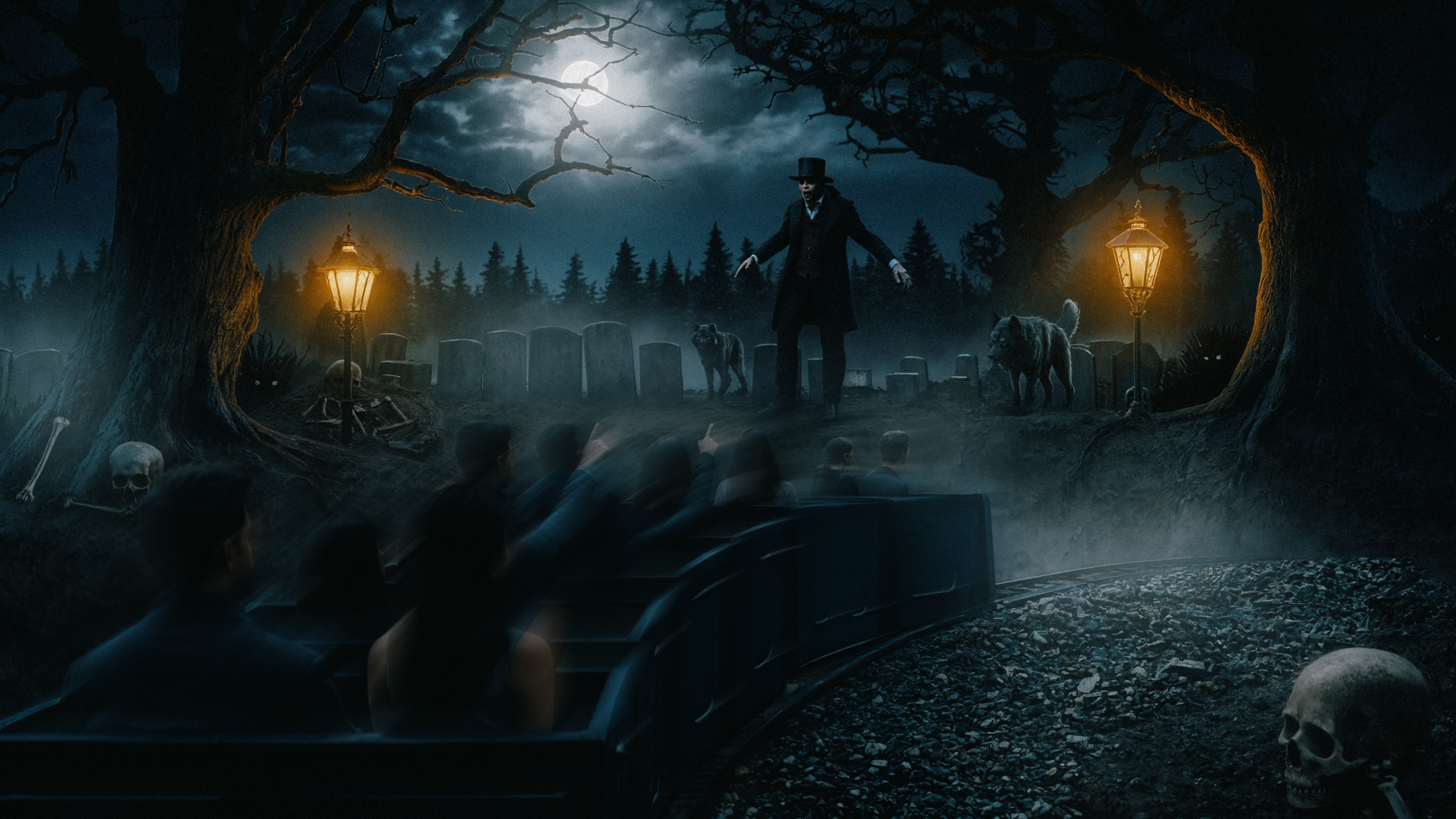
Scene 09: After passing through the tunnel, the train turns. A bend awaits ahead. The train enters a neglected old Caine family cemetery area. Bones can be seen protruding from the ground. Behind the dark bushes, a pair of glowing spheres resembling glowing eyes appears. First, one pair is seen, then another appears behind different bushes. Then, out of the darkness, several wolves with glowing eyes suddenly emerge. Growling. Then over there, on the edge of that low cliff, stands a human figure, his face looks exactly like the face in the painting back at the castle... it is Sebastian Caine. The owner of the castle who was executionally rumored to have died mauled by wolves while hunting... hundreds of years ago. Suddenly, the figure screams as if in pain, accompanied by the sound of barking and howling wolves.
Scene 09: Final Horror Lighting Design Concept
As the vehicle rapidly accelerates up a steep, blind incline, the lighting concept intentionally starves the riders of forward spatial awareness, relying on peripheral kinetic cues before unleashing a highly synchronized, blinding psychological climax at the track's apex.
The technical execution is split into three distinct phase triggers governed by the coaster's show control system:
Phase 1: The Ascent — Kinetic Blindness & Silhouette Distortion
Peripheral Silhouette Strobing: As the train climbs the steep incline in near-absolute blackness, high-contrast, cool-white asymmetric wash fixtures hidden behind the rocky chasm walls flash in a staggered, sequential pattern. This does not light the track ahead; instead, it casts giant, distorted, moving silhouettes of the riders' own raised arms against the cavern walls, amplifying the psychological feeling of being chased from behind.
The Purkinje Horizon: A faint, deep indigo sky glow is projected onto the distant ceiling vault. This subtle contrast establishes a fake horizon line, making the incline feel infinitely higher and steeper than its physical dimensions allow.
Phase 2: The Apex Stop — The Moonlight Flash Climax
Instantaneous Retinal Capture: The exact millisecond the coaster train hits its dead-end apex and stops, the ambient audio of the pack fades, leaving only the central werewolf's roar. Simultaneously, a high-intensity, overhead ellipsoidal projector cuts through the darkness. It uncovers the massive Alpha Werewolf animatronic with a crisp, stark, high-CRI "moonlight" beam.
Visual Dominance: By tight-focusing this beam directly onto the werewolf and its immediate pack, the surrounding mechanical track terminations and structural steel remain completely invisible in the spill shadows.
Glint Optics: Dedicated low-voltage, high-intensity red LED nodes inside the werewolf animatronic's eyes activate in tandem with the spotlight, creating a fierce, hyper-focused gaze that pierces through the cool backdrop.
Phase 3: The Backward Drop — Sudden Plunge Dissolve
The Retinal Afterimage: Right as the creature arches forward to pounce, the apex spotlight is cut instantly back to absolute darkness as the coaster vehicle drops backward down the track. This sudden drop from high-intensity light to absolute blackness tricks the riders' eyes, leaving a brief visual afterimage of the roaring werewolf seared into their retinas as they speed backward into the dark.
Blinded Retreat: As the train retreats, two high-velocity, wide-angle blue searchlights on the ridge activate behind the wolves, firing down the track plane. This hard back-lighting silhouettes the predators from the riders' perspective, keeping the threat visually striking even as it rapidly recedes into the distance.
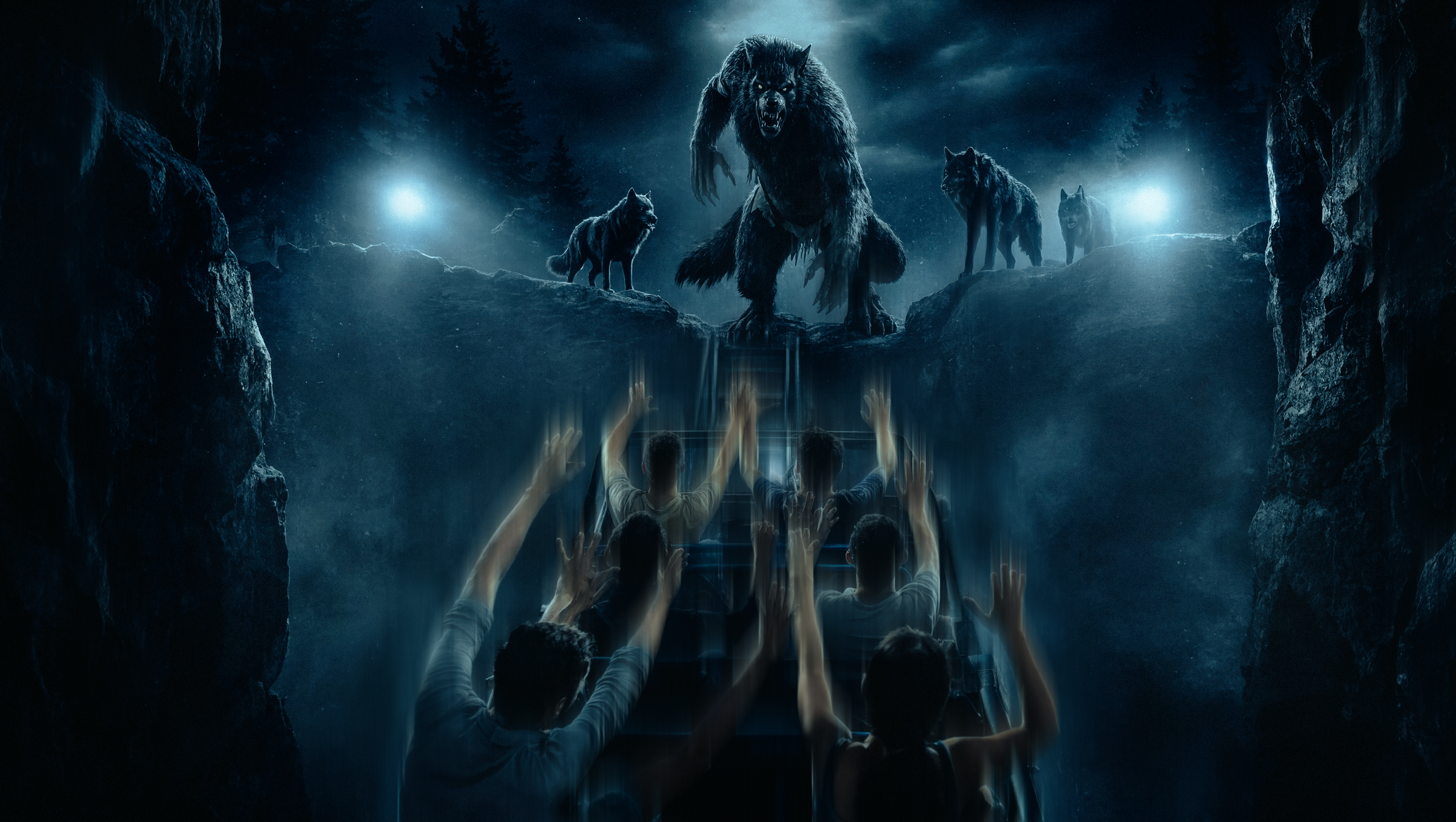
Scene 11: The train travels fast. The sound of howling and barking wolves is heard growing increasingly chaotic, sounding as if it is behind and all around the train. In the dark atmosphere, only indistinct silhouettes can be seen around. The speed of the train accelerates and the track feels steep, climbing higher until the train stops, and exactly at that moment, the moonlight illuminates a werewolf figure standing with wide, glaring eyes and roaring fiercely. The howling and barking sounds of the other wolves fade away, and only the growling sound of the Werewolf can be heard. As if ready to pounce. Right at the moment the werewolf is ready to pounce, the train moves backward rapidly. The chaotic sounds of howling and barking are heard once again, chasing the retreating train.
Project Outcome: Elevating Entertainment Architecture
The Immersive Lighting Design Concept for The Mystery Coaster at Dunia Fantasi Ancol serves as a definitive case study in how specialized engineering bridges the gap between technical constraint and raw human emotion. By understanding the intersection of human visual thresholds, optical physics, and structural safety, we transform a mechanical transit system into a living, breathing sensory experience.
For a deeper look at the technical layout, portfolio documentation, and our wider consulting work across acoustic, lighting, and sustainable built environments, view the full project breakdown at Herwin Gunawan Work — The Mystery Coaster.