Sacred Heritage Lighting Design Process Jakarta Cathedral Church
Lighting a historical place of worship requires a deep respect for historical architecture, religious liturgy, and structural preservation. This case study details the meticulous, data-driven lighting design process utilized to revitalize the interior of the iconic Neo-Gothic Jakarta Cathedral.
Phase 1
Architectural Heritage Study
Liturgical Study
Existing Lighting Quality Assesment
Before introducing new fixtures, a comprehensive empirical audit of the existing lighting environment is mandatory to safeguard the building's heritage status.
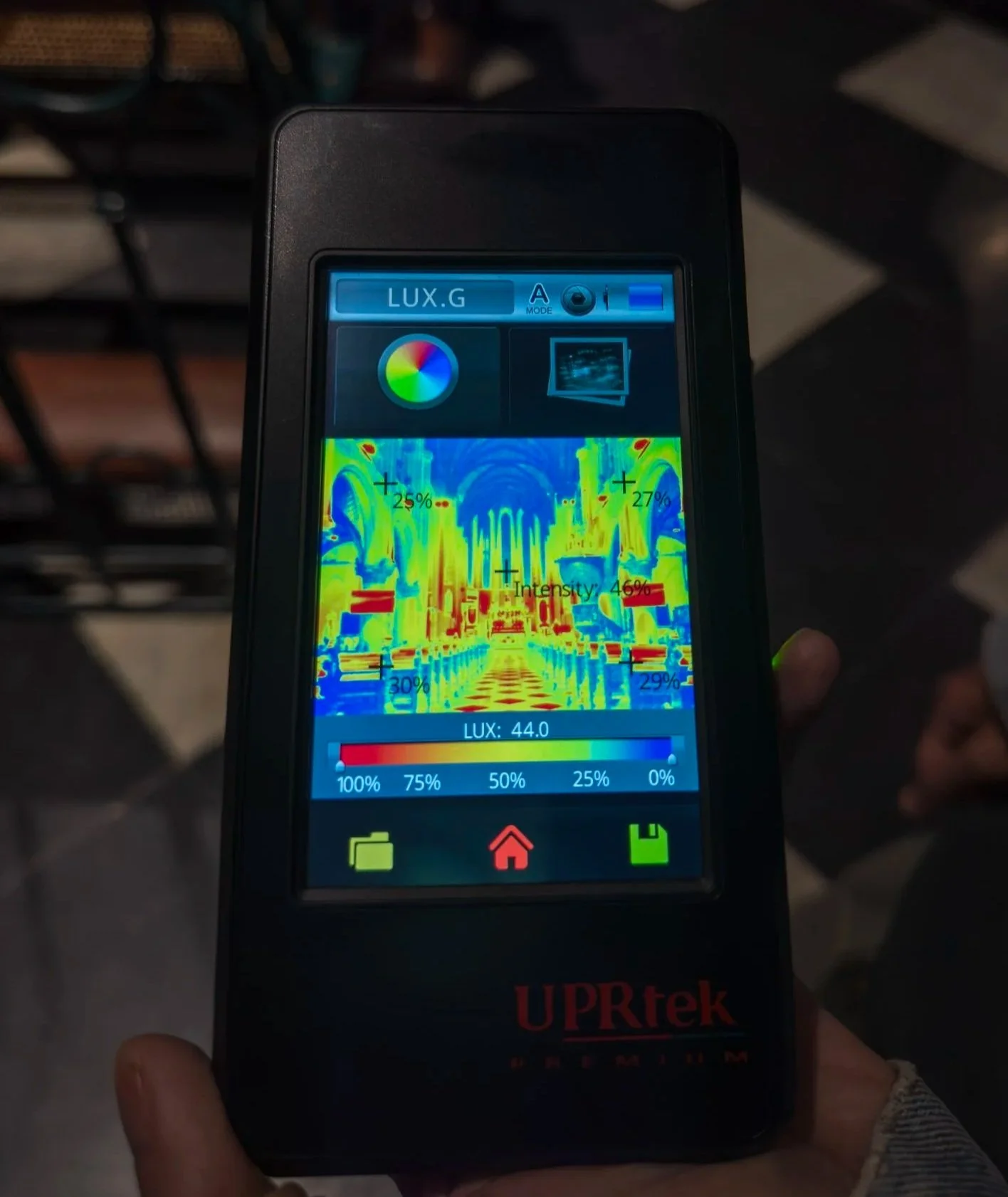
Spectral & Illuminance Testing: Utilizing advanced diagnostic tools (such as UPRtek spectrometer technology), we mapped the ambient light levels and color rendering indices across the nave and sanctuary.
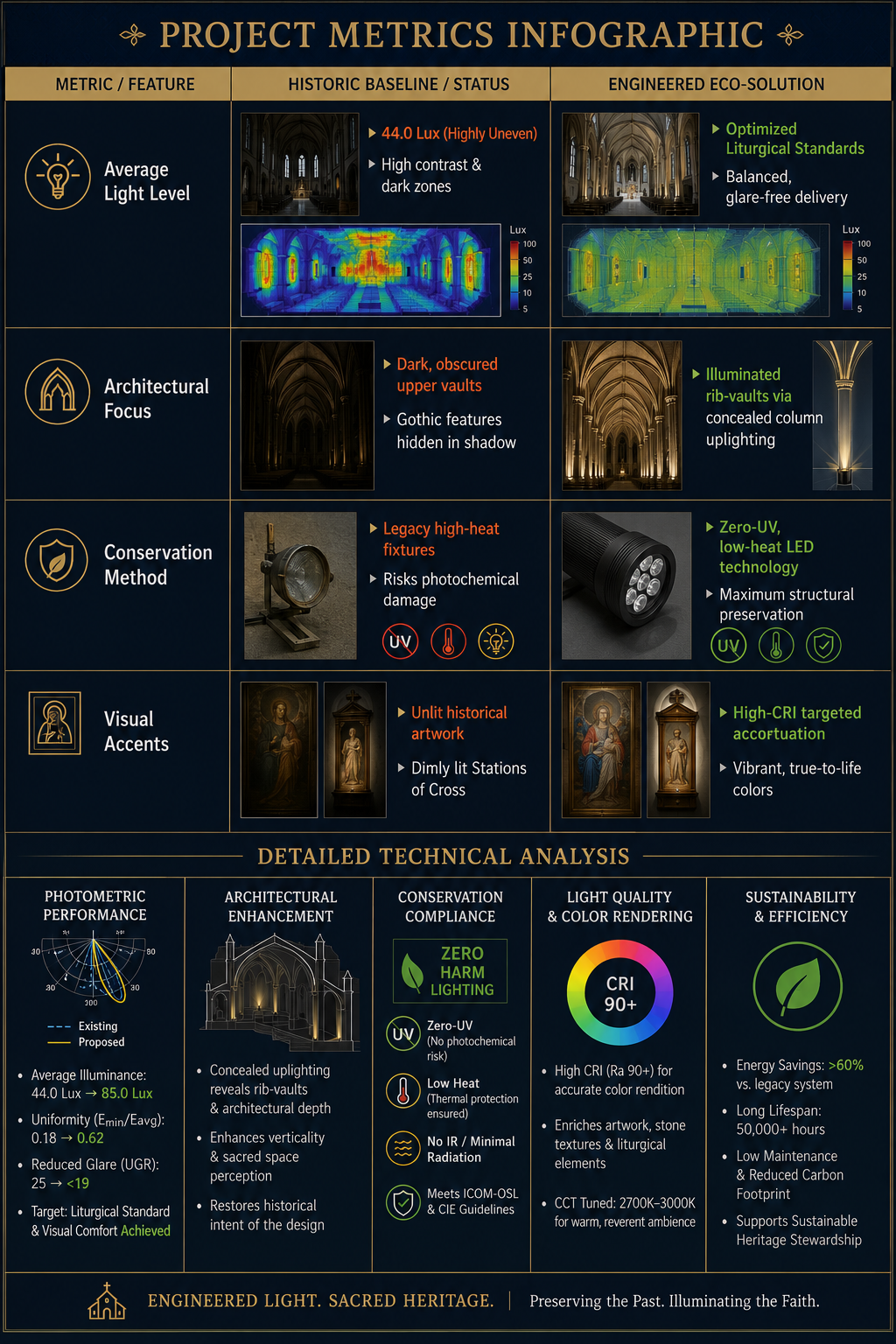
Data Findings: Initial assessments captured a baseline light level of 44.0 lux at the pew level, with highly uneven intensity distribution (ranging from 25% to 46% efficiency across different zones).
Identifying Deficiencies: The high contrast and dark voids in the upper vaults detracted from the cathedral's majestic Neo-Gothic verticality, while inadequate task lighting compromised the readability of liturgical texts.
Heritage Preservation Focus: High UV and heat-emitting legacy bulbs were flagged for replacement to protect centuries-old woodwork, paintings, and sacred artifacts from photochemical degradation.
Phase 2
Conceptual Lighting Design
3D Lighting Simulation & Digital Twin Mapping
To guarantee structural safety and visual accuracy before any physical installation begins, a digital twin of the Jakarta Cathedral was engineered.
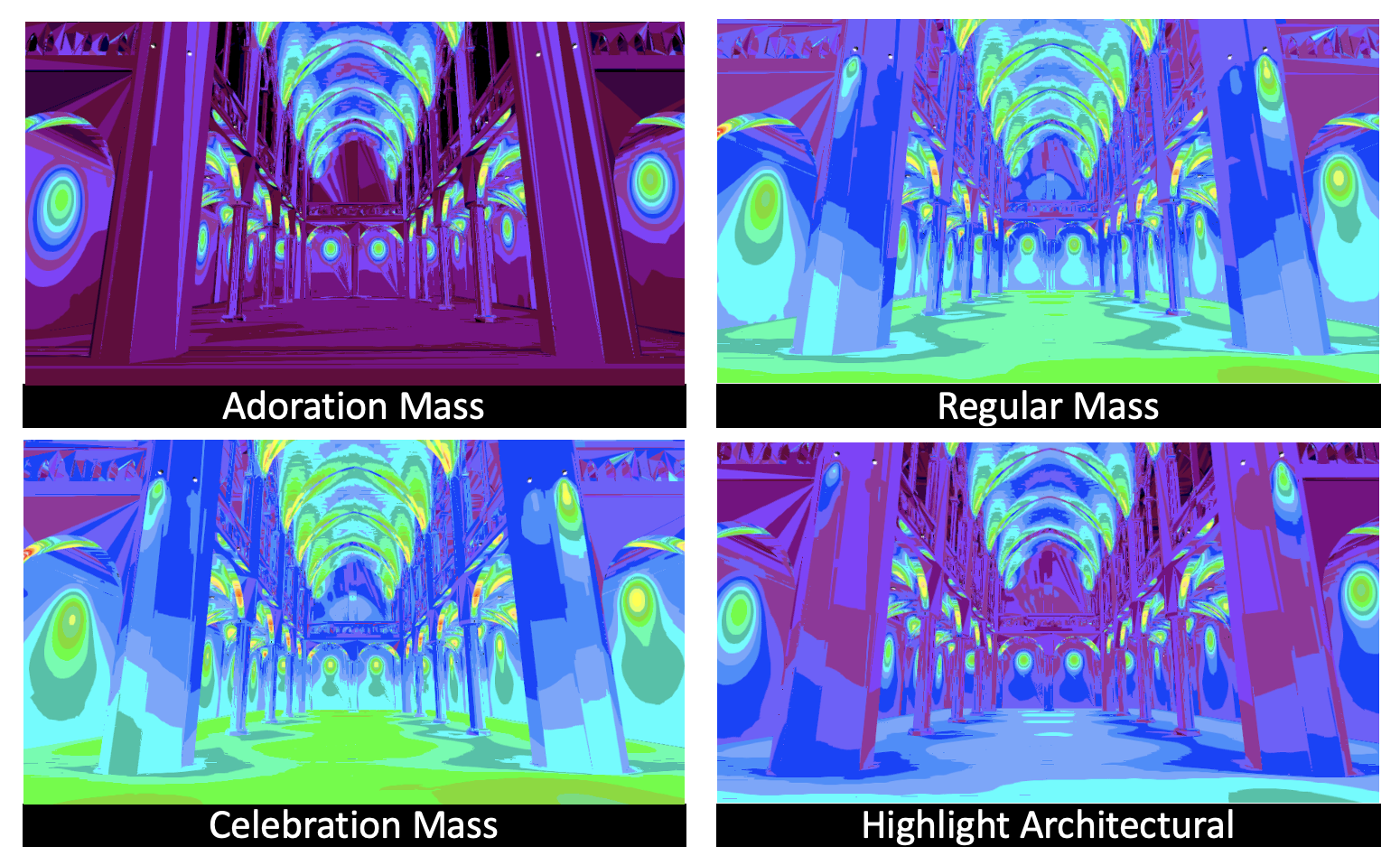
Quantitative False-Color Analysis
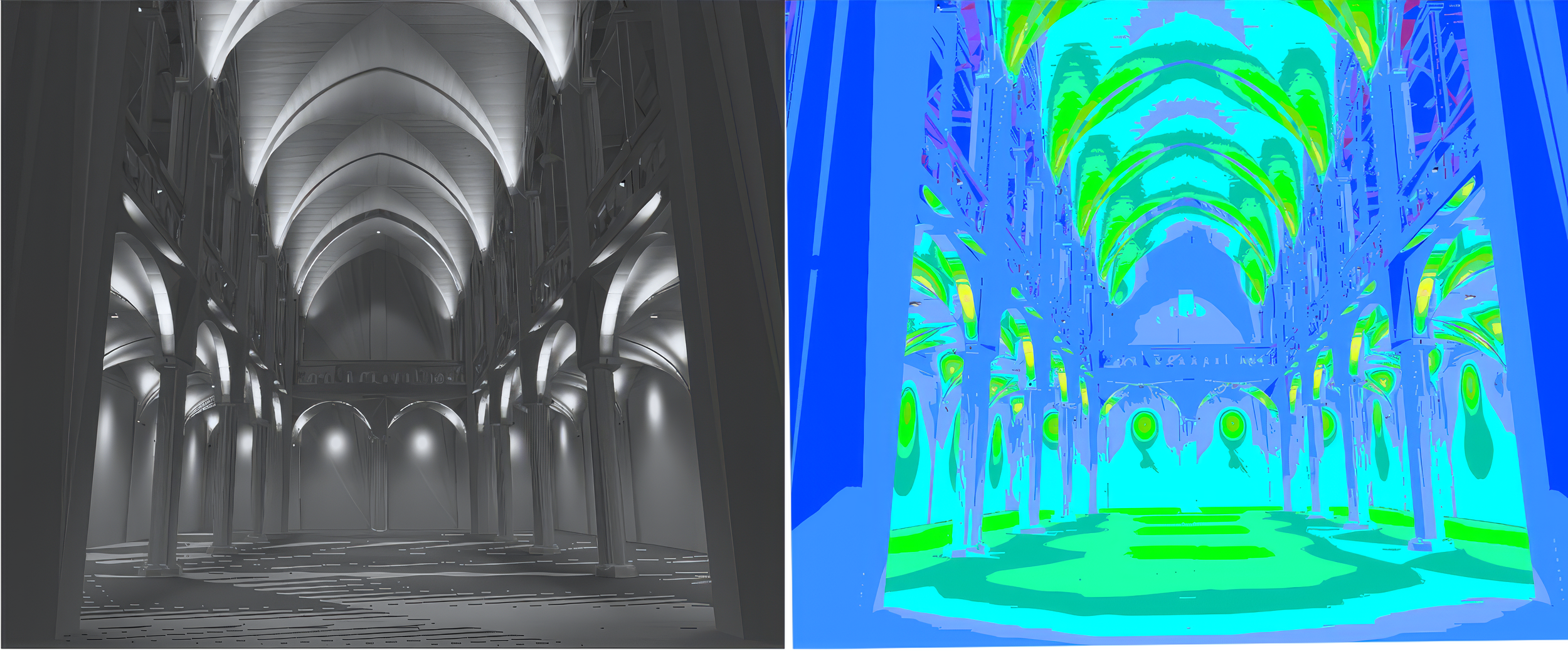
Using specialized lighting simulation software, the cathedral's interior was modeled to calculate exact lux distribution, glare ratings, and surface reflectance. The false-color rendering allows stakeholders to visualize precisely how light behaves along the complex ribbed vaults and pointed arches.
Qualitative Material Rendering
Simultaneously, a 3D gray-scale rendering was generated to study the interplay of light and shadow (chiaroscuro), ensuring the architectural integrity and depth of the stone and timber pillars are enhanced, not flattened, by the new scheme.
Phase 3
Conceptual 2D Wireframe
Structural Integration
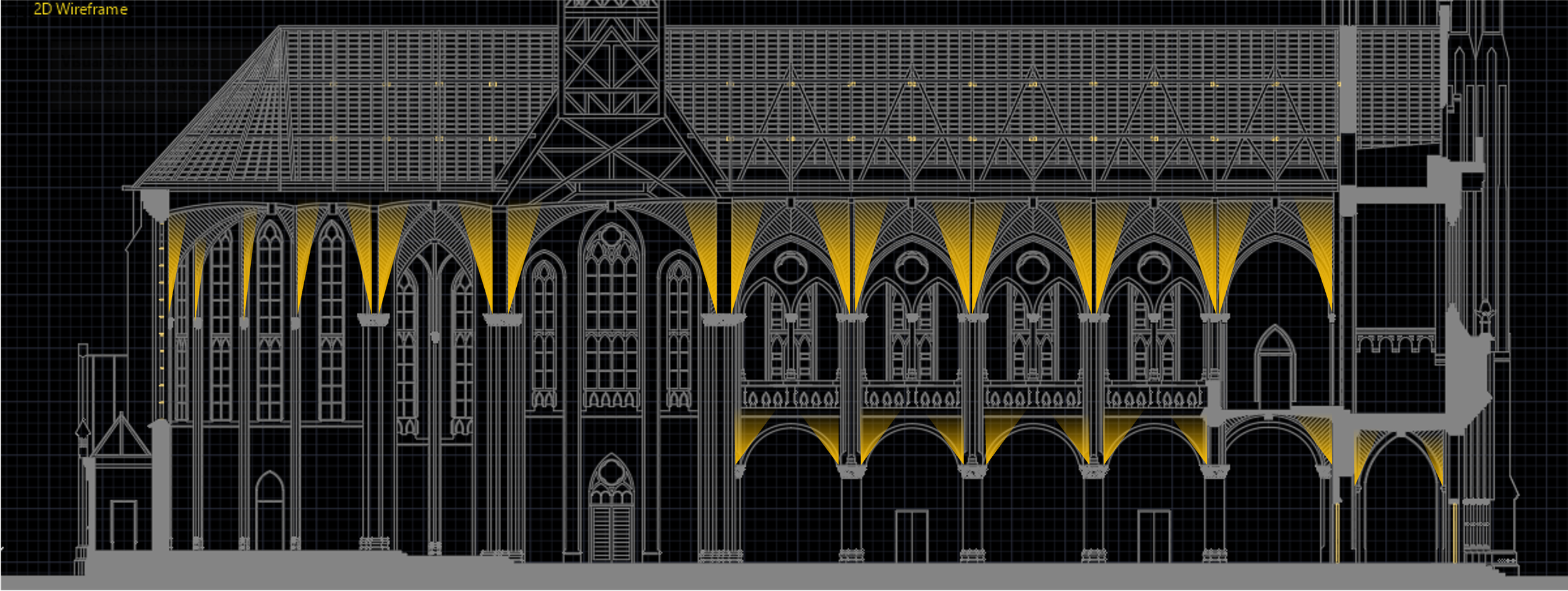
A core challenge of heritage conservation is hiding modern technology within historic architecture without altering the physical fabric of the building.
Non-Invasive Luminaire Placement: The 2D wireframe schematic illustrates the precise positioning of architectural uplights nestled into the capitals of the columns.
Accentuating the Architecture: By grazing the faces of the pointed arches with warm, directional light, the design draws the eyes upward, celebrating the structural engineering of the cathedral.
Reversible Design Principle: In adherence to strict international conservation standards, all lighting mounts and pathways are designed to be completely reversible, leaving zero permanent damage to the historic brick and stone.
Phase 4
The Final Ambiance
Harmonizing Liturgy and Light
The ultimate goal of the design is to foster a serene, contemplative atmosphere that elevates the spiritual experience for the congregation.
Layered Lighting Scheme:
Ambient Layer: Soft, warm-toned illumination reflecting off the ceiling vaults to provide comfortable, glare-free general lighting.
Accent Layer: High-CRI (Color Rendering Index) directional spotlights dedicated to the Stations of the Cross, altars, and sacred oil paintings, bringing out their true colors and textures.
Task Layer: Focused, dimmable illumination targeted precisely at the pews and sanctuary for reading scripts and hymnals.
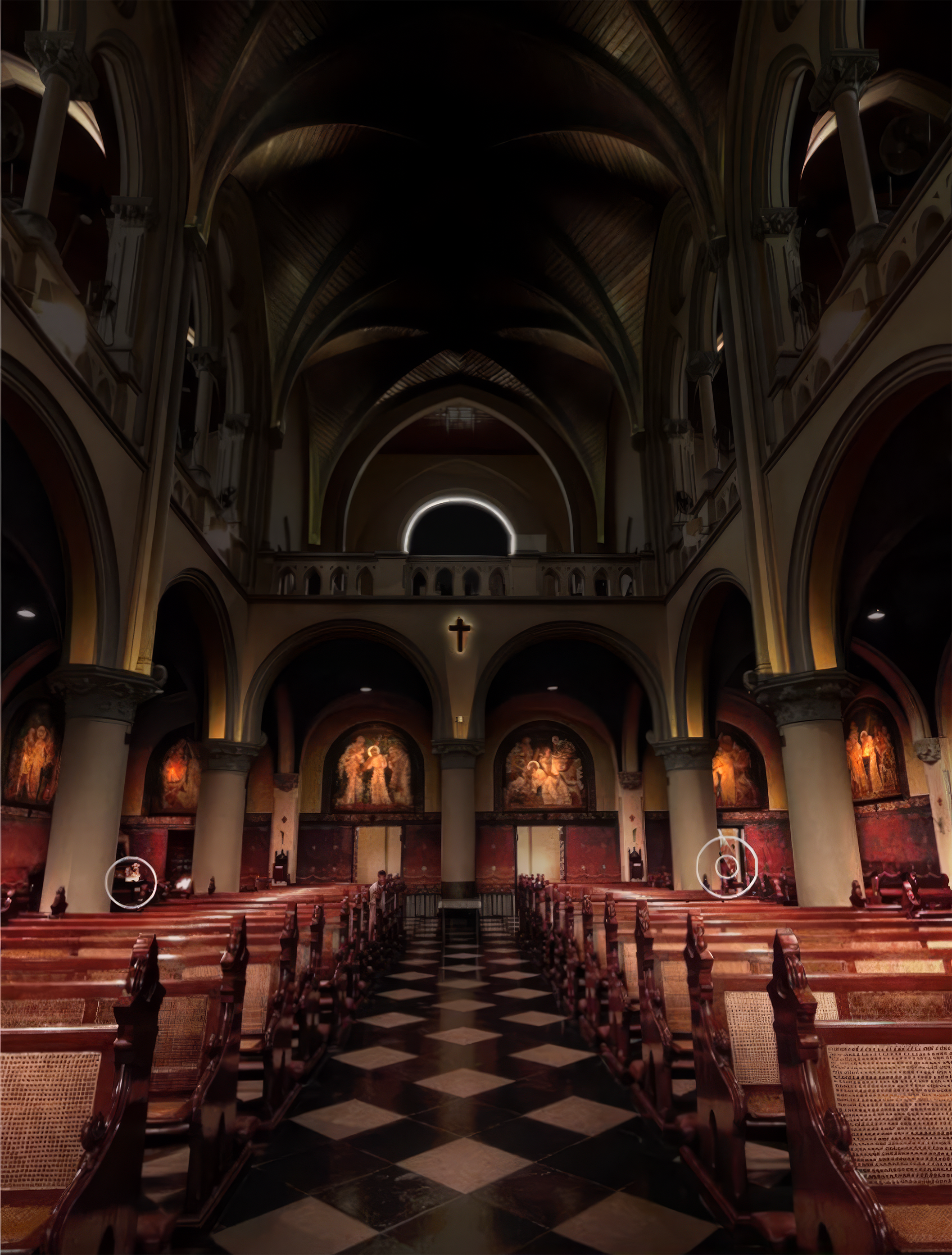
Smart Liturgical Control: The entire system is integrated into a digital control framework, allowing church staff to transition effortlessly between various scenes—ranging from intimate daily masses to brightly illuminated festive celebrations like Christmas and Easter.
Project Information
Project: Jakarta Cathedral Architectural Lighting
Location: Jakarta, Indonesia
Service: Sacred and Heritage Architectural Lighting Design
Scope: Lighting Mock-Up, Visual Evaluation, Lighting Quality Assessment
Consultant: Herwin Gunawan / ALTA Integra
Year: 2024